Ford Rolls Out Plug & Charge at Over 1,300 U.S. and Canada Dealerships
On May 11, 2026, Simon Bergg, General Manager, Global Charging at Ford, announced on his Linkedin account the following:
“For years, the conversation around public charging has centered on scale—how quickly the industry could deploy fast chargers. But scale without dependability doesn’t build trust.
Today, the real inflection point is reliability. The industry is shifting from counting chargers to delivering a charging experience customers can consistently depend on.
This is why we’re excited to share a milestone: Plug & Charge is now enabled at all 1,300+ Ford Charge fast chargers located at Ford dealerships across the U.S. and Canada.
By automating the handshake between the vehicle and the charger, we’ve eliminated the manual hurdles—apps and credit cards—that often create reliability gaps. When the technology handles the work, the margin for error virtually disappears.
We know from evaluating other networks within the BlueOval Charge Network that Ford drivers using Plug & Charge enjoy a 99%+ charging success rate.
By implementing this zero-interface approach we are focusing on what matters — enabling a better customer experience at Ford Charge stations.
While this seamless experience is an exclusive benefit for Ford electric vehicles via the BlueOval™ Charge Network, Ford Charge remains open to all EV models.
The transition to electric requires a frictionless future, and we’re proud to be leading that shift with Ford Charge. Learn more: https://lnkd.in/e-Rg-NhR.”
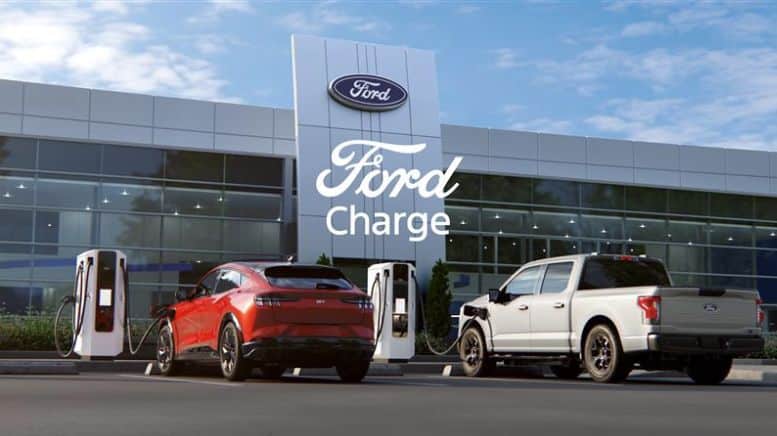
Ford and Others Offer Plug & Charge, For Growing Convenience
As public EV charging infrastructure expands across the United States, automakers are increasingly focused on simplifying the charging experience for drivers. Ford Motor Company is advancing that effort through its Ford Charge network, which provides DC fast charging access at select Ford dealership locations nationwide.
Ford Charge stations are compatible with electric vehicles from multiple automakers, not just Ford EVs, creating a more open and accessible charging ecosystem. Drivers can activate and pay for charging using several methods, including Plug & Charge, the Ford app, the Shell app, or traditional credit card and mobile wallet payments where supported.
For Ford EV owners, Plug & Charge offers the most seamless experience. Once enabled through the Ford app, drivers can simply plug in their vehicle and charging automatically begins, with payment processed through their connected BlueOval Charge Network account. The system eliminates the need to manually activate sessions or handle payment each time a vehicle charges.
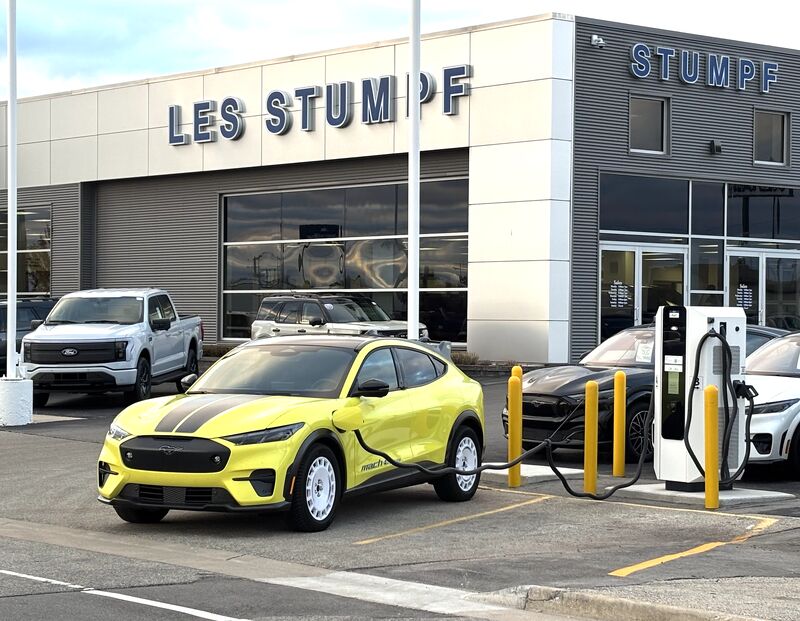
Ford EV drivers can also initiate charging directly through the Ford app by locating nearby chargers, selecting the correct connector, and remotely starting the session before plugging in. The app additionally helps drivers find public charging locations and manage charging history.
Non-Ford EV drivers are not excluded from the network. Ford Charge supports activation through the Shell: Fuel, Charge & More app, allowing drivers of virtually any compatible EV brand to access the chargers. Shell’s platform enables users to locate stations, activate charging sessions, and handle payments directly through the mobile app.
At select locations, drivers can also pay using credit cards, debit cards, or mobile wallets directly at the charger. Ford notes that not every site currently supports card readers, making app-based payments necessary at some locations.
The network also incorporates standard payment security measures, including temporary pre-authorization holds placed on payment methods during charging sessions. Ford states that these holds are automatically released after the charging session concludes, though processing times depend on individual financial institutions.
A notable aspect of Ford Charge is its integration into Ford’s broader EV ecosystem, including the BlueOval Charge Network and Ford app connectivity. This reflects a larger industry trend toward streamlining public charging through software integration, automated authentication, and simplified payment systems.
As automakers compete to improve EV ownership experiences, reducing friction at public chargers has become increasingly important. Features such as Plug & Charge, integrated navigation, automated billing, and cross-network accessibility are rapidly evolving from premium conveniences into expected industry standards.
Ford’s approach also highlights the growing role dealerships can play in expanding public charging access. By deploying DC fast chargers at dealer locations, automakers can supplement third-party charging networks while increasing infrastructure availability in areas that may still lack sufficient public charging coverage.
The continued expansion of accessible, multi-payment EV charging networks is likely to play a significant role in accelerating broader EV adoption, particularly among drivers who rely heavily on public charging infrastructure rather than home charging solutions.

Electric Vehicle Marketing Consultant, Writer and Editor. Publisher EVinfo.net.
Services