Lexus’ First-Ever Three-Row All-Electric SUV Debuts for the 2027 Model Year
On May 6, 2026, Lexus USA announced the 2027 Lexus TZ, marking a major step for Lexus as the brand’s first fully electric three-row SUV, blending premium comfort with long-range capability and performance-focused engineering. Built on Toyota’s TNGA architecture shared with the newly introduced Toyota Highlander EV, the TZ distinguishes itself with upscale materials, added technology, and a more refined driving experience.
The flagship configuration uses a 95.8-kWh battery pack that delivers an estimated 300 miles of driving range. Lexus will also offer a smaller 77-kWh battery option, although official range estimates for that version have not yet been announced.
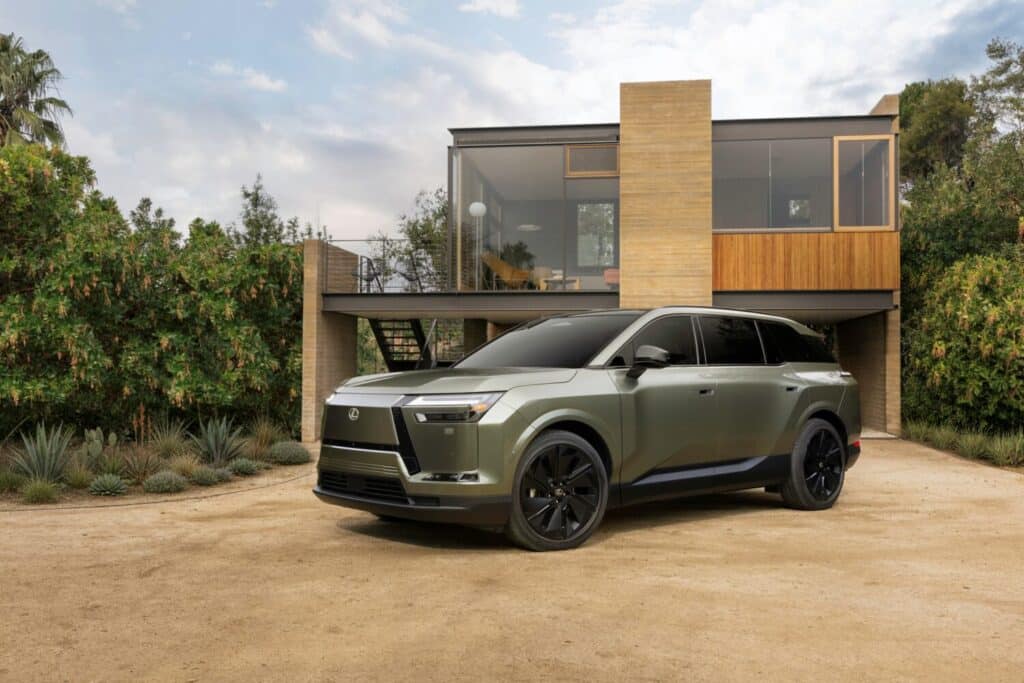
Unlike the Highlander EV, which offers a front-wheel-drive setup on certain trims, every TZ model comes standard with dual-motor all-wheel drive. Total output reaches 402 horsepower, giving the luxury SUV noticeably more performance than its Toyota counterpart.
Lexus engineered the drivetrain to continuously adjust torque distribution between the front and rear axles based on road conditions and driver input. Under acceleration, power can shift from a 60:40 front-to-rear split to a fully rear-biased setup. During aggressive cornering, the system can temporarily route all available torque to the rear wheels, improving responsiveness and handling dynamics.
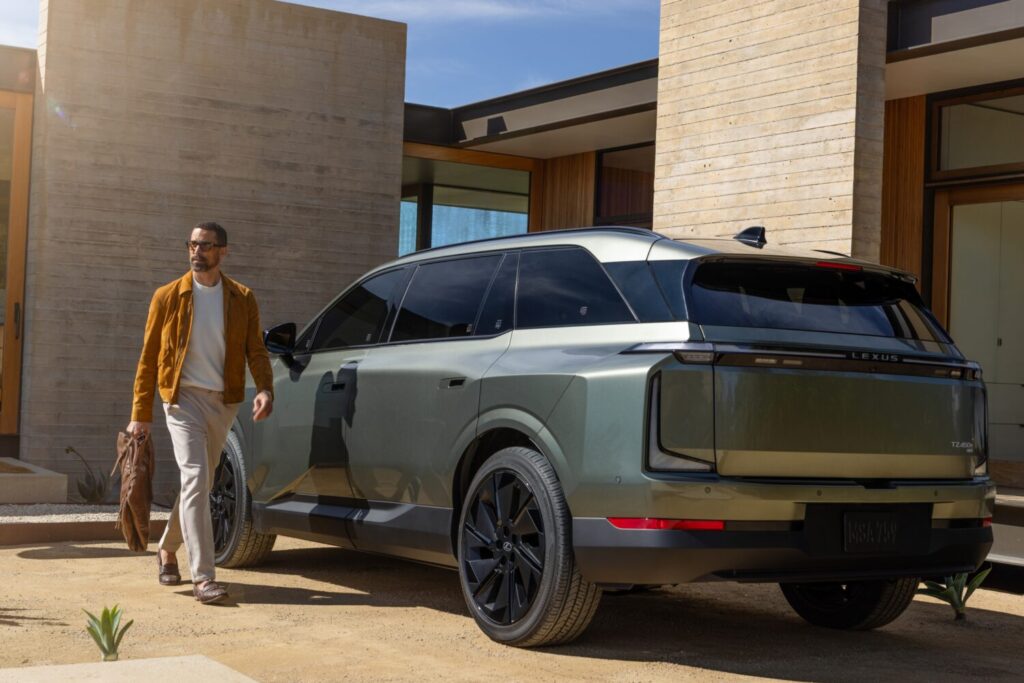
Design-wise, the TZ adopts Lexus’ evolving EV styling language. Standard 20-inch wheels are paired with available 22-inch upgrades, while the front fascia features a closed spindle-inspired grille treatment. A blacked-out rear pillar creates a floating roof effect, and sharp body sculpting is capped off by a full-width LED light signature across the tailgate.
Charging compatibility is another major highlight. The TZ includes a built-in NACS charging port, giving drivers direct access to Tesla Superchargers and other compatible DC fast-charging stations without requiring an adapter. Lexus says the larger battery can charge from 10% to 80% in roughly 35 minutes at speeds up to 150 kW.
Battery preconditioning comes standard to improve charging efficiency in varying temperatures, alongside vehicle-to-load functionality that allows the SUV’s battery to power external electronics, appliances, or equipment through an adapter.
An available rear-wheel steering system adds up to four degrees of steering angle to enhance agility and stability. Lexus says the feature sharpens handling while reducing body motion, and it also tightens the turning radius compared to models without the system.
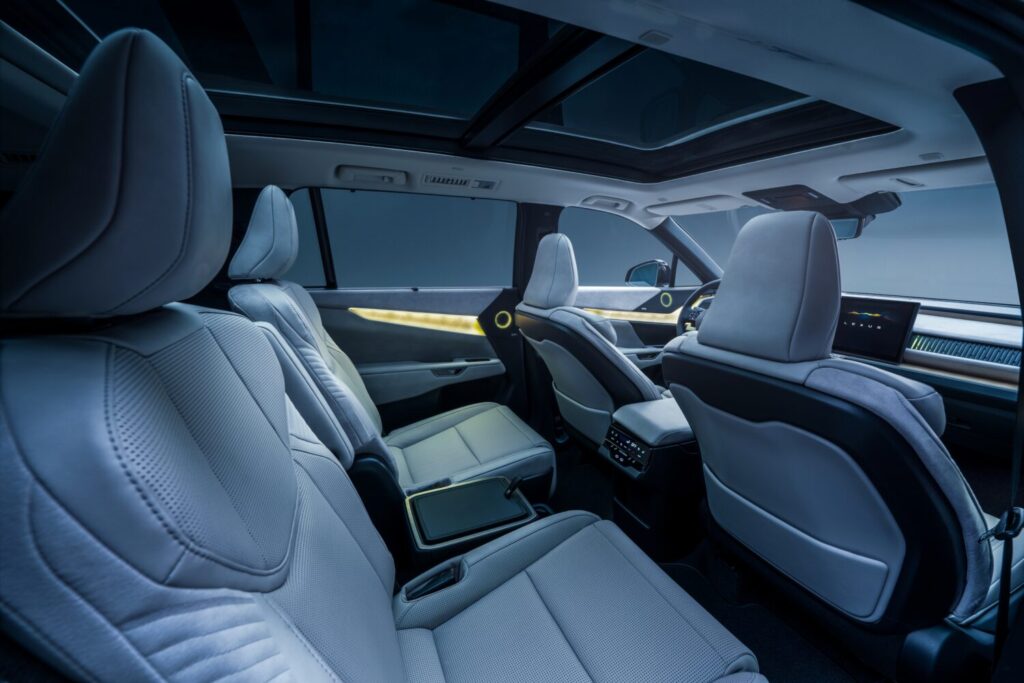
Inside, the TZ leans heavily into luxury lounge-inspired design. A panoramic glass roof stretches across all three rows and includes a powered sunshade. Lexus also incorporated Forged Bamboo trim sourced from Japan’s Shikoku Island, giving the cabin a distinctive handcrafted aesthetic.
Comfort features extend throughout the interior. Front passengers and second-row captain’s chairs can be equipped with ventilation and power ottomans, a first for a Lexus SUV, while heated seating is available across every row.
Lexus says the TZ delivers the quietest cabin of any SUV in its lineup. In addition to the naturally silent EV powertrain, engineers employed extensive sound insulation, aerodynamic mirror designs, and vibration-management technologies to minimize road and wind noise.
Technology includes a fully digital instrument display, a large central infotainment touchscreen, ambient cabin lighting, and a comprehensive suite of active safety systems. Behind the third row, cargo space measures 13.8 cubic feet, while towing capacity reaches 3,500 pounds.
Lexus is expected to release trim details and pricing information for the TZ later in 2026 ahead of the SUV’s market launch.

Electric Vehicle Marketing Consultant, Writer and Editor. Publisher EVinfo.net.
Services