India’s Market for Electric Cars Expanded by 25% in the Year Ending March 2026
On June 3, 2026, the BBC reported India’s electric vehicle market appears to be gaining meaningful momentum, with several indicators suggesting the country may be approaching a major shift toward electrified transportation.
Electric car sales grew 25% during the year ending March 2026, and EVs recently surpassed 5% of India’s passenger vehicle market, a level often considered a key threshold for mainstream adoption. According to the country’s automobile dealers association, the transition is moving beyond expectations and becoming increasingly significant.
Growth has been particularly strong in the premium vehicle segment, where electric models now account for roughly one in every ten vehicles sold above the one million rupee ($10,481; £7,777) price point. Meanwhile, electric three-wheelers represent more than 30% of sales in their category, while electric motorcycles have exceeded a 15% market share.
Rising fuel prices are helping drive consumer interest. India imports nearly 90% of its oil, and recent increases in crude prices have pushed fuel costs higher. The situation has strengthened the economic case for EV ownership, especially as consumers look for ways to reduce transportation expenses.
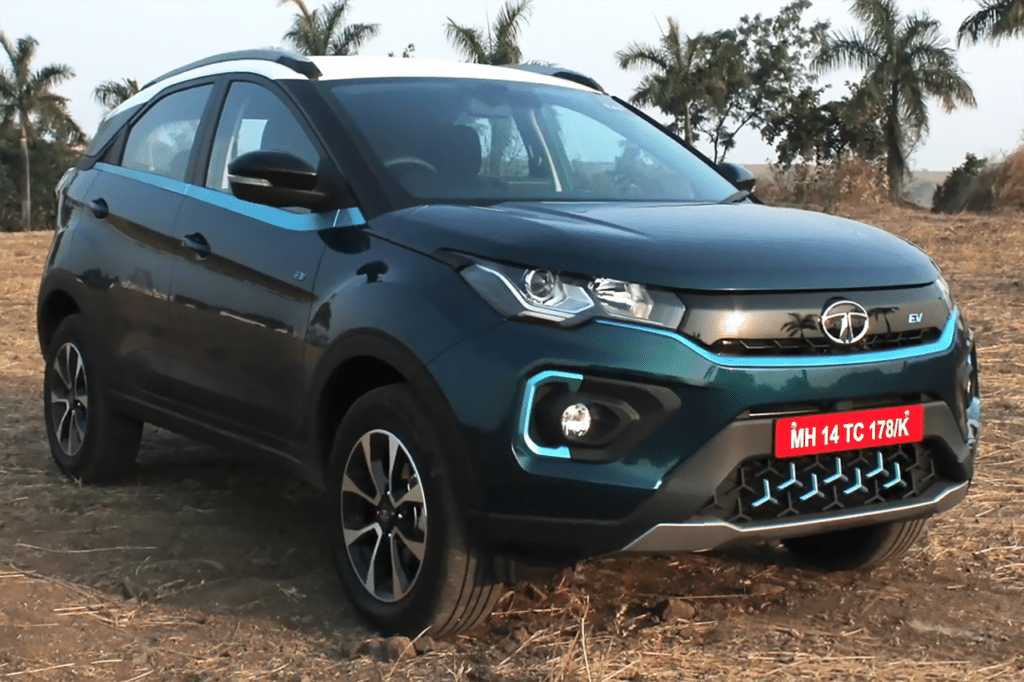
_front_view.png)
Industry analysts also point to upcoming Corporate Average Fuel Efficiency (CAFE-3) regulations as a major catalyst. Scheduled to take effect in April 2027, the new rules would significantly tighten vehicle emissions requirements and encourage automakers to accelerate EV development and sales. The regulations aim to reduce average vehicle carbon emissions by approximately one-third by 2032.
Additional support is coming from regional governments. Delhi, one of the country’s most polluted cities, has proposed policies that would gradually phase out internal combustion engine two- and three-wheelers and limit future registrations.
Automakers are expected to introduce a growing number of new EV models over the next several years, helping improve consumer choice and affordability. Analysts forecast EVs could reach approximately 9% of India’s passenger vehicle market by 2030.
Challenges remain. Charging infrastructure continues to lag behind demand, with just over 10,000 public chargers nationwide. Supply chain concerns also persist, particularly around battery materials, as India remains heavily dependent on imports and global processing capacity dominated by China.
Despite these obstacles, improving economics, expanding model availability, supportive regulations, and growing consumer awareness suggest India’s EV transition is beginning to accelerate and could enter a new phase of growth during the coming decade. Many analysts believe regulatory certainty and continued investment will be critical factors in determining the pace of adoption.
Tata Motors Leading India’s Electric Vehicle Revolution
As India’s electric vehicle market gains momentum, Tata Motors has emerged as the country’s clear EV leader. The automaker has played a major role in making electric vehicles accessible to Indian consumers through a growing lineup of affordable and practical models.
Tata’s electric vehicles, including the Nexon EV, Punch EV, Curvv EV, and Tiago EV, have helped introduce thousands of Indian drivers to electric mobility. The company’s focus on locally developed products, competitive pricing, and expanding charging infrastructure has contributed to strong adoption across the country.
While EVs currently account for a relatively small share of India’s overall passenger vehicle market, Tata Motors has consistently held one of the largest portions of the nation’s EV sales. The company continues to invest heavily in electrification, battery technology, software development, and manufacturing capacity.
Tata’s strategy aligns closely with India’s broader goals of reducing oil imports, lowering vehicle emissions, and strengthening domestic manufacturing. Through its EV ecosystem, which includes vehicle production, charging solutions, and battery investments, the company is helping build the foundation for long-term EV growth.
As new government regulations encourage cleaner transportation and consumers seek alternatives to rising fuel costs, Tata Motors is well positioned to remain a key driver of India’s electric vehicle transition. With additional EV launches planned and continued investment in technology, the company is expected to play an important role in shaping the future of mobility in one of the world’s largest automotive markets.

Electric Vehicle Marketing Consultant, Writer and Editor. Publisher EVinfo.net.
Services