Sila Raises $300 Million to Expand Battery Materials Factory
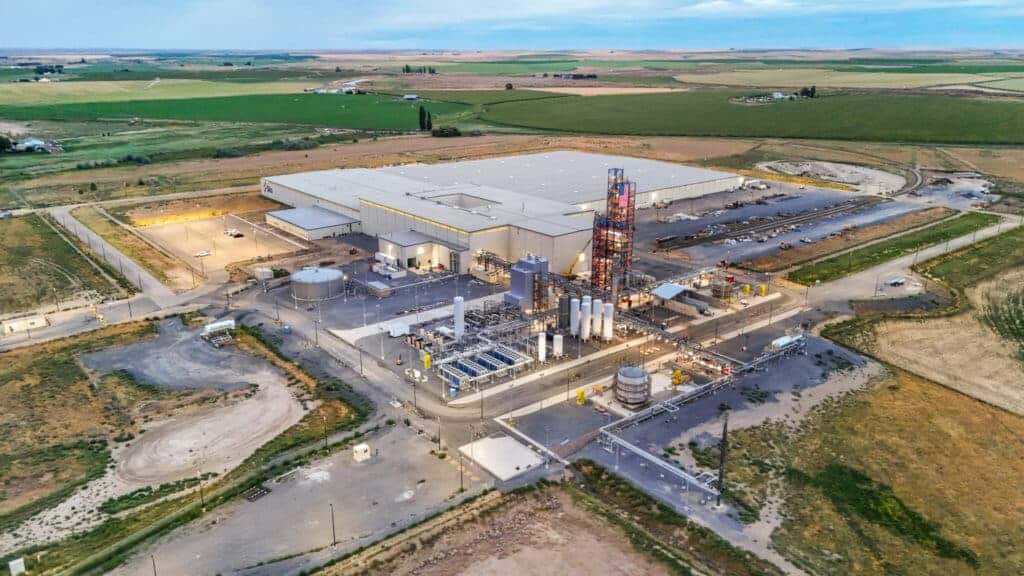
Sila, a U.S.-based battery materials startup, announced Tuesday that it has secured $300 million in new funding to expand its manufacturing facility in Moses Lake, Washington. The expansion will significantly increase production of the company’s silicon-carbon anode material, enough to supply batteries for more than 100,000 electric vehicles annually.
In September 2025, EVinfo.net reported that Sila announced that it had officially begun operations at its new facility. It’s one of the first plants in the United States dedicated to producing next-generation silicon-carbon anode materials at scale, a milestone for both the EV industry and U.S. manufacturing.
The investment comes at a time when the U.S. EV market has faced headwinds following policy changes by the current federal administration, that weakened support for electric vehicles, benefitting the administration’s fossil fuel campaign donors.
While American EV sales have slowed compared to the surge seen before federal tax credits expired, global demand continues to accelerate. According to Benchmark Minerals Intelligence, worldwide EV sales are up 27% year over year in June, compared to the same period in 2025.
EV sales are not still down in every U.S. state.
California is one of many states where EV adoption is growing. The California Energy Commission (CEC) reported that as gasoline prices skyrocketed due to the Iran war, new zero-emission vehicle (ZEV) sales increased in the second quarter of 2026, representing 19.1% of new vehicle sales in CA, a 3.3 percentage point increase quarter over quarter. California wisely announced it will offer rebates of up to $3,500 on new electric vehicles, scheduled to launch later this summer.
Sila has already secured supply agreements with major companies including Mercedes-Benz and Panasonic. Beyond the automotive sector, the company also provides advanced battery materials to consumer electronics manufacturers such as Whoop, as well as drone and satellite companies.
Today, most lithium-ion batteries rely on graphite anodes, with Chinese companies controlling roughly three-quarters of the global supply chain. As automakers seek to reduce dependence on Chinese materials and navigate trade uncertainties, alternative battery technologies have become increasingly attractive.
Sila’s silicon-carbon anode material is among the few commercially available alternatives capable of being produced at scale. The technology offers up to 40% higher energy density than conventional graphite anodes while also supporting faster charging speeds. The company has spent more than 15 years developing the material. Founder and CEO Gene Berdichevsky, Tesla’s seventh employee, has led the effort since the company’s inception.
Production at Sila’s Moses Lake plant currently has the capacity to produce enough material for approximately 2 gigawatt-hours of batteries annually. Following the expansion, output is expected to increase to tens of gigawatt-hours per year, dramatically boosting domestic battery-material production.
While EVs remain the largest market for lithium-ion batteries, demand from energy storage systems is growing rapidly. Utilities, renewable energy developers, and AI data centers are increasingly deploying large-scale battery storage to provide backup power, manage peak electricity demand, and maximize the use of solar and wind energy.
The funding round was led by Atreides Management and Sutter Hill Ventures, with participation from 8VC, Bessemer Venture Partners, Matrix Partners, and funds managed by T. Rowe Price Associates. According to PitchBook, Sila has now raised approximately $1.6 billion since its founding.

Electric Vehicle Marketing Consultant, Writer and Editor. Publisher EVinfo.net.
Services