Vermont Surpasses 20,000 EVs on the Road as Driving Electric Costs Around $1.75/g
Vermont Business Magazine reported Vermont’s electric vehicle market continues to accelerate, with nearly 21,000 EVs now registered statewide, according to new data from Drive Electric Vermont. The state has reached 20,970 electric vehicles on the road, marking a 12% increase over the past year as rising gasoline prices, utility incentives, discounted charging programs, and a growing supply of used EVs make electric transportation increasingly attractive.
For many Vermonters, driving an electric vehicle costs the equivalent of about $1.75 per gallon of gasoline. Drivers who take advantage of discounted off-peak charging rates or utility bill credits can reduce that figure to roughly $1 per gallon equivalent. With average gasoline prices around $4.50 per gallon, operating a gas-powered vehicle can cost approximately 150% more per mile than driving an EV.
The savings can be substantial over time. A Vermont driver charging at home on a discounted utility rate could have saved approximately $5,300 in fuel expenses over the past five years compared to operating a conventional gasoline vehicle.
The expanding used EV market is making electric transportation more accessible. As more vehicles come off lease and enter the pre-owned market, buyers are finding affordable options that also offer lower maintenance costs and reduced operating expenses. According to Drive Electric Vermont Coordinator David Roberts, the increasing availability of used electric cars and trucks is helping budget-conscious Vermonters access the benefits of EV ownership while enjoying the convenience and low cost of charging at home.
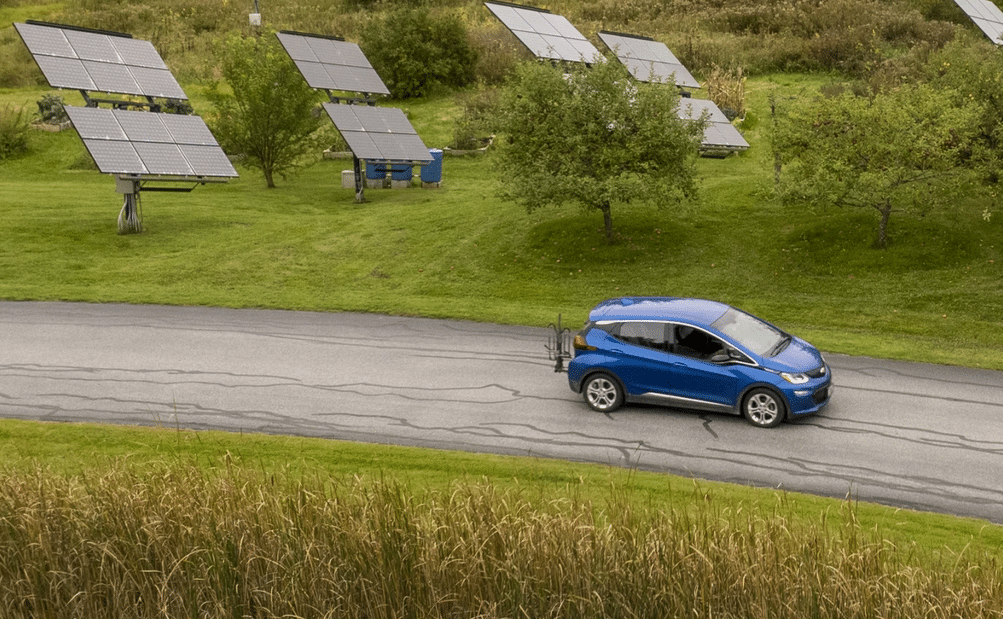
Several notable trends highlight the rapid growth of EV adoption in Vermont. The state now has 20,970 electric vehicles in operation, up 12% from a year ago. It took Vermont approximately a decade to reach its first 10,000 EVs, but less than three years to add the next 10,000. As of April 2026, used EVs accounted for 45% of newly registered electric vehicles, the highest proportion ever recorded. Data from the 2025 Vermont Vehicle Index shows that one in every ten new vehicles registered in the state during 2025 had a plug.
Battery-electric vehicles make up 62% of Vermont’s EV fleet, while plug-in hybrid electric vehicles account for 38%. Beyond passenger vehicles, more than 250 additional electric vehicles operate on Vermont roads, including 71 electric transit and commercial trucks, more than 40 electric school and transit buses, and approximately 80 electric motorcycles and mopeds.
Vermont’s electric utilities continue to support adoption through rebates, charging incentives, and special electricity rates. Burlington Electric Department offers rebates of up to $900 for home EV chargers, along with discounted charging rates and additional support for income-qualified customers and multifamily properties. Green Mountain Power provides customers with a free Level 2 home charger through its Home Charging Program, discounted charging rates, and up to $650 toward installation costs.
Stowe Electric Department offers incentives through its Connected Homes program, including a $100 rebate for qualifying WiFi-enabled Level 2 chargers and a $10 monthly participation incentive, with additional assistance available for income-qualified households. Vermont Electric Co-op provides a free Level 2 charger for customers participating in its managed charging program or a $250 bill credit for those using their own equipment. Participants can also receive an $8 monthly bill credit for avoiding charging during periods of high electricity demand.
Washington Electric Co-op offers a free Level 2 charger through its PowerShift program along with a $500 Efficiency Vermont installation rebate. Customers who already own a charger can receive a $100 enrollment incentive, while all participants earn a $10 monthly bill credit. According to Washington Electric Cooperative Director of Special Projects and Innovation JJ Vandette, nearly half of the co-op’s EV drivers have enrolled in PowerShift, helping reduce power costs across the community while earning monthly bill credits.
Federal incentives remain available for a limited time. Homeowners can still claim a federal tax credit covering 30% of home EV charger installation costs, up to $1,000, but chargers must be placed in service by June 30, 2026, to qualify.
Vermont’s public charging infrastructure is also expanding to support growing EV adoption. The state now has 537 public charging stations, a 16% increase over the past year. Included in that total are 100 Level 3 DC fast chargers capable of charging many EVs in approximately 20 to 45 minutes. Altogether, Vermont’s public charging network provides 1,371 charging ports.
The environmental benefits are also significant. According to the Vermont Energy Action Network, most EVs generate about 30% of the lifetime greenhouse gas emissions of comparable gasoline-powered vehicles. Because Vermont’s electricity supply is particularly low in carbon emissions, a battery-electric vehicle operating in the state produces only about 14% of the lifetime greenhouse gas emissions of a similar gas-powered vehicle.
Drive Electric Vermont is a statewide public-private partnership made up of policymakers, industry leaders, organizations, and citizens working to accelerate transportation electrification throughout Vermont. Coordinated by clean-energy nonprofit VEIC, the organization supports EV education and outreach, charging infrastructure deployment, incentive programs, and stakeholder collaboration across the state.

Electric Vehicle Marketing Consultant, Writer and Editor. Publisher EVinfo.net.
Services