Chip Motors is Rethinking Urban Mobility with Affordable, Electric and Autonomous LSVs
As cities become more crowded and transportation costs continue to rise, a new generation of electric vehicle startups is challenging traditional ideas about what a personal vehicle should be. One of the newest entrants is Chip Motors, a Miami-based company focused on developing affordable, low-speed electric vehicles designed specifically for urban mobility. Rather than competing with mainstream automakers in the race to build larger, faster, and more expensive vehicles, Chip Motors is taking a different approach centered on simplicity, accessibility, and autonomy.
According to Chip Motors, its vehicles are designed to serve everyday transportation needs while remaining affordable enough for a much broader audience than traditional EVs. The company is targeting a starting price of approximately $10,000 to $15,000, significantly below the average cost of most electric vehicles currently available in North America.

One of the most distinctive aspects of the Chip platform is its focus on low-speed operation. The company’s vehicles are designed for urban and neighborhood travel, with top speeds around 25 mph. By limiting speed and focusing on shorter trips, Chip Motors aims to reduce vehicle complexity, improve efficiency, and lower manufacturing costs. The approach also creates opportunities for autonomous and teleoperated driving technologies that may be easier to deploy in controlled, lower-speed environments than on highways.
Chip Motors describes its vehicle as a “personal autonomous vehicle” intended to make driving optional. The company envisions a future where users can summon their vehicle, or use remote operation technologies to simplify transportation in dense urban settings. One scenario could be that you drive to to the beach, unload, then dispatch your car to go park in some distant parking lot.
While many major automakers continue investing billions in fully autonomous vehicles, Chip Motors is focusing on a narrower use case that could potentially reach commercialization more quickly.

The platform is also designed with customization in mind. Chip says a single vehicle architecture can support multiple body styles and configurations, ranging from utility-focused models to passenger-oriented designs. This flexibility could allow customers to tailor vehicles to their specific needs while enabling the company to streamline production around a common platform.
As urban planners and policymakers search for solutions to congestion, parking challenges, and transportation affordability, smaller electric vehicles are receiving increased attention worldwide. Markets in Europe and Asia have already demonstrated demand for compact city-focused EVs, and Chip Motors believes a similar opportunity exists in the United States. The company’s strategy reflects a growing recognition that not every vehicle needs to travel hundreds of miles at highway speeds to meet the daily transportation needs of most drivers.
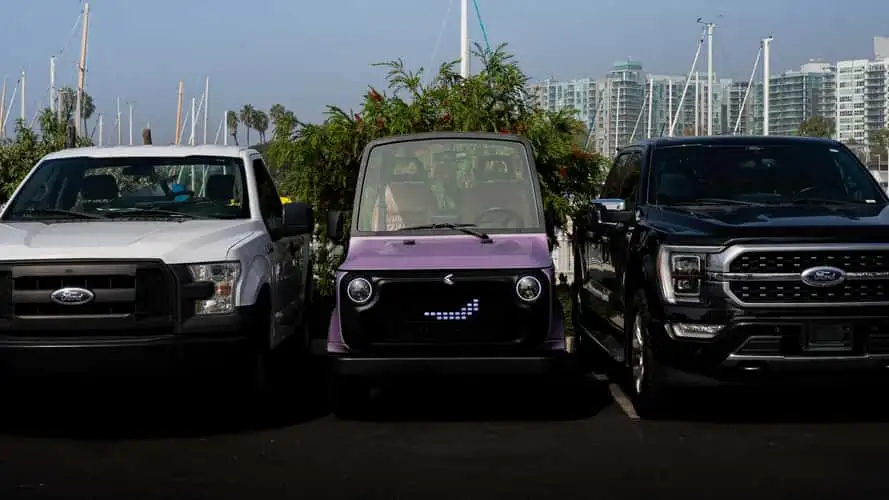
Although still in the early stages of development, Chip Motors represents a growing movement within the EV industry that prioritizes practical transportation over maximum performance. EVinfo.net recently reported that Stellantis has officially opened U.S. orders for the Fiat Topolino, a compact electric vehicle priced from $13,995 before destination charges.
EVinfo.net’s Take: Why Low-Speed Electric Vehicles Make the Perfect Second Car for Saving Money and Helping the Environment
As more households look for practical ways to reduce transportation costs and lower their environmental impact, low-speed electric vehicles (LSEVs) are emerging as an attractive solution. Designed for shorter trips and lower-speed roads, these compact electric vehicles can serve as the ideal second car for families, retirees, commuters, and anyone who frequently makes local trips.
Most daily driving doesn’t involve long highway journeys. In fact, many errands such as grocery shopping, school drop-offs, trips to the gym, dining out, or visiting friends occur within just a few miles of home. Using a full-size gasoline vehicle for these short trips can be inefficient and expensive. A low-speed electric vehicle offers a smarter alternative.
One of the biggest advantages of an LSEV is cost savings. These vehicles typically cost far less than traditional automobiles and consume only a fraction of the energy required by larger EVs. Charging an LSEV at home often costs just pennies per mile, resulting in significant savings compared to gasoline-powered vehicles. Maintenance expenses are also lower because electric drivetrains have fewer moving parts, eliminating many common service items such as oil changes, spark plugs, and complex engine repairs.
Insurance costs can also be lower than those associated with conventional vehicles, making ownership even more affordable. For households that already own a primary vehicle for long-distance travel, adding an LSEV can reduce wear and tear on the family’s main car while providing an economical transportation option for everyday errands.
Environmental benefits are equally compelling. Since LSEVs produce zero tailpipe emissions, they help reduce air pollution and greenhouse gas emissions. Their smaller size and lighter weight also require fewer raw materials to manufacture, reducing their overall environmental footprint compared to larger vehicles. When charged using renewable energy sources such as solar power, their environmental impact becomes even smaller.

Electric Vehicle Marketing Consultant, Writer and Editor. Publisher EVinfo.net.
Services