Canada-to-Mexico Zero-Emission Freight Network Announced
Government leaders from the U.S. West Coast, Canada and Mexico announced a new cross-border initiative to develop a zero-emission commercial charging network along Interstate 5, connecting Vancouver, British Columbia, with Baja California, Mexico.
The British Columbia to Baja California Zero-Emission Vehicle Corridor (BC2BC) is designed to enable heavy-duty electric and hydrogen-powered freight trucks to travel the length of the Pacific Coast. The initial project calls for 20 electric charging stations and three hydrogen fueling hubs along the I-5 freight corridor, which carries nearly 10,000 trucks each day.
California, British Columbia, Oregon, Washington and Baja California are supporting the initiative, which is backed by the California State Transportation Agency, CALSTART and the University of California, Davis Institute of Transportation Studies.
The project was launched at the Port of Long Beach, where zero-emission commercial trucks from Volvo, Tesla and ZM Trucks were displayed. Industry participants include Volvo Group North America, Tesla, Southern California Edison, EV Realty, King Fio Trucking and IMC Logistics.
Jamie Hall, Senior Director, External Affairs at EV Realty, said: “As an infrastructure developer, we are obviously focused on growing our Powered Properties® charging network to meet fleet needs for fast and reliable charging at a price that can beat diesel. We are making real progress on this front with an operational site in California’s Inland Empire plus sites under development in Torrance near the Ports of LA and Long Beach and in Stockton along the I-5 corridor. But our work at this early stage of the market also extends beyond infrastructure deployment to broader market development efforts. Scaling freight electrification requires collaboration across sectors to reduce risks, enable investment, and align vehicles and infrastructure. Initiatives like BC2BC are an essential part of this as we collectively look to electrify key hubs and corridors across the region.”
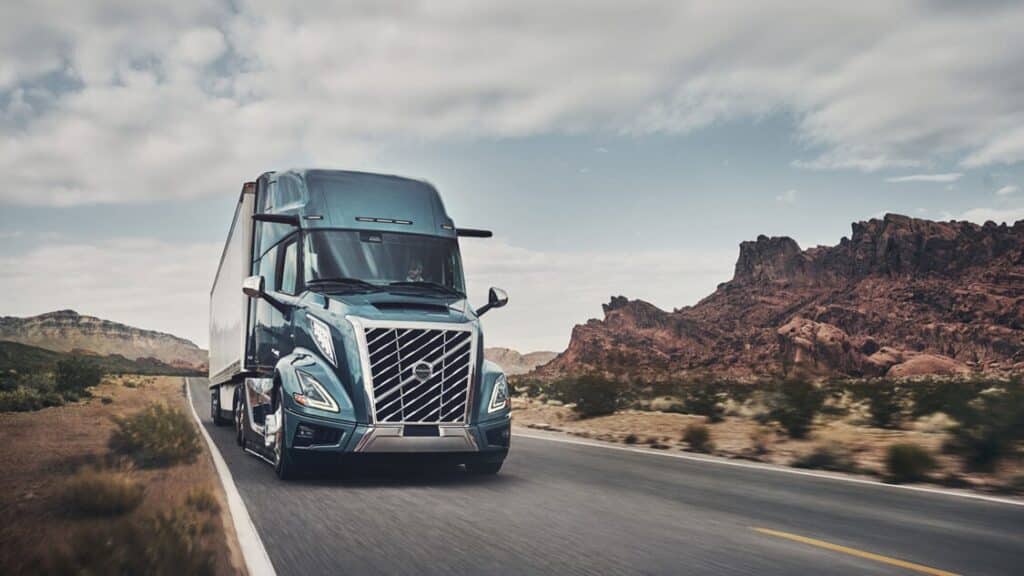
Volvo Group North America emphasized that coordinated infrastructure, technical standards and planning across jurisdictions can give trucking companies greater confidence to adopt zero-emission vehicles and operate them efficiently across long-distance routes.
The initiative also supports the Port of Long Beach’s long-term goal of becoming North America’s first zero-emission port while expanding cargo capacity.
Technical working groups from the participating regions will now coordinate equipment standards and public investments. The project will also be incorporated into California’s California-Baja California Border Master Plan.
The BC2BC Corridor represents an important step toward creating a connected zero-emission freight network across North America, demonstrating that successful truck electrification will require cooperation across state, national and international borders.
EVinfo.net’s Take: Heavy-Duty EV Trucking Is Growing Rapidly Across the U.S.
Heavy-duty electric trucking is moving from early deployments into a period of rapid growth across the United States. Trucking companies, manufacturers, ports and governments are investing in electric trucks and charging infrastructure as battery technology improves and fleets look for ways to reduce fuel and operating costs.
Electric trucks are particularly well suited for regional and drayage operations, where vehicles follow predictable routes and return to a depot or charging facility. Ports are becoming important centers of electrification as fleets replace diesel drayage trucks with zero-emission models.
Manufacturers including Volvo, Daimler Truck, PACCAR and others are expanding their electric truck offerings, while charging companies are developing high-power systems capable of supporting commercial vehicles. The development of megawatt-scale charging will also make longer-distance electric trucking increasingly practical.
Government investment is helping accelerate the transition. California and other states are supporting zero-emission trucks and infrastructure.
In August 2026, EVinfo.net reported California is investing $95.2 million to accelerate the expansion of zero-emission vehicle (ZEV) infrastructure across the state. The funding will support EV charging and hydrogen refueling infrastructure for light-, medium-, and heavy-duty ZEVs.

Electric Vehicle Marketing Consultant, Writer and Editor. Publisher EVinfo.net.
Services