NYC Plans to Expand Curbside EV Charging to Nearly 700 Chargers Over Next Three Years
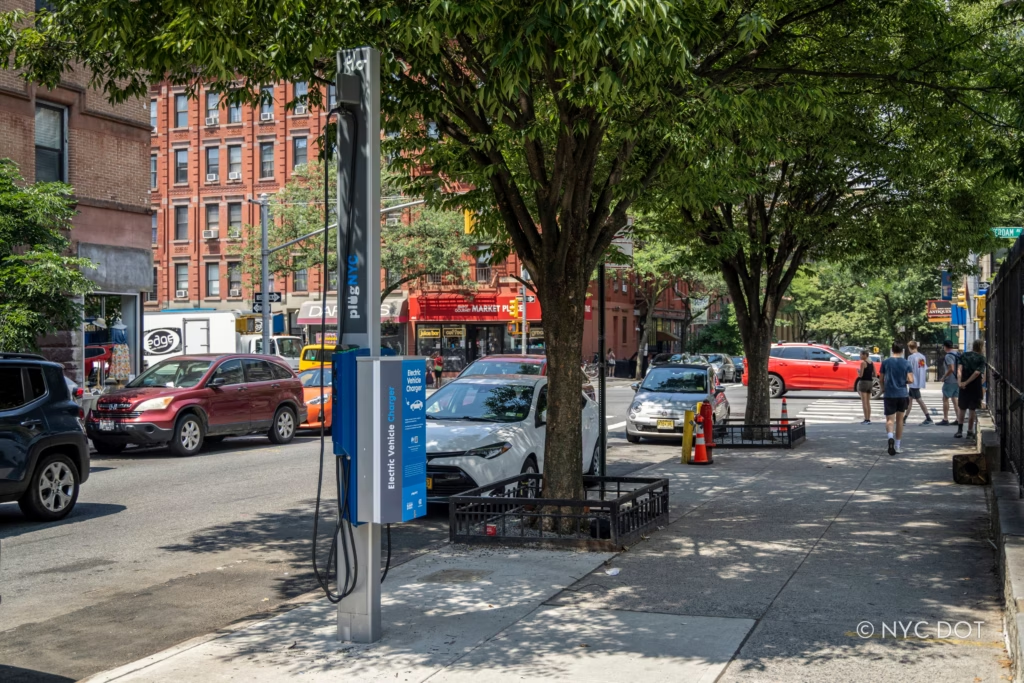
New York City is making a major investment in public EV charging, announcing plans to expand its curbside charging network from 88 chargers to nearly 700 across the five boroughs over the next three years. The initiative, announced by the New York City Department of Transportation (NYC DOT) on August 4, is designed to make electric vehicle ownership more practical for residents who lack access to private charging while supporting the city’s climate goals.
The first phase of the rollout will target neighborhoods with high residential density, limited off-street parking, and significant numbers of Taxi and Limousine Commission (TLC)-licensed drivers. Initial locations include Soundview and Unionport in the Bronx; Rego Park, Forest Hills, and Far Rockaway in Queens; Red Hook, Carroll Gardens, and Bedford-Stuyvesant in Brooklyn; the Upper West Side and Washington Heights in Manhattan; and Stapleton on Staten Island. Additional neighborhoods will be announced as the program expands.
The city also aims to improve charging access in low- and moderate-income communities where private charging providers have invested less heavily. Residents can provide feedback on proposed charger locations through NYC DOT’s online project portal as planning, design, and construction continue.
Each PlugNYC charging station will include at least two charging posts with two charging points per post, providing four charging points at every location. Where possible, stations will also support electric micromobility by including infrastructure for electrified bikeshare docks, public e-bike charging cabinets, secure bike parking with charging, or cargo bike charging for urban delivery hubs.
The expansion reflects New York City’s broader strategy to reduce transportation emissions while ensuring that public charging is available in neighborhoods where drivers need it most. By significantly increasing curbside charging options, the city is helping remove one of the biggest barriers to EV adoption for apartment dwellers and residents without dedicated parking.
EVinfo.net’s Take: Why Curbside EV Charging is Important
Curbside EV charging is becoming one of the most important pieces of charging infrastructure as more people switch to electric vehicles. Millions of city residents live in apartments or homes without garages, making home charging impossible. Convenient curbside chargers give these drivers a practical way to own an EV without relying exclusively on public fast chargers.
Expanding curbside charging also helps make EV adoption more equitable by bringing charging access to neighborhoods that have historically seen little private investment. Drivers can charge while their vehicles are parked overnight or during the day, reducing range anxiety and making charging part of their normal routine.
As cities work to reduce transportation emissions, curbside charging fills a critical gap between home and public fast charging. By making charging accessible where people already park, communities can encourage more EV adoption while supporting cleaner air and a more reliable charging network.
it’s electric Is Curbside EV Charging Specifically Built for Cities
Urban EV charging startup it’s electric is taking a different approach to solving one of the biggest barriers to EV adoption: the lack of convenient charging for apartment dwellers and city residents. Instead of relying on expensive utility upgrades, the company installs Level 2 curbside chargers that draw power from a nearby building’s existing electrical service. Property owners pay nothing for installation or maintenance and can earn passive income by sharing their spare electrical capacity, while drivers gain access to reliable neighborhood charging. The chargers are compact, cable-free, and designed to blend into city streets, with drivers using their own portable charging cable.
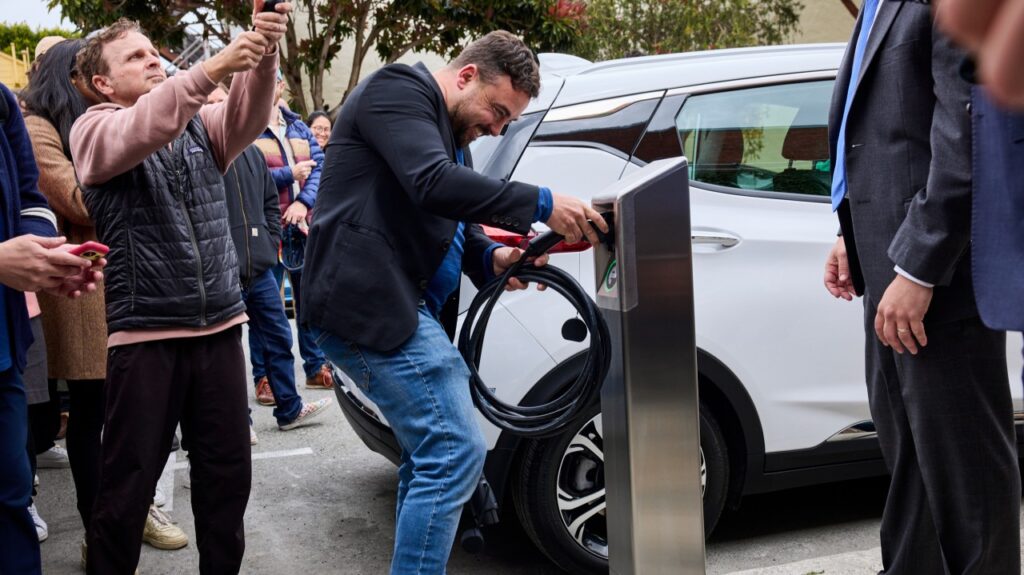
Founded in Brooklyn, it’s electric has expanded beyond New York and is working with cities including Boston, Detroit, Los Angeles, San Francisco, Jersey City, Yonkers, and Washington, D.C. The company’s model aims to make curbside charging faster and less expensive to deploy than traditional public charging infrastructure, helping cities electrify transportation without major grid upgrades. By unlocking existing electrical capacity and bringing charging directly to where residents already park, it’s electric is creating a scalable solution that could accelerate EV adoption in dense urban neighborhoods across the U.S.

Electric Vehicle Marketing Consultant, Writer and Editor. Publisher EVinfo.net.
Services