B2U Begins Commercial Operations of Second Repurposed EV Battery Storage Project in Texas
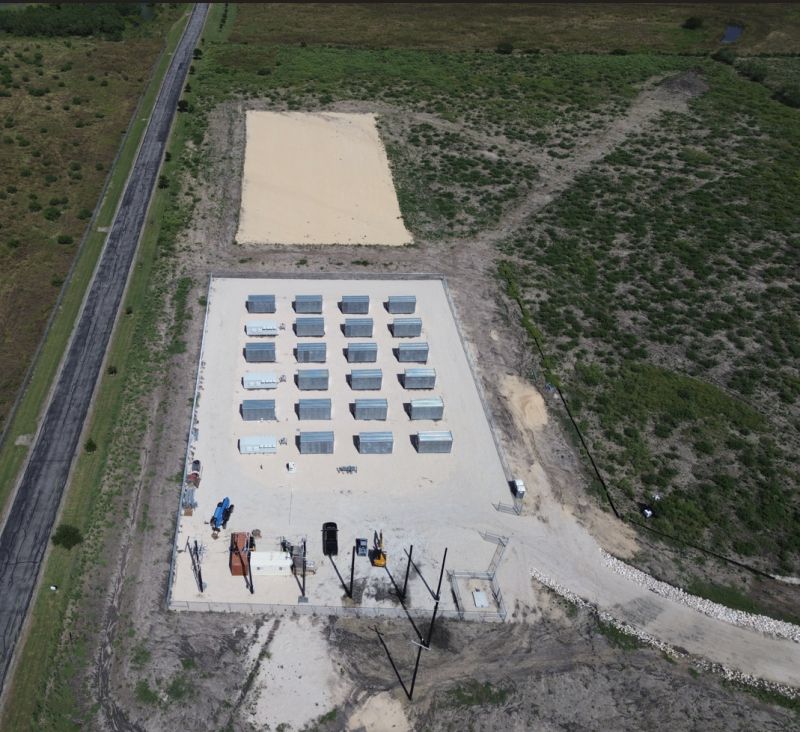
B2U Storage Solutions announced September 9, 2026, that its Bexar Martinez battery energy storage system (BESS) near San Antonio has entered commercial operation, delivering 28 MWh of grid services to ERCOT. Located within CPS Energy’s service territory, the project is built entirely from repurposed electric vehicle batteries, demonstrating the potential of second-life batteries for utility-scale energy storage.
Bexar Martinez is B2U’s second Texas project equipped with its patented BESS cabinets using repurposed EV batteries. By giving batteries a second life after vehicle use, B2U extends their useful value, reduces waste and lowers the cost of grid storage. The company says its BESS projects can deliver significantly higher returns to infrastructure investors than other domestic BESS vendors.
The new project brings B2U’s Texas portfolio providing grid services to ERCOT to more than 50 MWh. Across Texas and California, B2U manages more than 5,000 repurposed EV batteries and operates roughly 100 MWh of energy storage in solar-paired and stand-alone configurations.
“Bexar Martinez proves that second-life batteries can deliver reliable, cost-effective grid services at scale,” said Freeman Hall, CEO of B2U Storage Solutions. “Reaching 50 MWhs in Texas is an important milestone, but the bigger story is what it represents. Every battery we redeploy keeps valuable resources in service longer, strengthens the grid, and shows the market that repurposed EV batteries are ready to compete today.”
The project supports grid reliability in one of ERCOT’s fastest-growing regions, helping meet rising electricity demand with a lower-cost storage option. B2U expects to deploy more than 50 additional MWh in ERCOT during the next six months.
The Bexar Martinez project and B2U’s other sites qualify for the domestic content bonus under the Investment Tax Credit, have received third-party financing and have been acquired by B2U Infrastructure Partners, demonstrating the bankability of the company’s approach.
B2U Storage Solutions manufactures, develops, deploys and operates BESS projects using its patented EPS technology platform and integrated EV battery repurposing services. Its solutions are designed for grid-scale projects and large energy users, providing lower-cost energy storage that qualifies for the domestic content tax credit bonus.
EVinfo.net’s Take: Second-Life EV Batteries Put the Circular Economy Into Practice
An EV battery that no longer meets the performance requirements of automotive use does not necessarily have to be recycled or discarded. These batteries can be redeployed in stationary energy storage systems, extending their useful lives by years and extracting additional value from the materials, manufacturing and energy already invested in them.
This second-life model offers both economic and environmental benefits. Repurposed EV batteries can reduce energy storage costs for grid operators, renewable energy developers, and commercial and industrial customers while potentially reducing demand for newly mined critical minerals such as lithium, nickel and cobalt. Keeping batteries in productive service longer also defers recycling, improves asset utilization and can reduce lifecycle emissions associated with manufacturing replacement batteries.
Second-life batteries are particularly suited to stationary applications including peak shaving, renewable energy firming, backup power and grid services. Companies deploying modular, plug-and-play storage architectures are demonstrating that repurposed EV batteries can provide reliable grid services at utility scale. As battery costs decline and the need for flexible electricity resources increases, second-life systems are emerging as another option within the growing energy storage market.
The opportunity will expand as EV adoption increases. Millions of batteries will eventually reach the point where they are no longer suitable for vehicle use, creating a growing need for practical pathways between automotive applications and recycling. Second-life storage provides that bridge, keeping batteries productive for longer before their materials are ultimately recovered.
The concept also demonstrates why electrification and the circular economy can develop together. Rather than treating an EV battery as a single-use asset, second-life applications allow its remaining capacity to support the electric grid and renewable energy systems. Keeping valuable materials in productive use longer can strengthen resource efficiency, create additional economic value and help build a more resilient battery ecosystem as EV adoption continues to scale.
EVinfo.net sees second-life battery storage as an important part of the broader EV ecosystem. The transition to electric transportation is not only about replacing gasoline and diesel vehicles. It also creates opportunities to reuse, repurpose and ultimately recycle the batteries that power them.

Electric Vehicle Marketing Consultant, Writer and Editor. Publisher EVinfo.net.
Services