2028 Mercedes-AMG GT SUV Has 1,153 HP and 710 kW Charging Capability
Mercedes-Benz unveiled the 2028 Mercedes-AMG GT SUV, an all-electric performance SUV that delivers up to 1,153 horsepower and charging capabilities of up to 710 kilowatts (kW). The GT 55 and GT 63 can charge from 10% to 80% in a claimed 12 minutes, with Mercedes estimating that the vehicles can add 48 kilowatt-hours (kWh) of energy in just five minutes.
The new SUV is the high-riding sibling of the AMG GT 4-Door EV and is built on the same dedicated AMG.EA platform. However, the SUV features a larger battery in its higher-performance versions, greater peak charging power, and upgraded suspension. The GT 53, GT 55, and GT 63 are scheduled to reach U.S. dealerships in summer 2027.
All three models feature variable all-wheel drive and can mechanically disconnect their front motors to improve efficiency. The GT 53 uses a two-speed rear transmission, while the three-motor GT 55 and GT 63 can independently control each rear wheel to deliver precise torque vectoring during aggressive cornering.
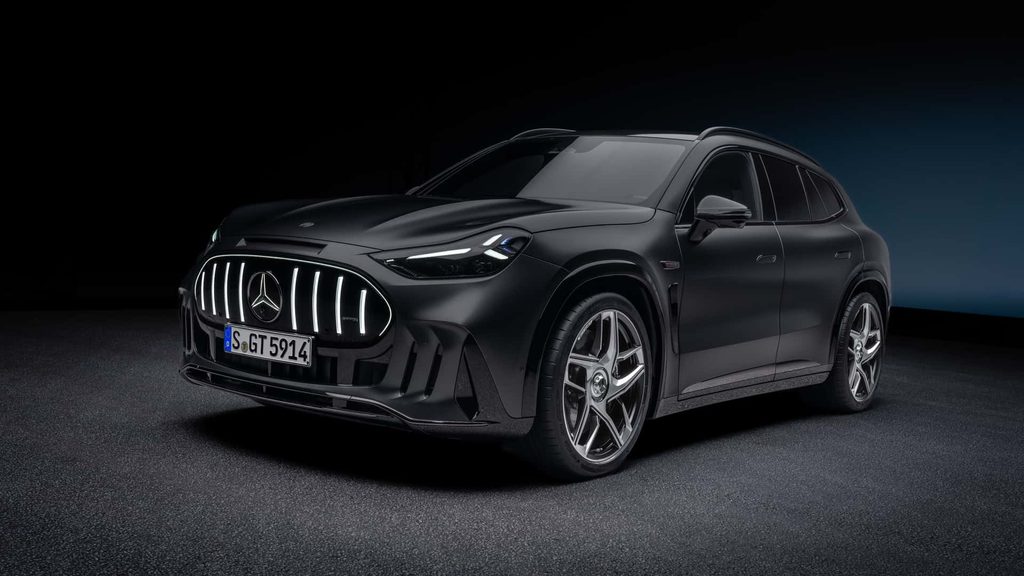
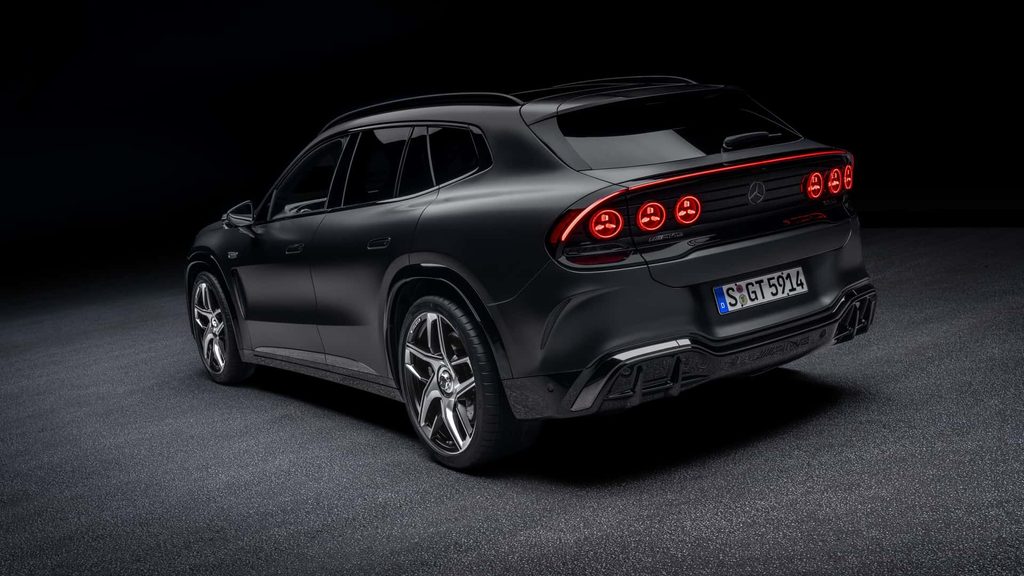
The GT SUV features a broad front grille framed by star-shaped daytime running lights, prominent wheel arches, and a low fastback-style roofline. The GT 55 and GT 63 add an active rear spoiler. Six circular taillights create a visual connection to the four-door model, while frameless side windows reinforce the coupe-inspired design.
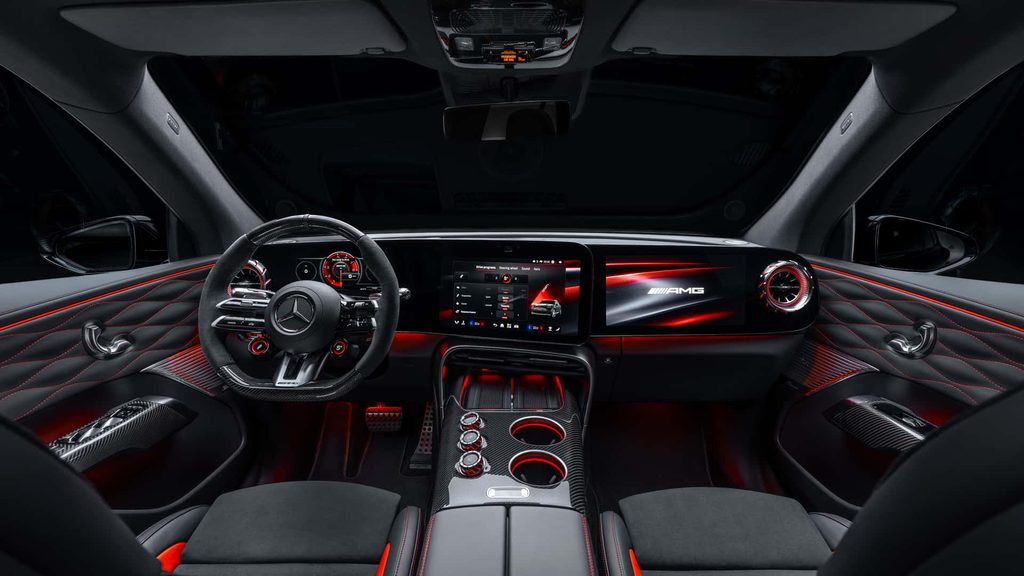
Inside, a 14-inch central touchscreen angles toward the driver and is paired with a 10.2-inch instrument display. An optional second 14-inch screen serves the front passenger. The center console incorporates three rotary driving controls, while the panoramic glass roof switches between transparent and opaque. Illuminated AMG patterns can also appear on the roof at night.
Charging Performance and Battery Specifications
The GT 55 and GT 63 feature a 128-kWh usable battery, compared with the 106-kWh battery in the AMG GT 4-Door EV. Peak DC fast-charging power increases from 600 kW in the GT 53 to 710 kW in the higher-performance models.
Mercedes claims the GT 55 and GT 63 can add 83 kWh in 10 minutes at an average charging power of approximately 498 kW. Charging from 10% to 80% takes a claimed 12 minutes, while charging at a 400-kW station takes approximately 16 minutes.
The GT 53 retains the smaller 106-kWh battery and supports peak charging power of 600 kW. Mercedes claims it can charge from 10% to 80% in 11 minutes, adding up to 41 kWh in five minutes or 70 kWh in 10 minutes. At a 400-kW charging station, the GT 53 requires approximately 14 minutes to charge from 10% to 80%.
All three versions support 11-kW AC charging and the North American Charging Standard (NACS) in the United States. They can also automatically switch to 400 volts for compatibility with supported DC charging stations.
Mercedes estimates a WLTP driving range of 371 to 415 miles for the GT 53. The GT 55 and GT 63 target a WLTP range of 385 to 435 miles, equivalent to approximately 620 to 700 kilometers. EPA-estimated ranges have not been announced.
Although the GT 55 and GT 63 offer higher peak charging power, the AMG GT 4-Door EV retains a shorter claimed 11-minute charging time from 10% to 80%. The SUV requires an additional minute because its larger battery needs more energy to reach the same state of charge.
Power and Acceleration
The entry-level GT 53 uses two synchronous electric motors producing 536 peak horsepower and 590 pound-feet of torque. Its continuous power output is 362 hp. Mercedes estimates acceleration from zero to 60 mph in 4.1 seconds and from zero to 124 mph in 14.6 seconds, with a top speed of 143 mph.
The GT 55 switches to three axial-flux motors delivering 805 peak horsepower and 1,372 lb-ft of torque, with 711 hp available continuously. It accelerates from zero to 60 mph in an estimated three seconds and reaches 124 mph in 9.9 seconds. Its top speed is 143 mph as standard, with an optional increase to 168 mph.
The flagship GT 63 shares the GT 55’s battery, charging specifications, range targets, and continuous power output. However, peak power rises to 1,153 hp, while torque increases to 1,475 lb-ft. The GT 63 reaches 60 mph in an estimated 2.6 seconds and 124 mph in 7.2 seconds. Its top speed of 168 mph comes standard.
Advanced Suspension and Driving Technology
The new Active Ride Control+ suspension introduces active pitch stabilization alongside body-roll control. The system helps resist nose-diving under braking and front-end lift during acceleration. It is standard on the GT 63 and optional on the GT 55. Carbon-ceramic brakes are also optional on both higher-performance versions.
All three models come standard with six-degree rear-wheel steering, improving maneuverability and high-speed stability.
Mercedes also retains simulated gear shifts, artificial engine soundtracks, and seat vibrations to recreate elements of conventional AMG driving. The GT 55 and GT 63 simulate a V-8 engine soundtrack, while the GT 53 reproduces a six-cylinder sound.
Rotary controls allow drivers to adjust response, handling, and traction. Predictive track software manages power distribution around a circuit, conserving energy in areas where maximum output is unnecessary, including downhill sections and tight corners. The system can then preserve more power for uphill stretches and long straights.
Pricing and U.S. Availability
The 2028 Mercedes-AMG GT SUV lineup is expected to reach U.S. dealerships in summer 2027. Mercedes has not announced U.S. pricing.
For comparison, the AMG GT 4-Door EV starts at €115,430 for the GT 53 in Germany and rises to €196,350 for the GT 63.
The new electric SUV combines extreme acceleration, a larger battery in its top versions, and charging capabilities that exceed those of many current production EVs. Its final competitiveness will depend on pricing, real-world charging performance, and the driving range achieved under U.S. testing standards.

Electric Vehicle Marketing Consultant, Writer and Editor. Publisher EVinfo.net.
Services