High Diesel Prices Added $1.1B to U.S. School Costs in One Year, EV Buses Provide Relief
U.S. school districts and fleet operators spent an estimated $1.1 billion more on diesel fuel over the past 12 months, as rising fuel prices placed additional pressure on school transportation budgets. According to the World Resource Institute (WRI’s) Electric School Bus Initiative, diesel fuel costs increased 35% compared with the previous 12-month period.
The November 11, 2026, analysis estimated that school districts and fleet operators spent approximately $4.3 billion on diesel fuel during the 12 months ending October 2026. The estimate covers approximately 417,600 diesel-powered school buses nationwide, assuming each bus travels 14,000 miles annually and averages 6.59 miles per gallon.
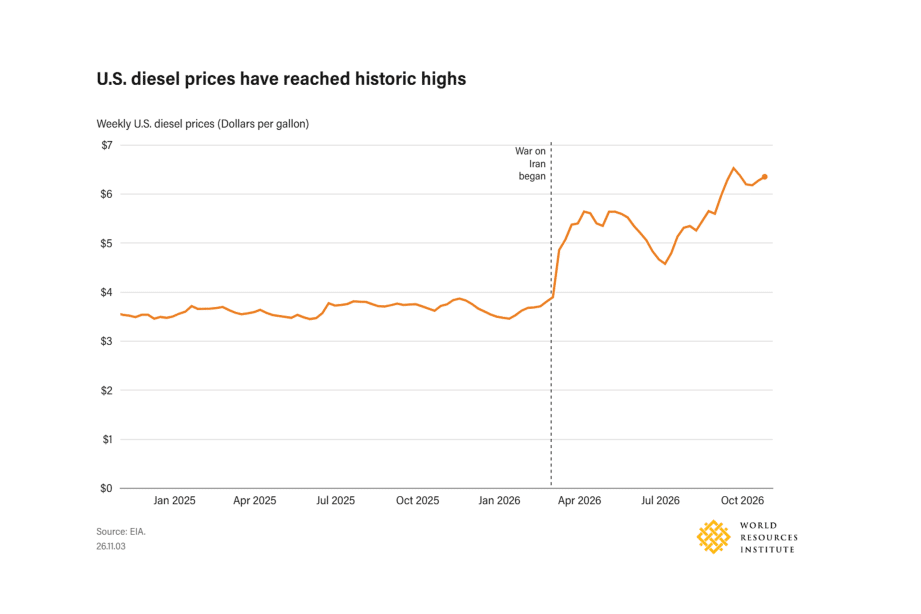
Diesel prices climbed above $6 per gallon for the first time on record in September. Before the war in Iran began last March, national average diesel prices remained below $3.50 per gallon. Prices exceeded $5 per gallon during all but four weeks following the start of the conflict.
Electric school bus operating costs also increased, but at a considerably slower rate. The average cost of electricity to operate an electric school bus rose 12% over the past year, compared with the 35% increase for diesel buses. Greater energy efficiency also makes electric buses less expensive to power.
More than 8,600 electric school buses now operate across the United States, approximately 12 times the number in service five years ago. Their lower fueling and operating costs provide school districts with greater protection against volatile petroleum prices.
Although electric school buses generally cost more to purchase than diesel models, their lower operating expenses narrow the total cost of ownership gap. Inflation-adjusted prices for the most common electric school bus models declined over the past five years, while diesel bus purchase prices increased.
Government funding and state incentive programs remain important for helping schools, particularly under-resourced districts, overcome higher initial purchase costs.
With diesel prices continuing to pressure school budgets, electrification offers districts an opportunity to reduce operating expenses, stabilize transportation costs, and improve air quality for students and communities.
Hingham Public Schools Deploys 13 Electric School Buses, Electrifying Nearly Half Its Fleet
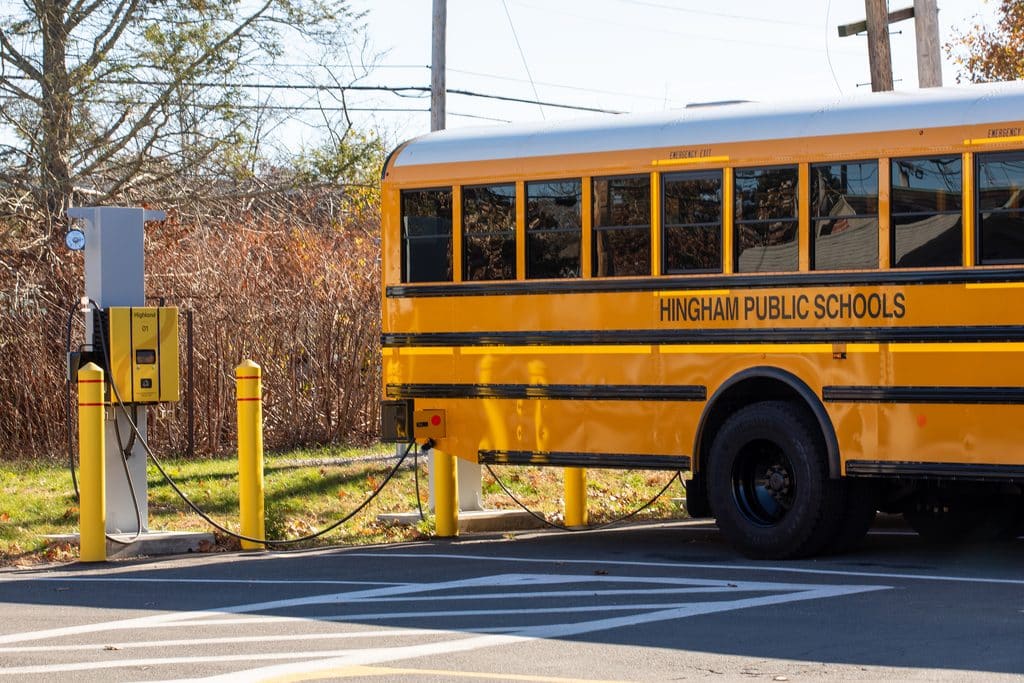
Hingham Public Schools in Massachusetts celebrated the deployment of 13 electric school buses and 13 charging stations during a ribbon-cutting ceremony on November 12, 2026. The project, developed in partnership with Highland Electric Fleets, brings the district close to electrifying half of its school bus fleet.
The deployment includes 13 Type C electric school buses manufactured by IC Bus and 13 chargers supplied by Zerova. The expansion adds 10 buses to the three originally announced in 2025.
Hingham Public Schools Superintendent Kathryn Roberts said the additional electric buses align with the Town of Hingham’s Climate Action Plan and the district’s goals for student health, safety, and well-being. Students, employees, and community members have responded positively to the vehicles, which have operated smoothly while supporting the district’s net-zero objectives.
Highland Electric Fleets, North America’s leading Electrification-as-a-Service (EaaS) provider, supplied the buses and charging infrastructure through its partnership with the district.
Other project partners include Hingham Municipal Lighting Plant (HMLP), which coordinated utility requirements; NECGroup, which handled electrical construction; and DeVivo, the local bus dealer that supplied the vehicles.
Matt Stanberry, Highland Electric Fleets’ Senior Vice President of Market Development, highlighted the project’s potential health benefits. He cited research indicating that replacing just five diesel school buses with electric models can reduce pediatric asthma risk for approximately 1,500 students. He also pointed to Hingham’s progress as an example of how local partnerships and planning can accelerate school transportation electrification.
Hingham Public Schools is a PreK-12 district in Hingham, Massachusetts, serving approximately 3,700 students. The district operates four elementary schools, including two offering preschool and pre-K programs, one middle school serving grades 6-8, and one high school serving grades 9-12.
EVinfo.net’s Take: Why Electric School Buses Are a Smart Investment
Electric school buses offer significant benefits for students, schools, communities, and the environment. Replacing diesel-powered buses with battery-electric models reduces harmful tailpipe emissions, improves air quality around schools, and helps protect children from exposure to pollutants associated with respiratory problems and asthma.
Electric buses also provide quieter, smoother rides without the engine noise, vibration, and exhaust fumes of diesel vehicles. These improvements create a more comfortable transportation experience for students while reducing noise pollution in residential neighborhoods.
Lower operating costs provide another compelling reason to electrify school bus fleets. Electricity generally costs less than diesel fuel per mile, while electric drivetrains require less routine maintenance because they have fewer moving parts and no engine oil, exhaust systems, or conventional transmissions. Over the vehicles’ operating lifetimes, these savings can help school districts manage transportation budgets.
Electric school buses can also support renewable energy adoption. When charged with solar-generated electricity or other renewable power, they further reduce transportation-related emissions. Their large batteries also create opportunities for vehicle-to-grid (V2G) technology, allowing buses to send stored electricity back to buildings or the electrical grid when needed.
With predictable daily routes, overnight charging, and long periods parked between school days, school buses are particularly well suited to electrification. Investing in electric buses means healthier students, quieter communities, lower long-term operating expenses, and cleaner transportation for future generations.

Electric Vehicle Marketing Consultant, Writer and Editor. Publisher EVinfo.net.
Services