Honda Announces $3 Billion U.S. Investment to Expand Hybrid Production
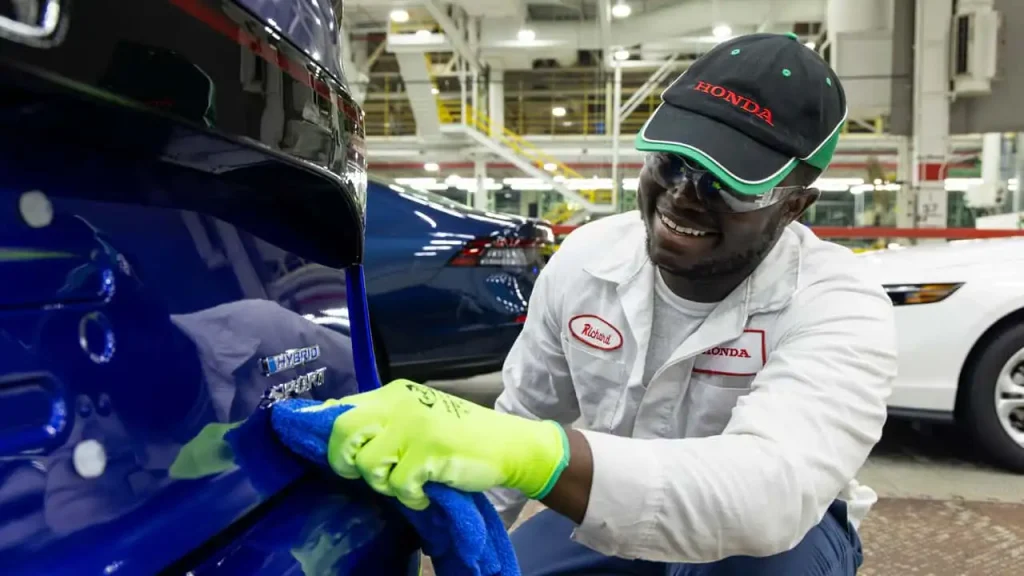
On November 9, 2026, Honda announced a $3 billion investment in a new Ohio automotive plant and upgrades to manufacturing facilities in Ohio, Alabama, and Georgia. The expansion will create more than 2,000 American jobs, add annual production capacity for 240,000 vehicles, and increase Honda’s total U.S. automotive production capacity to approximately 1.3 million vehicles.
The new Ohio plant is scheduled to begin production in 2029 and will build hybrid, gasoline-powered, and potentially battery-electric vehicles. Honda is also expanding engine and hybrid system production, including a new V6 hybrid engine in Alabama and next-generation four-cylinder Atkinson-cycle engines in Ohio.
Honda plans to increase Ohio hybrid powertrain production capacity by 250% while adding next-generation hybrid system manufacturing in Georgia. Additional investments in Ontario will support future hybrid and gasoline-powered vehicle production.
The expansion supports Honda’s May 2026 announcement of plans to introduce 15 new Honda and Acura hybrid models globally by 2030, with North America expected to be a primary market.
Honda expects the combined investments to increase North American automotive production capacity to approximately 1.9 million vehicles annually. Nearly 99% of Honda and Acura vehicles sold in the United States in 2025 were manufactured in North America.
The investments reinforce Honda’s commitment to domestic manufacturing while positioning the company to meet changing consumer demand for hybrid and other electrified vehicles.
EVinfo.net’s Take: Honda Retreats From Major EV Plans, Pivots to Hybrids Amid U.S. Policy Blunders
Honda’s cancellation of its planned 0 Series electric vehicle lineup, including the Acura RSX, Honda 0 Series Saloon, and Honda 0 Series SUV, marked a major retreat from its ambitious U.S. electrification strategy. The vehicles were expected to launch from a new EV manufacturing hub in Ohio, but mounting financial losses and changing market conditions caused by federal blunders led the automaker to scrap the entire project. Honda subsequently projected approximately $9 billion in financial losses associated with its EV strategy, marking its first annual loss in nearly 70 years.
Honda is now shifting its U.S. strategy toward ultra-efficient hybrid vehicles, with multiple new models under development and initial debuts expected in 2028.
The company’s retreat reflects a broader industry reaction to unfavorable federal policy changes in 2025 and 2026. Eliminating federal consumer EV tax credits worth up to $7,500 for new vehicles and $4,000 for used EVs made electric vehicles less affordable. Weakened emissions and fuel economy standards reduced regulatory pressure to expand EV offerings, while frozen NEVI funding delayed highway charging projects.
Reckless tariffs on imported batteries, components, and critical minerals increased manufacturing costs. Federal challenges to state emissions regulations, particularly California’s zero-emission vehicle standards, added further uncertainty. Restrictions on manufacturing incentives also contributed to delayed and canceled domestic battery and EV investments.
The Big Three automakers overreacted to these policy changes, cutting back EV programs and collectively absorbing an estimated $52.1 billion in losses from their EV pivot.
Meanwhile, China continues strengthening its global position. The International Energy Agency reported that China accounted for nearly 75% of global electric car production and more than 80% of battery cell production in 2025.
Congress Has an Opportunity to Restore U.S. EV Competitiveness
The exciting new congressional majority will have an opportunity to reverse damaging, unpredictable and foolish federal policies and restore smart, predictable support for EV purchases, domestic battery manufacturing, charging infrastructure, and tighter emissions standards.
The consequences extend beyond vehicle sales. Electric vehicle manufacturing, battery technology, renewable energy, and charging infrastructure represent important economic and industrial opportunities.
American automakers need consistent policies that encourage long-term investment rather than abrupt changes that undermine business confidence. The global automotive industry is moving toward electrification, and the United States risks surrendering additional ground to China unless policymakers strengthen support for domestic EV innovation and manufacturing.
The choice is increasingly clear: America can compete for leadership in the electric transportation economy or allow international competitors to capture more of the industry’s growth.
Hybrids Mostly Unnecesssary, BEVs the Best Choice
The bad part about growing hybrid popularity in America is most drivers don’t need them. The biggest remaining barrier is education. Americans facing high gasoline prices need to know that they have alternatives, and BEVs should be main part of that conversation. The technology is ready. The challenge is helping more drivers understand it and know that BEVs are easier to adopt today than ever before.

Electric Vehicle Marketing Consultant, Writer and Editor. Publisher EVinfo.net.
Services