IEA: Middle East Energy Crisis Could Permanently Reshape Global Energy Markets
The International Energy Agency (IEA) warned in its November 19, 2026, World Energy Outlook that the unprecedented energy supply shock caused by the Middle East conflict and disruptions to shipping through the Strait of Hormuz could permanently reshape global energy markets, government policies and investment priorities.
The crisis is exposing the risks of dependence on concentrated energy supplies and vulnerable shipping routes. IEA Executive Director Fatih Birol said the longer the crisis continues, the deeper its economic consequences will become, adding that there is no credible pathway for the global energy system to return to its previous condition.
The report identifies several emerging priorities among governments: diversifying energy supplies and trade routes, increasing reliance on domestically available resources, strengthening technology supply chains and accelerating electrification.
Renewable energy, particularly solar power, and nuclear energy are expected to benefit significantly from this shift. Energy efficiency and biofuels could also gain momentum, although some Asian countries may extend their reliance on domestically available coal.
Electricity demand is growing faster than overall energy consumption. Since 2019, global electricity demand increased twice as fast as total energy demand, driven by electric vehicles, industrial motors, air conditioning, heat pumps, appliances and data centers. The IEA expects electricity demand to accelerate further through 2035.
Volatile petroleum prices are also strengthening the economic case for electrification. Countries affected by the crisis are reporting increased electric vehicle sales alongside greater demand for solar panels and batteries.
The IEA also examined a prolonged Strait of Hormuz disruption scenario. Oil shipments through the waterway, which handled approximately 20 million barrels daily before the crisis, could decline to 8.5 million barrels per day by 2030 and below 2 million by 2035 under this scenario.
Birol emphasized that energy security and clean energy transitions are increasingly aligned. Governments must diversify supplies without simply replacing one dependency with another while building more secure, affordable and sustainable energy systems.
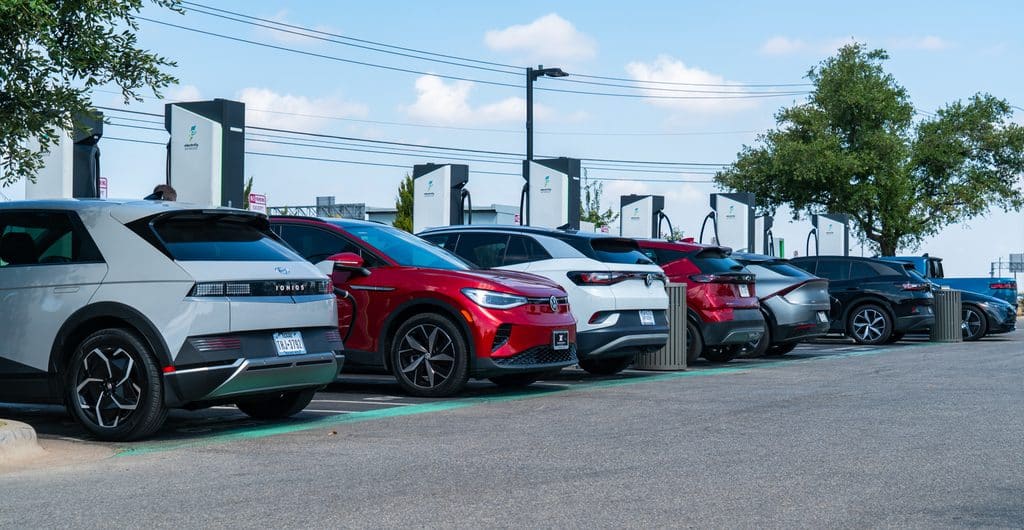
Global EV Adoption Advances as Electric Vehicles Displace More Oil
Global electric vehicle adoption continued to expand in 2026, with EVs accounting for 26.4% of new car registrations worldwide so far this year, according to Ember’s EV Sales Data Tracker, updated November 18. The tracker covers 56 countries representing more than 90% of global EV sales in 2025 and includes both battery-electric vehicles (BEVs) and plug-in hybrids (PHEVs).
An estimated 92.5 million electric cars were on the road worldwide as of October 2026, including 62.9 million BEVs and 29.6 million PHEVs. Together, these vehicles displaced approximately 1.47 million barrels of oil per day, equivalent to $148 million at an average Brent price of $101 per barrel. Their combined electricity demand reached 660 GWh. BEVs account for most of the oil displacement because PHEVs continue to rely substantially on gasoline engines.
Norway led the latest 12-month sales rankings, with BEVs representing 97.9% of new registrations. Hong Kong followed at 89.7%, Denmark at 81.3%, Nepal at 75.2% and Singapore at 60.2%. China recorded a 39.1% BEV share and 7.6 million registrations, while the United States reached 5.96%, with approximately 957,000 new BEVs registered.
The figures show how quickly electric vehicles are reshaping transportation and reducing dependence on petroleum. Countries leading adoption are gaining experience, expanding their EV markets and cutting exposure to volatile oil prices. The United States, meanwhile, remains well behind numerous global markets in BEV adoption.
EVs are not simply a cleaner alternative to gasoline-powered cars. They are an increasingly important tool for reducing oil consumption, strengthening energy security and building a more competitive transportation industry. Accelerating adoption, supported by reliable charging infrastructure and domestic manufacturing, would help the United States capture more of these economic and strategic benefits.
Electrification is Transforming the Global Energy System, Bringing Environmental Benefits and Cost Savings
Electrification is the transition from burning fossil fuels to using electricity to power transportation, buildings and industry. Examples include replacing gasoline and diesel vehicles with electric vehicles (EVs) and natural gas boilers with electric heat pumps.
Electrification is fundamentally transforming the global energy system. It offers one of the most effective ways to reduce fossil fuel dependence, strengthen energy security and cut greenhouse gas emissions. Electric technologies such as EVs and heat pumps can require three to four times less energy to perform the same work as their fossil-fuel counterparts.
Electrifying transportation, heating and industrial operations also reduces dependence on expensive and often volatile fossil fuel imports. Approximately three-quarters of the world’s population live in countries that import more fossil fuels than they export. Domestic electricity generated from renewable sources, particularly solar and wind, offers countries a way to meet more of their energy needs using affordable, locally available resources.
As electric vehicles, industrial electric furnaces and residential heat pumps become more widely adopted, manufacturing scales up, technology improves and costs decline. Electrification is also opening new markets in heavy-duty transportation, industrial heating and other energy-intensive sectors.
Countries that accelerate electrification will gain important advantages in energy independence, economic resilience, manufacturing competitiveness and long-term industrial growth.

Electric Vehicle Marketing Consultant, Writer and Editor. Publisher EVinfo.net.
Services