Cadillac Is Now the #1 Selling Luxury EV Brand in the U.S.
On July 22, 2025, GM released its 2025 second-quarter results, revealing some shocking findings for its rapidly increasing electric vehicle (EV) sales in the US, as well as its long-term plan to keep boosting its EV share in the US and around the world.
GM CEO Mary Barra made some momentous announcements about GM’s EV strategy in GM’s Q2 2025 Letter to Shareholders, also released on July 22.
“We are also growing in EVs because people love the design, performance, range, and value we deliver across our strategic portfolio, from the affordable Equinox EV to the handcrafted Cadillac CELESTIQ. Five years ago, the EV market essentially had one player. Today, there are 30, and Chevrolet became the #2 EV brand in the second quarter, while Cadillac became the #5 EV brand overall and the luxury EV leader,” said Barra.
Barra continued: “Despite slower EV industry growth, we believe the long-term future is profitable electric vehicle production, and this continues to be our north star. As we adjust to changing demand, we will prioritize our customers, brands, and a flexible manufacturing footprint, and leverage our domestic battery investments and other profit-improvement plans.”
General Motors (GM) is charging ahead in the electric vehicle (EV) space, defying broader EV industry sales growth slowdowns and establishing itself as a clear leader in the U.S. EV market. In Q2 2025, GM reported a 111% year-over-year (YoY) increase in EV sales, securing 16% of total U.S. EV market share, and positioning Chevrolet and Cadillac among the top five EV brands nationally. As the company balances its growing EV portfolio with continued strength in internal combustion engine (ICE) vehicles, GM is proving that flexibility, innovation, and scale are central to its long-term strategy.
Strong Momentum in EV Sales
GM’s EV sales performance is outpacing the broader industry, with highlights across its flagship brands. In the first half of 2025, EV sales surged 134%, led by record-breaking numbers for GMC electric vehicles, particularly the Hummer EV and the newly introduced Sierra EV. In Q2 alone, Chevrolet’s EV sales increased by 146% YoY, driven in large part by the strong market reception of the Equinox EV, which is now the third-best selling EV year-to-date in the U.S.
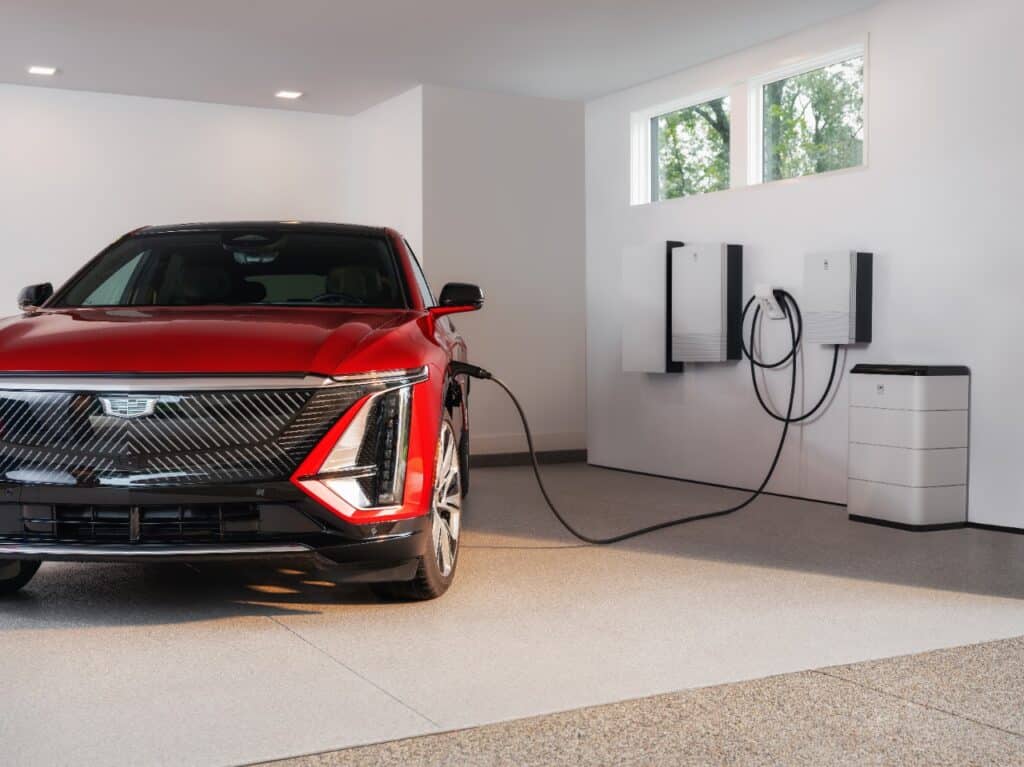
Meanwhile, Cadillac has emerged as the top luxury EV brand in the country, with EVs making up more than 25% of total Cadillac sales in Q2. Cadillac now ranks as the #5 EV brand overall, ahead of many legacy and startup competitors, and showcases GM’s ability to balance volume and premium segments within its EV strategy.
U.S. Manufacturing Investments to Power Future Growth
To meet surging demand and better align production with evolving consumer preferences, GM is investing heavily in its domestic manufacturing capabilities. In June, the company announced $4 billion in new investments through 2027 to expand U.S. assembly plant capacity by 300,000 units, with a focus on high-margin pickups, SUVs, and crossovers.
Two plants in particular will see notable transformations:
Fairfax Assembly in Kansas will build the ICE Chevrolet Equinox while continuing production of the Chevrolet Bolt EV, one of GM’s most affordable electric offerings.
Spring Hill Assembly in Tennessee will produce the ICE Chevrolet Blazer and ICE Cadillac XT5, while maintaining EV production for the LYRIQ and VISTIQ, further integrating mixed drivetrain manufacturing under one roof.
This dual production strategy reflects GM’s commitment to a flexible manufacturing footprint, ensuring it can adapt to shifts in EV adoption while maintaining its ICE customer base.
Batteries: Next-Gen Chemistry and Strategic Partnerships
GM’s EV momentum is further strengthened by its expanded partnership with LG, a cornerstone of the company’s battery supply chain. Together, GM and LG will move beyond the current Ultium battery platform to develop prismatic battery cells that incorporate both low-cost lithium iron phosphate (LFP) and lithium manganese-rich (LMR) chemistries, starting in 2027.
These next-generation chemistries are designed to lower battery costs, extend vehicle range, and reduce reliance on scarce or expensive materials like nickel and cobalt, critical steps toward profitable, mass-market EVs.
Just outside Nashville, in the gently rolling hills of Spring Hill, Tennessee, American innovation is powering a bold new chapter in transportation. At the heart of this transformation is Ultium Cells, General Motors’ joint venture with LG Energy Solution. With cutting-edge technology and a workforce committed to excellence, the Spring Hill facility is proving that the United States can lead the world in next-generation EV battery manufacturing.
Backed by a $2.3 billion investment announced in 2021, the Spring Hill site represents more than just a factory—it’s a cornerstone of GM’s long-term electrification strategy and a symbol of American industrial resurgence. Together with the company’s Warren, Ohio facility, Ultium Cells now gives GM the largest OEM battery cell manufacturing capacity in the U.S.
By securing diverse battery supply agreements and investing in new chemistries, GM is positioning itself to lead not only in vehicle sales but also in the global battery innovation race, a key differentiator in an increasingly competitive market.

Global Growth: Strong Gains in China
GM’s EV success isn’t limited to the United States. The company is also gaining ground in China, historically the world’s largest EV market, where it reported two consecutive quarters of YoY growth in its new energy vehicle sales. In Q2 2025, GM gained more market share than any other foreign automaker and recorded positive equity income from its Chinese joint ventures.
These results are particularly notable given the ongoing competition from domestic Chinese EV startups and the increasing complexity of trade and technology regulations. GM’s performance reflects its ability to tailor offerings for international markets and stay competitive in the face of rapid market evolution.
Balancing ICE and EV: A Profitable Transition
While EVs represent GM’s long-term direction, the company is strategically embracing a dual-path approach to meet current consumer demand and maximize profitability. ICE vehicles, especially light-duty pickups and full-size SUVs, continue to generate strong cash flow. GM believes this segment has a longer-than-expected runway, and it’s investing accordingly to satisfy unmet demand.
As Barra emphasized, GM’s strategy is rooted in customer prioritization, agile manufacturing, and consistent capital discipline. By keeping overall capital expenditures between $10–12 billion, GM aims to deliver strong returns while preparing for an all-electric future.
EV Profitability, Tech, and Innovation
As GM navigates a dynamic auto market, it remains laser-focused on achieving EV profitability at scale. The company is implementing various profit-improvement plans, including reducing battery and component costs through chemistry innovation, enhancing operational efficiencies at the plant level, and expanding software and autonomous vehicle development.
Innovation remains central to GM’s vision. The company is investing in American battery manufacturing, autonomous driving technology, and software-defined vehicles, critical growth areas for the next generation of mobility.
General Motors is proving that legacy automakers can lead the electric transition, not just follow it. With record-breaking EV sales, aggressive U.S. manufacturing investments, global momentum, and a balanced product portfolio, GM is accelerating into a future of profitable electric mobility.

Electric Vehicle Marketing Consultant, Writer and Editor. Publisher EVinfo.net.
Services