Third-Generation LEAF Set to Be America’s Cheapest EV, Priced Lower Than 2011
In July, GM’s Chevrolet division teased its 2027 Bolt, featuring exciting updates and a NACS plug. However, details were few. Will the upcoming Bolt be lower-priced than Nissan’s new LEAF? It’s hard to say right now which EV’s price will be lower. Nissan released compelling news about its low-priced, third-generation LEAF EV on August 19, 2025.
The 2026 Nissan LEAF is arriving this fall with a bold new design, enhanced technology, and a price tag that makes it the most affordable new EV in America. With a starting MSRP of just $29,990 for the S+ grade, the new LEAF undercuts every competitor while delivering more range, features, and value than ever before.
Nissan has long championed accessible electric mobility, and the new LEAF continues that mission. In fact, its starting price is lower than it was back in 2011, when the original LEAF launched at $32,780. The 2026 SV+ grade also starts at an attractive $34,230, nearly $2,000 less than the outgoing 2025 model, while adding dramatically more standard equipment and extended driving range.
With a 303-mile range per charge, NACS (North American Charging Standard) compatibility, and Plug & Charge functionality, drivers will enjoy effortless charging across the U.S. Whether commuting or road-tripping, charging has never been easier.
Design-wise, the LEAF brings a fresh, minimalist aesthetic with sleek surfacing, motorized flush door handles, and a flowing roofline accented by a Z-inspired katana blade element. A segment-first dimming panoramic roof adds a futuristic touch, shifting from opaque to transparent at the push of a button. Inside, the cabin is airy and spacious, with a flat open floor, dual digital displays (12.3” standard; 14.3” on higher trims), and redesigned seating for improved comfort and rear legroom.
On the tech front, the LEAF introduces Google built-in with Maps and Intelligent Route Planner, plus class-exclusive camera features like the Intelligent Around View Monitor, Invisible Hood View, and Front Wide View, making it easier and safer to drive in any environment.
The all-new 2026 Nissan LEAF proves that cutting-edge EV technology doesn’t have to come with a luxury price tag. By delivering more for less, Nissan is making it clear: electric mobility is for everyone.
For full details on all features and options, see the 2026 Nissan LEAF specifications sheet.

“The LEAF really kicked off the mainstream EV market when it launched 15 years ago, and Nissan’s still committed to making electric driving accessible to all,” said Vinay Shahani, senior vice president of U.S. Marketing and Sales at Nissan. “We’ve stuck to our mission of engineering EVs that are affordable but packed with value. That’s how we’ve kept the LEAF’s price steady over three generations — all while giving owners more style, more technology, more features and a vastly improved driving range over the original 2011 model.”
Nissan’s Proud History of EV Innovation
When the Nissan LEAF first rolled onto U.S. roads in 2010, the electric vehicle market was still little more than a vision. EVs were considered experimental, expensive, and impractical for everyday drivers. The LEAF changed that. It wasn’t just another concept—it was the world’s first mass-market all-electric car, and it redefined what driving electric could mean for millions.
The LEAF proved that EVs could be more than futuristic novelties. With zero tailpipe emissions, a smooth and quiet ride, and a price point that made it accessible to mainstream buyers, it brought electric mobility out of niche status and into neighborhoods across the globe. By 2024, more than 650,000 LEAFs had been sold worldwide, making it one of the best-selling EVs of all time.
Its influence didn’t stop at sales. The LEAF pushed the industry to take EVs seriously. Automakers that once dismissed electrification suddenly began investing billions into battery technology, charging networks, and new EV lineups. Governments around the world also accelerated incentives and infrastructure plans, inspired in part by the LEAF’s early success.
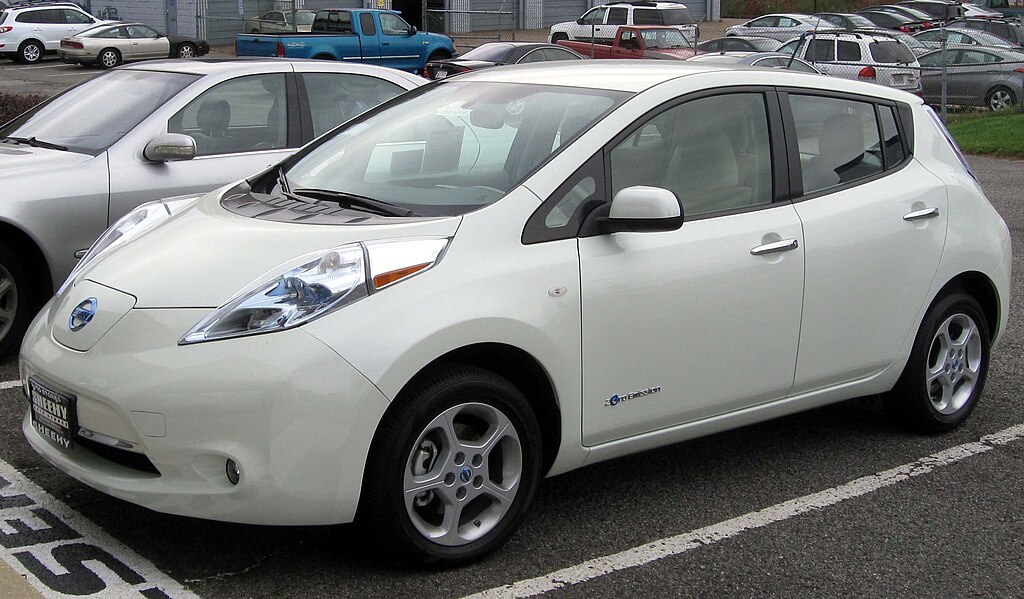
Nissan continued to evolve the model with longer ranges, smarter technology, and better design, proving that EVs could keep up with the rapid pace of consumer expectations. Features like regenerative braking, intelligent safety systems, and practical hatchback utility helped the LEAF become not just a pioneer but a benchmark for affordable electric cars.
Now, as the 2026 LEAF prepares to launch with over 300 miles of range and the lowest MSRP of any new EV in America, it’s clear the car’s legacy isn’t just in what it achieved—it’s in what it started. The LEAF showed the world that electric mobility is possible, practical, and here to stay.
Nissan’s Financial Troubles: Challenges Behind the Wheel
Nissan has long been recognized as one of the world’s most innovative automakers, producing iconic vehicles like the Z sports car and pioneering the all-electric LEAF. But in recent years, the company has faced significant financial headwinds that have tested its resilience.
The struggles began well before the pandemic. Nissan’s global sales started to decline in the late 2010s, weighed down by an aging product lineup, aggressive discounting, and an overreliance on fleet sales. The 2018 arrest of former chairman Carlos Ghosn added further instability, creating leadership turmoil and damaging the brand’s reputation internationally.
When COVID-19 disrupted supply chains and slowed consumer demand, Nissan’s challenges deepened. The company posted billions in losses between 2019 and 2021, forcing cost-cutting measures, layoffs, and plant restructuring. At its lowest point, Nissan was operating at roughly half its former sales volume.
To recover, Nissan launched a turnaround plan known as Nissan NEXT in 2020, focusing on streamlining operations, reducing capacity, and renewing its model lineup. Vehicles like the Ariya electric SUV and the redesigned Z aimed to restore excitement around the brand. Still, competition in the EV space and shifts in consumer demand continue to put pressure on profitability.
EVinfo.net wrote in December 2024 that Nissan reported a 90% drop in profits compared to 2023, a dramatic decline that underscores the challenges it faces in an increasingly competitive and rapidly evolving market, as it rapidly transitions to EVs. Nissan’s global sales fell 3.8% to 1.59 million vehicles for the first half of the 2024 financial year, largely due to a 14.3% drop in China. In response to this downturn, Nissan announced significant restructuring measures. The automaker planned at the time to cut 9,000 jobs globally and reduce its manufacturing output by 20%.
Despite these struggles, Nissan is not standing still. The company is betting heavily on electrification, battery innovation, and new models to regain momentum. Its recent announcement of the 2026 Nissan LEAF, priced lower than the original 2011 model while delivering over 300 miles of range, signals a push to reclaim leadership in affordable EVs.
Nissan’s financial troubles highlight the challenges of balancing tradition, innovation, and global competition. The road ahead is uncertain, but with bold moves in electrification, the automaker is working to turn a difficult chapter into a comeback story.

Electric Vehicle Marketing Consultant, Writer and Editor. Publisher EVinfo.net.
Services