Chevy Teases 2027 Bolt, Featuring Updates, NACS Plug
This week, GM teased Chevrolet’s long-awaited next-generation all-electric Bolt, a popular EV that was crucial to the great advances so far in EV adoption in the United States. The Bolt led the new low-priced EV sector for several years, before the plug was pulled for the 2024 model year.
After a controversial exit in 2023 that sparked widespread backlash, the Chevrolet Bolt is officially on its way back. General Motors confirmed via social media that the beloved compact EV will return for the 2027 model year—and it’s coming back stronger, smarter, and finally profitable.

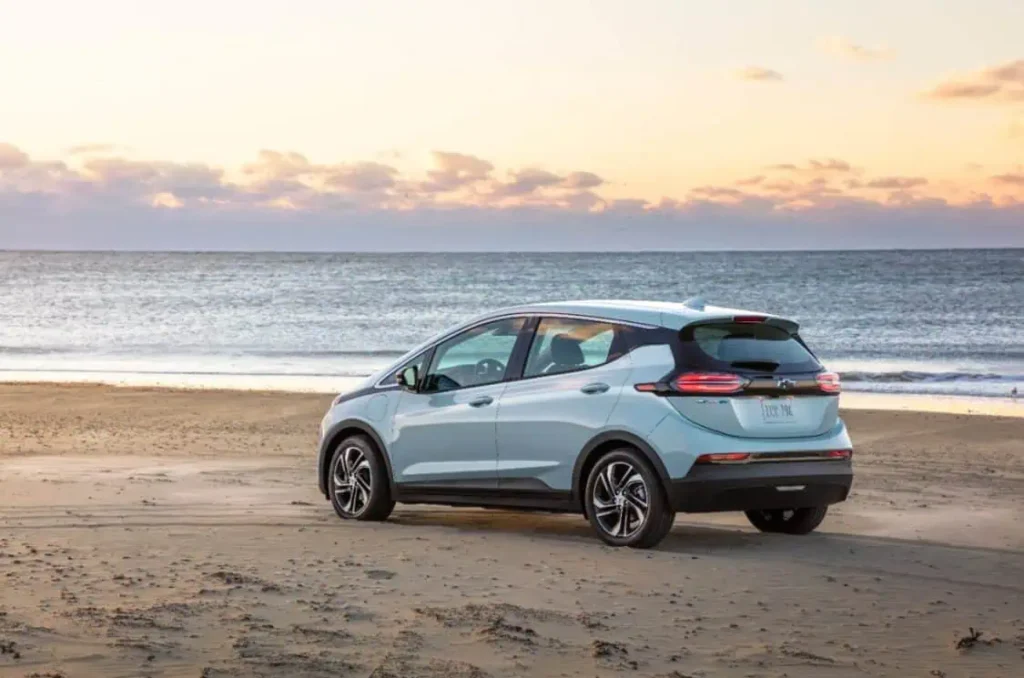
“You asked, we listened. The Chevy Bolt is back and better than ever. More this fall,” GM declared on Chevy’s Instagram, alongside the first images of the redesigned Bolt. While the model’s revival had already been announced, this marks the public’s first look at what’s to come. The teasers reveal a refreshed front fascia, a sleek new taillight setup, and, most notably, the inclusion of the North American Charging Standard (NACS) connector. It’s a major shift, but one aligned with the broader industry move toward interoperability and faster charging. The Bolt will follow GM’s other NACS-adopting EVs like the Cadillac Lyriq and Chevrolet Blazer EV.
As previously confirmed, the new Bolt will be sold exclusively as the larger EUV variant, meaning the smaller hatchback is likely gone for good. Still, GM appears determined to retain the Bolt’s original appeal: a compact, budget-friendly EV that doesn’t compromise on tech or utility. At a time when many EV buyers are concerned about affordability—especially with the expiration of federal tax credits this September, the Bolt’s return couldn’t be better timed.

Under the hood, GM is upgrading the Bolt with a lithium-iron-phosphate (LFP) battery pack, chosen for its lower cost and longer life span. This tech has already made its way into GM’s newer Ultium-based models and signals that the Bolt won’t be left behind when it comes to modern EV performance. It’s also the key to making the new Bolt profitable, a first for the nameplate, and an important part of GM’s bold EV plan and its success.
No official pricing is available yet, but insiders expect the 2027 Bolt to come in below $30,000, potentially making it one of the most accessible EVs in America when it launches.

EVinfo.net’s Take: Why Low-Cost EVs Are Vital for America’s Electric Transportation Future
EVinfo.net’s main focus is affordable EVs for the American market. EV adoption is our passion, and lower prices will get America going on electric cars. As the US is woefully behind China and Europe in EV adoption, many more affordable EV models are needed to finally send the US into long-overdue mass EV adoption. This will provide cleaner air for America’s residents, as well as lower ownership costs for its drivers, as EVs are more eco friendly and cost effective than gas or hybrid vehicles.
As the electric vehicle (EV) revolution accelerates, it’s easy to focus on luxury models with jaw-dropping performance and six-figure price tags. But for America to truly embrace an electric future, affordable EVs aren’t just a nice-to-have, they’re an absolute necessity.
The U.S. is a car-dependent nation. Millions of Americans rely on personal vehicles for daily life, often in regions where public transit is limited or nonexistent. Yet many of today’s EVs remain out of financial reach for the average driver. That’s where low-cost EVs come in. They provide the crucial on-ramp to electrification for working families, first-time buyers, students, and commuters who need reliable, efficient, and economical transportation.
Without affordable EV options, the market risks becoming skewed toward the affluent, slowing down emissions reductions and cutting off vast portions of the population from the benefits of electric driving. These benefits include lower fueling and maintenance costs, cleaner air, and energy independence. The electric transition needs to be inclusive, or it simply won’t be effective.
Low-cost EVs also play a pivotal role in grid stability and domestic manufacturing. As more people adopt EVs, especially models with smaller batteries like the upcoming new next-gen Chevrolet Bolt, they can help reduce strain on the power grid and make better use of renewable energy. And as automakers shift to cost-effective battery chemistries like lithium iron phosphate (LFP), they create new opportunities to manufacture batteries domestically, support American jobs, and reduce reliance on unstable global supply chains.
Ultimately, EV adoption must reflect the full spectrum of American drivers. Low-cost EVs help close the affordability gap, expand access to clean technology, and ensure that the road to a zero-emission future leaves no one behind.

Electric Vehicle Marketing Consultant, Writer and Editor. Publisher EVinfo.net.
Services