Secrets Revealed Inside Ford’s Skunkworks EV Program
On December 11, 2025, the New York Times (NYT) released some of the interesting, little-known details behind Ford’s secret “skunkworks” electric vehicle (EV) program.
The American auto industry is entering a period of disruption unmatched since the early 1900s, when Henry Ford’s Model T and the moving assembly line overturned long-established industries and reshaped the economy. Just as the horse drawn buggy faded into history, today’s shift toward electrification is poised to redefine manufacturing, employment, and global competitiveness. More than four million Americans depend on the auto ecosystem for their livelihoods, and the stakes could not be higher.
At the center of this transition is a growing recognition that the United States must out innovate its rivals, particularly China, which dominates the global electric vehicle supply chain. The best path forward is not simply to catch up, but to leapfrog and to build better batteries, more efficient electric motors, and next generation technologies, and then keep doing it again and again. That responsibility rests largely with leaders like Doug Field, a veteran of Tesla and Segway who now spearheads advanced product development at Ford. He and teams like his are working to infuse Detroit with Silicon Valley’s speed, discipline, and innovation culture.
Yet as Western automakers push toward this future, the challenge grows more daunting. Many of their most promising and affordable electric models remain years from market. Even Mr. Field’s first program is not expected to arrive until 2027. Every delay gives Chinese competitors more room to extend their lead.
Complicating matters further, the current U.S. administration has pulled back federal support for electric vehicles. Rollbacks of fuel efficiency rules and abrupt cuts to EV tax credits have cost automakers billions and forced them to reset production plans. Still, as global markets accelerate away from the combustion engine, executives acknowledge that abandoning EVs is not an option.
“Most of our sales are outside the U.S.,” Jim Farley, Ford’s chief executive and Mr. Field’s boss told the NYT, “and we are running into the Chinese.”
For the American auto industry, the race is now fully underway. The outcome will determine whether the country leads the next century of transportation or watches that future pass it by.

In 2021, after Apple abandoned its secretive effort to develop a driverless electric car, Doug Field left the technology company and took on what many viewed as an impossible assignment: helping to reinvent the American auto industry.
He returned to Ford Motor, where he had begun his career, determined to create electric vehicles capable of competing with fast rising Chinese manufacturers. These companies are rapidly gaining global market share and capturing consumers with affordable, high quality models. Ford, a company with more than a century of history, needed a bold new approach.
Mr. Field understood that Detroit’s traditional processes were not built for the speed and complexity of the electric age. To accelerate progress, he built something resembling an automotive start up: a confidential development lab outside Los Angeles, supported by a small office in Silicon Valley. He referred to the operation as a “skunk works”, a place where small, focused teams could innovate without constraint.
He recruited engineers and designers from Tesla, Rivian, Lucid, and emerging companies in batteries, electronics, and software. He offered them the type of creative autonomy typically associated with Silicon Valley rather than a legacy automaker.
To protect the work from internal bureaucracy, access was tightly controlled. Anyone not on the team was barred from entering the facility. There were no exceptions.
“They got to start over,” Mr. Field told NYT of Tesla, which was founded just over twenty years ago and effectively built the modern electric vehicle market. “We had to have a place inside of Ford with that opportunity.”
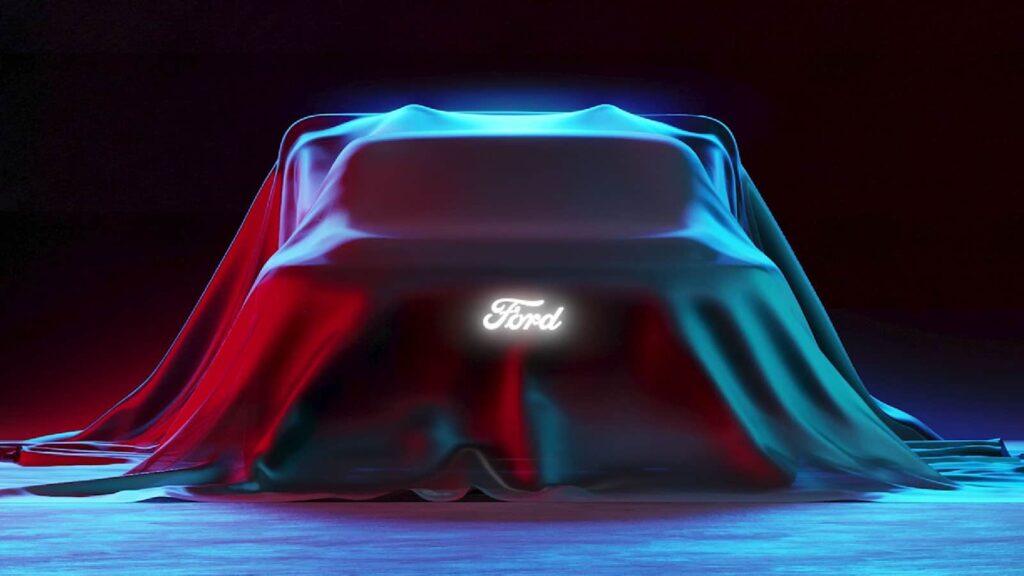
Substantial Opportunities Exist to Improve How Electric Vehicles Are Designed and Built
Western automakers may be under pressure, but they still have substantial opportunities to improve how electric vehicles are designed and built. A wave of ambitious entrepreneurs is working to seize that opportunity.
In the Boston area, AM Batteries is one of several young companies developing technology that could significantly reduce the cost of battery production. Instead of relying on the wet slurry used in most factories, AM’s equipment forms layers of lithium, nickel, and other materials using a dry powder. This process eliminates long drying stages, avoids toxic chemical byproducts, shortens the assembly line, and lowers manufacturing costs. If it scales successfully, it could make batteries, which remain the most expensive part of an electric vehicle, far more affordable.
“What keeps me awake at night is knowing that engineers in China and Japan are doing the same thing,” said Lie Shi, the company’s chief executive told NYT.
Backed by the venture capital arms of Toyota and Porsche, AM is one of many start-ups racing to push electric vehicle technology forward. Daqus Energy in Woburn, Massachusetts, is developing batteries made from abundant organic materials rather than costly metals such as lithium, nickel, and cobalt. Estes Energy Solutions in San Francisco is working on lighter battery cell packaging. Niron Magnetics in Minnesota is collaborating with Stellantis to create substitutes for the rare earth metals used in electric motors, reducing reliance on Chinese supply chains. The list continues to grow.
“There is a lot of room to run with these technologies,” Brian Potter, a structural engineer and author of “The Origins of Efficiency,” told NYT.
But even with a thriving start-up ecosystem, the responsibility ultimately falls on established automakers like Ford, which must shift from incremental change to fundamental reinvention. Doug Field’s California based team has designed a medium size pickup that embodies this shift. Its front and rear sections will be cast from molten aluminum in massive machines rather than welded and glued from hundreds of individual components.
The stakes could not be higher. “Any car company that doesn’t adapt will have trouble surviving,” Joachim Post, a senior executive at BMW, told NYT.
Move Fast or Get Run Over by the Chinese
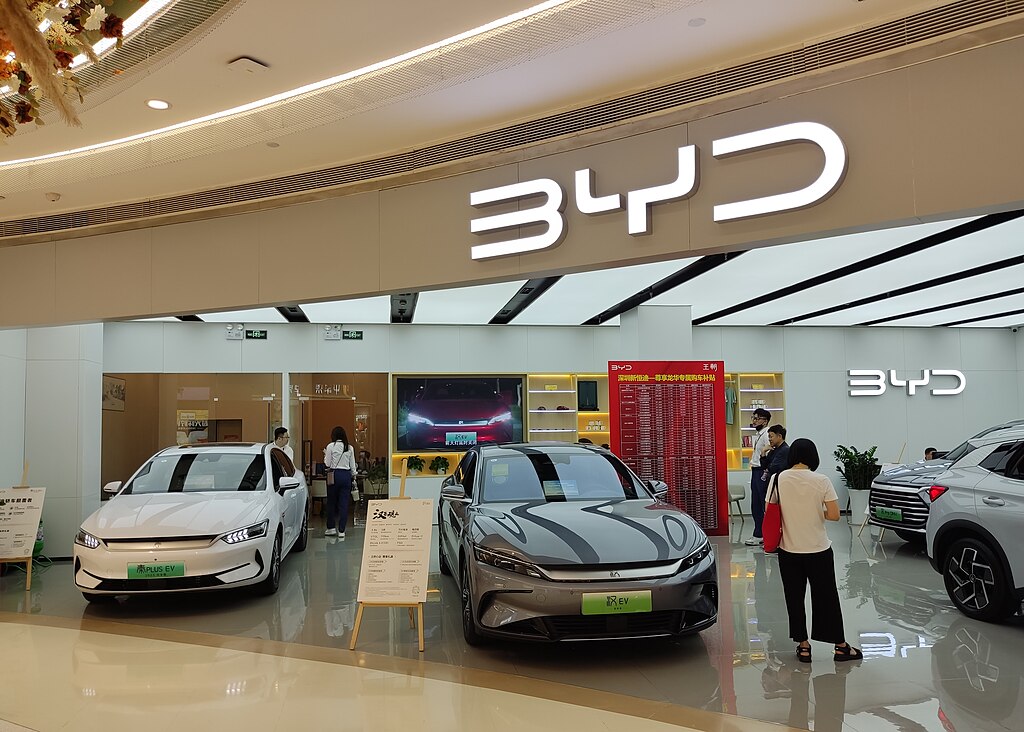
Chinese vehicles are effectively blocked from the United States by tariffs and other limits, but in global markets the competition is intense. Ford dealers in Bangkok, London, and Mexico City already face rival Chinese models that are high quality and low cost. If Ford and other American automakers cannot compete abroad, they risk shrinking into niche producers of large gasoline vehicles sold mainly in the United States. EVinfo.net reported recently on a UK dealership switching from Ford to BYD.
“I have 10,000 dealers around the world. Only 2,800 are in the U.S.,” said Jim Farley, Ford’s chief executive to NYT. “So you do the math. It is the biggest battle of my career.”
In Thailand, for instance, the Ford Everest gasoline sport utility vehicle seats seven and starts at 1.2 million baht, or about 37,700 dollars. The electric BYD M6 seats six and costs roughly 26,000 dollars.
His concerns are shared throughout the industry. Electric vehicles, including plug in hybrids, represent about 10 percent of new car sales in the United States. In Europe they account for nearly 30 percent, and in China they have already surpassed 50 percent.
American Innovation is Slipping Away
Innovative technologies could help save the U.S. auto industry, but only if they are developed and manufactured domestically. History shows how easily that opportunity can slip away. Lithium ion batteries were pioneered in laboratories in the United States, Britain, and Japan, yet today the world’s largest producer is CATL, a Chinese company founded in 2011.
“We have to break the cycle of invent here, scale there,” Gene Berdichevsky, chief executive of Sila Nanotechnologies, said to NYT. The company recently began producing a new silicon based anode material at its factory in Moses Lake, Washington. The material significantly increases the energy a battery can store, offering a path to longer range electric vehicles.
Start ups in the United States face steep challenges. The Chinese government provides long term financial and strategic support to its automakers and battery companies, treating the sector as a national priority. “The government is completely in bed with the local brands,” said Jim Farley of Ford.
U.S. innovators do receive government help, but the support often shifts with political cycles. Many companies must rely heavily on private capital, especially since Congress cut or eliminated several programs that were designed to accelerate domestic electric vehicle manufacturing.
Speed is another major disadvantage. Western automakers can take up to seven years to design a new vehicle and build an assembly line to manufacture it. Chinese manufacturers often accomplish the same in three years or less.
BMW is attempting to close this gap with its upcoming iX3 electric sport utility vehicle. To accelerate development, senior executives visited engineering teams every four weeks instead of requiring employees to travel to Munich for approvals. The company broke down traditional departmental boundaries, even tapping experts in foam design to develop new insulation for the battery pack to improve fire and crash resistance.
BMW engineers are especially proud of a panoramic digital display that spans the lower edge of the windshield, giving drivers navigation and key information without diverting their eyes from the road. The iX3 is expected to arrive in the United States in 2026 at a price of about 60,000 dollars, with a range of 400 miles and the ability to fast charge in 21 minutes.
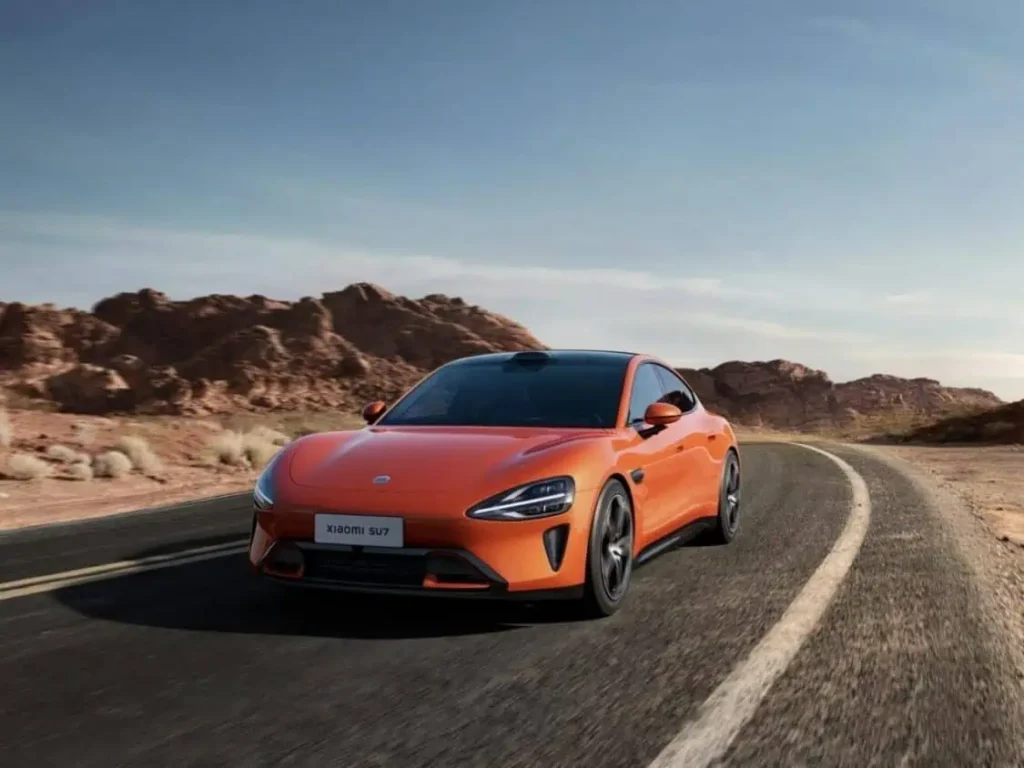
Yet staying ahead of China remains difficult. Xiaomi, the Beijing based smartphone and electric vehicle manufacturer, has already launched a model with a similar panoramic display. Some new BYD vehicles can recharge in less than 10 minutes at ultrafast stations the company is building across China.
At their secluded workspace in Long Beach, California, Doug Field’s Ford team, which included Alan Clarke, formerly responsible for new vehicle development at Tesla, discarded the traditional organizational structure. Vehicle designers worked directly alongside aerodynamics engineers. In most automakers, those groups sit in separate buildings and collaborate through layers of process. Here, they shared the same mission and the same space.
Ford’s decision to place this team far from its headquarters was unusual, but it reflects a broader trend. Other automakers, including Mercedes Benz, General Motors, and Honda, have also directed teams to pursue clean sheet designs that are free from legacy constraints.
U.S. automakers face additional structural challenges. Large gasoline powered vehicles like Ford’s F 150 pickup deliver high profits because they do not cost much more to produce than smaller cars, yet customers willingly pay a premium for them. That formula breaks down with electric vehicles. Batteries account for a substantial share of total cost, and larger vehicles require larger, more expensive packs.
“As they get bigger and less efficient, you have to put bigger and better batteries in them, and it does not scale the same way,” Mr. Field said to NYT.
Some analysts argue that it may already be too late for U.S. automakers to surpass China. Shay Natarajan, a partner at Mobility Impact Partners, believes American companies should consider partnerships with Chinese manufacturers to gain access to technology that is already proven and competitive.
“If I were leading any of the carmakers right now I would focus on partnering with the Chinese,” she said to NYT.
Others are more optimistic. Dan Cook, chief executive of Lyten, a San Jose battery company, points to the innovation culture that has given rise to breakthroughs in computing and microchips. Lyten is developing lithium sulfur batteries made from inexpensive and widely available U.S. materials. If scaled successfully, the technology could deliver lighter, cheaper batteries that do not depend on Chinese supply chains.
“Silicon Valley is here because of the freedom to innovate, and the freedom to think and make mistakes,” said Mr. Cook to NYT, who began his career at General Motors. “Getting a large company to produce high volume and high quality and still innovate,” he said, “would be a force to be reckoned with.”
Mr. Field’s challenge now is to combine Ford’s manufacturing depth with this spirit of experimentation. As the project nears production, he has gradually opened access to the once isolated skunk works. The team has added a satellite office in Dearborn, Michigan, close to Ford’s headquarters.
EVinfo.net’s Take: Now Is the Worst Time for America’s Government to Be Moving Backwards on EVs
The United States is standing at a crossroads in the global transition to clean transportation. While other leading economies are doubling down on electric vehicle adoption, infrastructure expansion, and domestic battery manufacturing, America’s federal leadership is making a retreat. Pulling back now is not a simple policy disagreement. It is an vastly stupid economic mistake that would weaken our competitiveness, slow innovation, and place entire industries at risk, threatening to take down the entire US economy.
The global EV market is accelerating at a pace that will not reverse. China and the European Union are investing aggressively in advanced batteries, charging networks, and zero emission vehicle production. These regions have recognized that the future of transportation is electric, and they intend to dominate it. If the United States chooses to pause, hesitate, or dilute its policies during this critical moment, it will not slow the global shift. It will only ensure that American companies fall further behind. That will absolutely be economic suicide.
Automakers have already signaled what the market demands. Nearly every major manufacturer has committed billions of dollars to electrification. Battery plants, supply chain facilities, and charging infrastructure projects are underway across the country. These investments were made with the expectation of stable and supportive policy. If federal momentum stalls, companies will respond by redirecting capital to markets that provide clearer long term certainty. The result would be fewer jobs, delayed factory openings, and weakened industrial capacity at precisely the time when the nation should be expanding it.
A retreat from EV progress also jeopardizes American energy security. Electric transportation is a pathway to reduce dependence on volatile global oil markets, stabilize household transportation costs, and strengthen national resilience. Slowing EV adoption locks consumers into rising fuel expenses and exposes the economy to future oil price shocks.
From an infrastructure standpoint, hesitation is equally damaging. Charging networks require steady buildout over many years, not sudden reversals. Utilities need planning horizons measured in decades. Private developers need predictable demand signals. Any policy backtracking introduces costly uncertainty and undermines the entire ecosystem of companies working to modernize American transportation.
The transition to electric mobility is not a matter of ideology. It is a matter of global economic reality. If the United States retreats while competitors surge forward, the nation will cede leadership in one of the most important industrial shifts of the century. The timing could not be worse, and the cost of moving backwards will be measured in lost jobs, lost investment, and lost global influence.
Now is the moment to strengthen America’s position, not weaken it. Join EVinfo.net in demanding that the federal government reverse all anti-EV policy as soon as possible. Oppose the weaker emissions standards currently proposed, that will make Americans sicker by breathing smog, increase their fuel costs by lowering MPG, decrease national security, and make human-caused global climate change worse.

Electric Vehicle Marketing Consultant, Writer and Editor. Publisher EVinfo.net.
Services