Hyundai Spin-off Offers Built-in Solar Panels for EVs, Increasing Range up to 50 Miles per Day
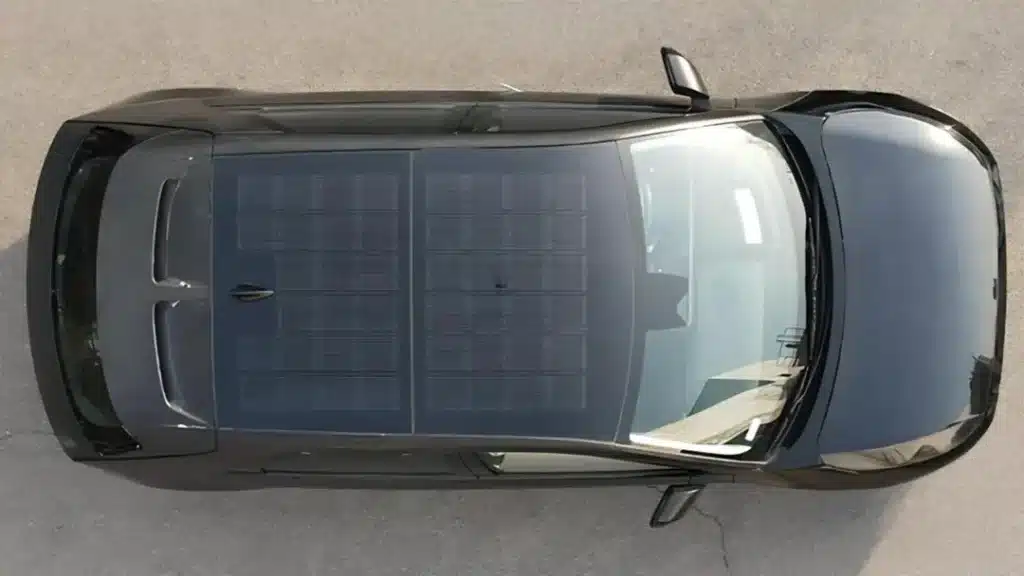
Solarstic, an internal venture spun out of Hyundai Motor Group, showcased its vehicle-integrated solar technology at CES 2026 in Las Vegas, underscoring efforts to incorporate renewable energy directly into vehicle exteriors. The company was named a CES Innovation Awards Honoree in the Vehicle Tech & Advanced Mobility category for its Injection-Molded Vehicle Solar Module. The award recognizes Solarstic’s approach to embedding solar generation into exterior body components while maintaining automotive-grade design, safety, and durability standards. Unlike conventional glass-based vehicle solar panels, Solarstic’s solution uses lightweight polymer packaging.
Replacing glass with polymer reduces weight, increases design flexibility, and allows the solar modules to function as structural exterior components. Solar panels can be integrated into the hood and roof areas, enabling multiple surfaces to contribute to power production. According to the company, combining these panels can generate up to 500 watts of power, extending EV driving range by up to 50 miles per day under optimal solar conditions.
Solarstic states that, depending on driving habits, the technology can significantly reduce or even eliminate charging needs for short-distance users, while long-distance drivers may see up to 30 percent battery replenishment while driving. Proof-of-concept projects have already been demonstrated on Hyundai vehicles such as the IONIQ 5 and ST1 electric models, confirming real-world operability on both passenger and commercial platforms. The product, however, remains in development, with a market introduction targeted within the next one to two years.
Manufacturing is currently the greatest technical challenge. Polymer packaging typically relies on high-pressure injection molding, yet solar cells are fragile and susceptible to breakage. Solarstic has developed a low-pressure molding process and protective layer design to shield the cells during production. The company is also addressing aesthetics and safety, aiming for a sleek, dark exterior appearance that hides cell visibility while improving pedestrian impact safety due to the softer polymer surface. Durability testing is ongoing, including evaluations of anti-scratch and anti-yellowing coatings to ensure long-term exterior performance.
Solarstic’s presence at CES 2026 aligns with Hyundai Motor Group’s broader ZERO1NE open innovation strategy to accelerate sustainable mobility solutions.
A Solar-Assisted Electric Vehicle Delivers the Strongest Environmental Benefits
A gasoline vehicle driven 15,000 kilometers per year produces approximately 2,310 kilograms of CO₂ annually. This option has the highest fuel consumption and results in the greatest environmental impact among all vehicle types. Emissions arise both from fuel production and from combustion during driving, making conventional gasoline vehicles the least sustainable choice in this comparison.
A battery electric vehicle charged exclusively from the grid significantly improves environmental performance. At the same annual mileage, a grid-charged EV generates about 895 kilograms of CO₂ per year, representing a 61 percent reduction compared with a gasoline vehicle. Because the electricity mix still includes fossil-based generation in many regions, emissions are not eliminated entirely, but they are substantially lower, resulting in a moderate environmental impact overall.
A solar-assisted electric vehicle, which combines onboard solar generation with grid charging, delivers the strongest environmental benefits. Its annual emissions are estimated at about 666 kilograms of CO₂, a 71 percent reduction relative to gasoline vehicles and 26 percent lower than a grid-charged EV. By supplementing charging with solar energy, this configuration achieves the lowest lifecycle emissions in the comparison group.
Solar-equipped vehicles make a meaningful difference because they reduce dependency on grid electricity. Solarstic VIPV modules generate clean energy directly from sunlight, further lowering emissions associated with charging. This capability also translates into lower operating costs, as onboard solar production offsets a portion of paid electricity consumption. In addition, integrated solar modules can extend driving range by supplying supplemental energy during daylight hours, which helps decrease the frequency of plug-in charging.
On an annual basis, using Solarstic technology can avoid approximately 1,644 kilograms of CO₂, provide an environmental benefit comparable to planting 82 trees, and save roughly 715 liters of fuel. The system can generate up to 0.5 kW of clean solar power onboard, reinforcing both sustainability and practical driving advantages.

Electric Vehicle Marketing Consultant, Writer and Editor. Publisher EVinfo.net.
Services