Rocsys Unveils World’s First Multi-bay Hands-free Robotaxi Charging, Raises $13m Series A Extension
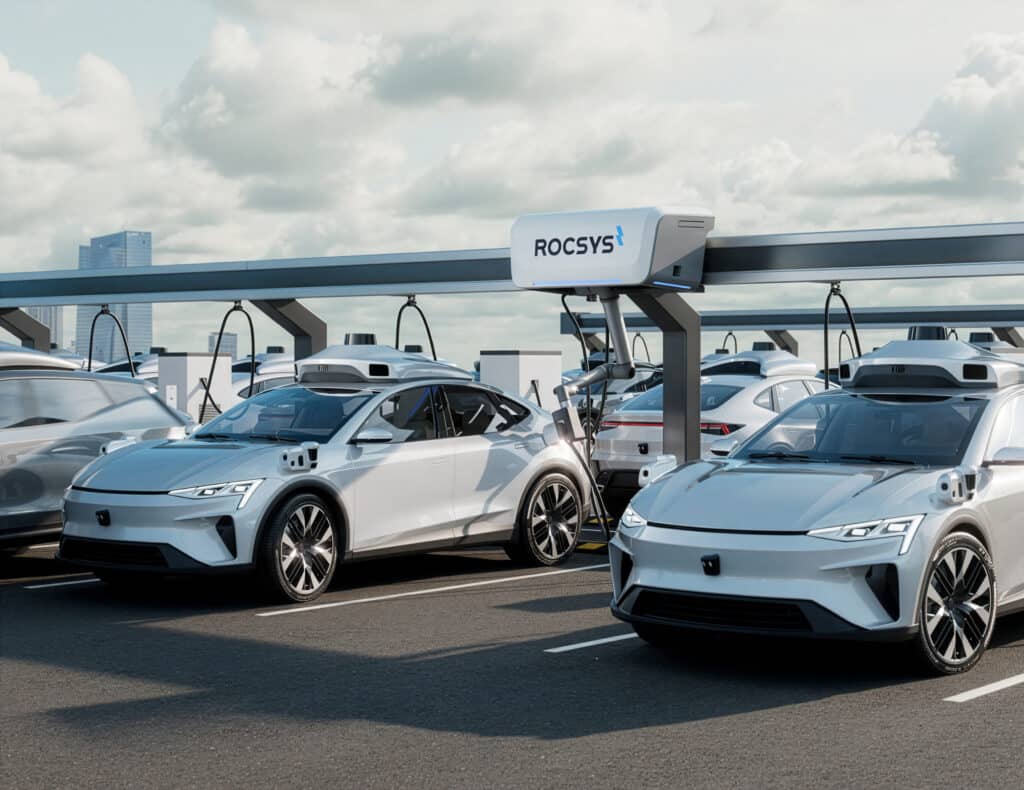
On April 29, 2026, Rocsys, a global provider of hands-free depot solutions for autonomous electric fleets, introduced the Rocsys M1, the first charging system designed to operate across multiple bays in robotaxi environments without human intervention. The M1 is part of a larger depot services platform built to enable fully autonomous depot operations. It is currently being piloted, with broader commercial deployment planned for 2027. Over the next five years, Rocsys intends to scale the solution to support thousands of charging bays across North America and Europe. Alongside the product announcement, the company disclosed a $13 million Series A extension led by Capricorn Partners, with participation from Scania Invest, Forward.One, SEB Greentech Venture Capital, and Graduate Ventures, bringing total capital raised to $56 million.
The robotaxi sector is expected to grow to $45.7 billion by 2030, accelerating fleet expansion and increasing demands on depot infrastructure. As utilization intensifies, manual charging becomes a bottleneck, introducing inefficiencies, added costs, and safety concerns. With charging events occurring thousands of times daily, the process can constrain scalability and impact overall fleet economics.
Rocsys aims to remove this constraint by automating the charging process, improving uptime and operational efficiency across fleets.
The M1 features a modular, multi-bay design that enables a single unit to service up to 10 bays, increasing throughput while lowering labor requirements. Its flexible installation options, including overhead configurations mounted on the ground or roof, allow it to integrate into a wide range of depot layouts while maintaining usable space. This design also supports simultaneous activities such as cleaning and inspection during charging. In larger facilities, such as a 50-bay depot, the system can improve staff productivity by up to 75% and generate annual savings of as much as $1.7 million.
Crijn Bouman, CEO and Co-Founder of Rocsys, said: “Autonomous vehicles are growing rapidly, and infrastructure must keep pace. Without hands-free operations, autonomy stops at the depot. Based on a platform designed to extend beyond charging to automated interior cleaning and inspection, the Rocsys M1 introduces smart charging infrastructure for continuous, real-world use at scale, validated by signing a major robotaxi deal. It enables operators to run mixed fleets autonomously, reliably and without interruption. This is the missing link for robotaxi operators to move from pilots to global deployment.”
The system builds on technology already deployed in port operations and other demanding environments, supported by more than six years of operational data and edge-case training. It is engineered to perform reliably under varying lighting conditions, weather, and vehicle positioning, achieving a plug-in success rate exceeding 99.9% in real-world settings. The platform combines AI-driven computer vision for precise alignment with motion intelligence to ensure safe, context-aware operation, supported by a portfolio of more than 130 patents and pending applications.
The Rocsys M1 is designed for interoperability across different electric vehicles, charging systems, and connector types. Its overhead rail system, paired with a long-reach robotic arm, enables consistent connection and disconnection across mixed fleets regardless of inlet placement, eliminating the need for vehicle modifications or infrastructure lock-in.
A live demonstration of the M1 will be available at booth 3401 during ACT Expo, taking place May 4 through 6 in Las Vegas.
As part of the broader Rocsys platform, the M1 integrates hardware, software, and service layers to support autonomous fleet operations. It operates within a connected ecosystem that includes the Rocsys Portal for real-time visibility, API integrations with customer systems, and remote monitoring backed by field support. Together, these capabilities ensure vehicles remain charged and operational with minimal manual oversight.

Electric Vehicle Marketing Consultant, Writer and Editor. Publisher EVinfo.net.
Services