Managing EV Batteries at End-Of-Life Will Become an Increasing Challenge in the US
Despite short-term headwinds in the United States, EVs remain the global long-term future of mobility. They outperform internal combustion engine vehicles in acceleration, mechanical simplicity, and long-term economics. Maintenance costs are roughly 40% lower, fueling costs are reduced, and as charging infrastructure expands, usability continues to improve. Combined with air-quality benefits and lower lifetime emissions, the case for EVs remains compelling.
The near-term challenge for U.S. automakers is staying in the EV race, in the face of significant setbacks. Retrenchment is underway, but EV sales in the U.S. are still expected to exceed 2024 levels and continue growing over time.
A critical enabler of mass EV adoption will be data, particularly around batteries. As EV penetration rises, battery end-of-life management will become a visible regulatory and operational issue. Unlike tailpipe emissions, battery waste is tangible and valuable, ushering in an era of extended producer responsibility. Europe is already moving in this direction through battery passports, digital product passports, carbon border adjustments, and recycled-content requirements. While U.S. regulations will differ, similar data-sharing imperatives are inevitable.
Scaling EVs to ICE-like volumes will require far more integrated information flows across supply chains. Recyclers, second-life energy storage providers, and material recovery firms will demand precise data on battery composition, provenance, and performance. The necessary systems, including carbon accounting, lifecycle management, and circularity planning, largely exist today but must be connected.
The current slowdown offers breathing room. Initiatives like Catena-X illustrate how the industry can prepare for a data-intensive future. Catena-X is an open, secure, and standardized data ecosystem for the automotive industry, connecting all players in the value chain (OEMs, suppliers, service providers) for seamless, sovereign, and interoperable data exchange, focusing on supply chain resilience and sustainability.
What was once framed as an EV revolution is proving to be an evolution. Automakers that use this pause to invest in interoperability, transparency, and supply-chain intelligence will be best positioned when mass adoption accelerates again.
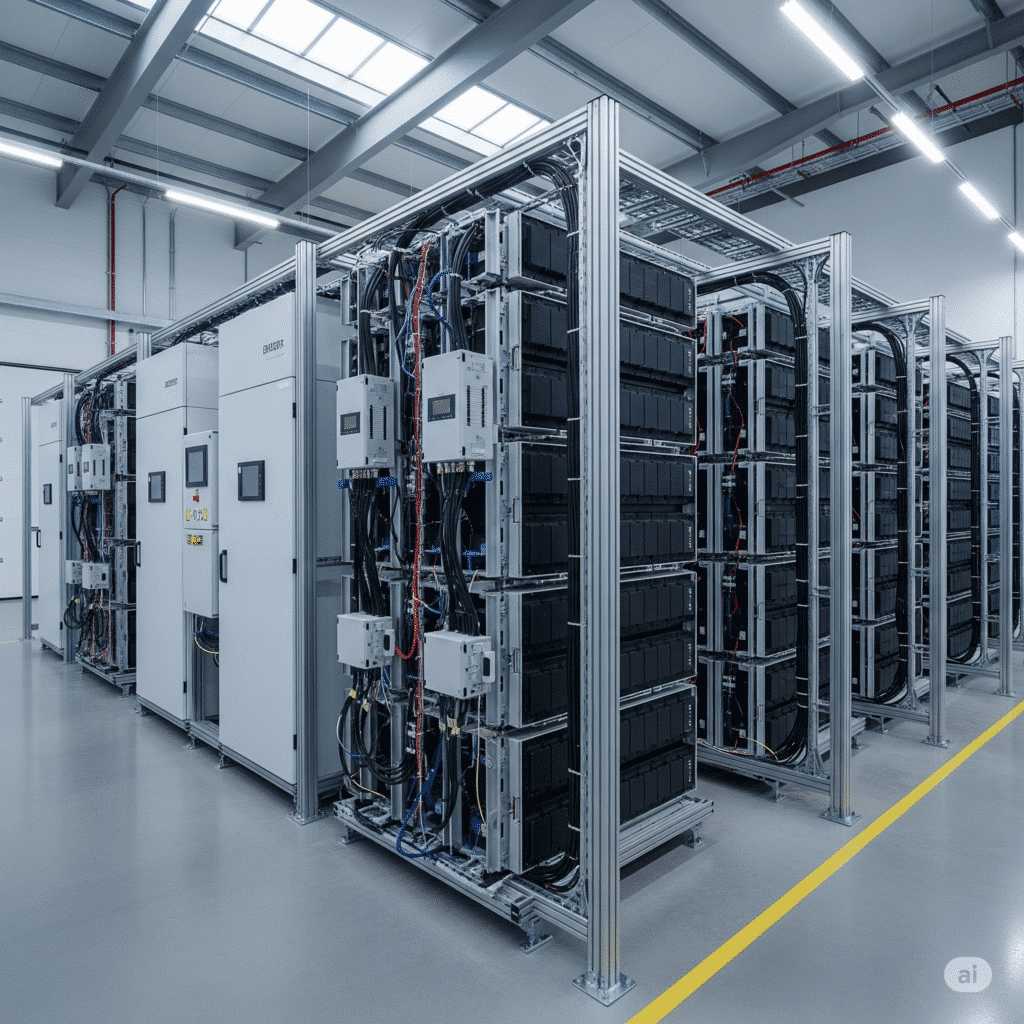
Repurposing Used EV Batteries Can Lower Costs, but Repurposing Is Rare and the United States Lacks Standards for Repurposing
Demand for the minerals used in electric vehicle batteries is projected to rise sharply over the coming decades as EV adoption accelerates. Many of these critical minerals are sourced outside the United States, are limited in supply, and account for a significant share of an EV’s total cost. Their extraction often carries substantial environmental and community impacts, making it essential to maximize the value derived from each battery over its full usable life.
While recycling can recover minerals for new batteries, many EV batteries reaching the end of their vehicle life still retain considerable functionality. In many cases, these batteries have more than 80 percent of their original capacity and can be repurposed for stationary applications such as home or commercial energy storage, solar integration, or backup power. Extending battery use through repurposing increases overall value and preserves much of the energy and investment embedded in their production.
A growing repurposing industry has emerged to capture this opportunity. Companies are recovering high-quality batteries from retired EVs and converting them into stationary storage systems, either by linking intact battery packs together or by disassembling and reconfiguring components to create more customized solutions. Repurposing offers multiple benefits, including lower emissions, reduced demand for new battery production and mining, and more affordable energy storage options. Recycling remains necessary but should occur only after reuse and repurposing pathways have been fully explored.
EVinfo.net reported on several repurposing efforts under way. In December 2025, Nissan Australia announced the completion of a new on-site renewable energy project at its Melbourne production facility. The project includes a 100 kW rooftop solar installation and a 120 kWh battery energy storage system that repurposes retired electric vehicle batteries, marking a first-of-its-kind deployment.
The project, known as Nissan Node, was developed in partnership with Melbourne-based battery technology company Relectrify. Central to the installation is a 36 kW / 120 kWh battery energy storage system assembled from nine second-life Nissan Leaf battery packs.
In June 2025, Crusoe and Redwood Materials unveiled North America’s largest microgrid powered by large-scale solar and second-life EV batteries, a pioneering achievement that powers Crusoe’s modular AI data center infrastructure with renewable energy and unmatched agility.
This innovation is made possible by Redwood, the industry leader in battery recycling and second-life battery repurposing. Through its new Redwood Energy division, the company has transformed used EV battery packs, many of which still retain most of their original capacity, into reliable, high-performance energy storage systems.

Despite its promise, battery repurposing faces significant barriers. Limited access to data on battery health forces companies to conduct extensive testing to assess suitability, increasing costs and uncertainty. Safety certification for repurposed storage systems is also time-consuming and expensive, often requiring repeated testing when different battery types are used. Additional challenges include transportation logistics, disassembly complexities, safety concerns, and lingering customer perceptions about the risks of used batteries.
In July 2025, the American Council for an Energy-Efficient Economy (ACEEE) published Repurposing EV Batteries for Second-Life Stationary Storage: Market Landscape and Key Challenges. The policy brief draws on interviews with industry and policy stakeholders and incorporates insights from a recent workshop on the subject. It highlights a range of policy opportunities at both the federal and state levels, with a particular emphasis on improving battery repurposers’ access to critical battery data.
The United States currently lacks a comprehensive framework governing EV battery end-of-life management, resulting in lost value and missed sustainability gains. Effective policy should prioritize repurposing before recycling and improve access to battery data as ownership changes. Measures such as battery passport systems, streamlined safety certification, and clearer manufacturer responsibility could significantly lower barriers. With coordinated action from federal, state, and local governments, battery repurposing can become a cornerstone of a more sustainable and resilient EV ecosystem.
Battery Recycling Is Key to a Resilient EV Supply Chain
As electric vehicle adoption accelerates, increasing attention must be paid to what happens when these vehicles reach the end of their service life, particularly their batteries. EVs rely primarily on lithium-ion batteries that contain critical minerals such as lithium, nickel, manganese, cobalt, and copper. Today, end-of-life EV batteries are often classified as electronic or hazardous waste. In practice, they represent a valuable input to a closed-loop domestic supply chain that can recover and reuse critical materials rather than discard them.
Battery recycling offers a strategic opportunity to strengthen U.S. supply chains, lower production costs, and advance economic and national security objectives. As outlined in the Zero Emission Transportation Association (ZETA’s) white paper, Closing the Loop: Strategies for Electric Vehicle Battery Management and Critical Mineral Recovery, recycling should be viewed not as waste disposal, but as a core pillar of a more circular, secure, and competitive energy economy. This is increasingly important as demand for EVs and other advanced technologies continues to grow and access to critical minerals becomes more constrained.
At present, much of the EV battery supply chain remains dependent on overseas sources. The International Energy Agency reports that China controls more than 70 percent of the global lithium-ion battery industry, leaving U.S. manufacturers exposed to geopolitical and market risks. Expanding domestic battery recycling capacity can reduce this dependence by recovering high-value materials from end-of-life batteries and reintegrating them into new production. These same materials are also essential for consumer electronics and defense applications, making proactive battery management policies critical to long-term resource security.
The scale of the opportunity is substantial. Argonne National Laboratory estimates that by 2027, roughly 200,000 metric tons of EV batteries in the United States will reach the end of their initial life. Recovered materials from these batteries could support the production of approximately 1.55 million new EVs annually, equivalent to about 10 percent of new vehicle sales based on recent volumes. This incoming wave of batteries represents a strategic resource that requires deliberate policy planning.
Battery recycling is also driving job creation and investment. Nearly 20 recycling facilities have been announced or are operating nationwide, backed by more than $9.65 billion in investment and with the potential to support up to 15,000 jobs by 2035. Advanced recycling technologies can recover over 95 percent of critical minerals while reducing energy use, water consumption, and lifecycle emissions.
Challenges remain, including transportation logistics, unclear liability, and inconsistent regulatory frameworks. Addressing these barriers through coordinated policy and industry action will be essential. With hundreds of thousands of batteries approaching end-of-life, building a robust recycling system is critical to sustaining EV growth and capturing the full economic, environmental, and security benefits of transportation electrification.

Electric Vehicle Marketing Consultant, Writer and Editor. Publisher EVinfo.net.
Services