The Larson Group Donates New Peterbilt 579EV to Pitt State, Advancing EV Tech Education
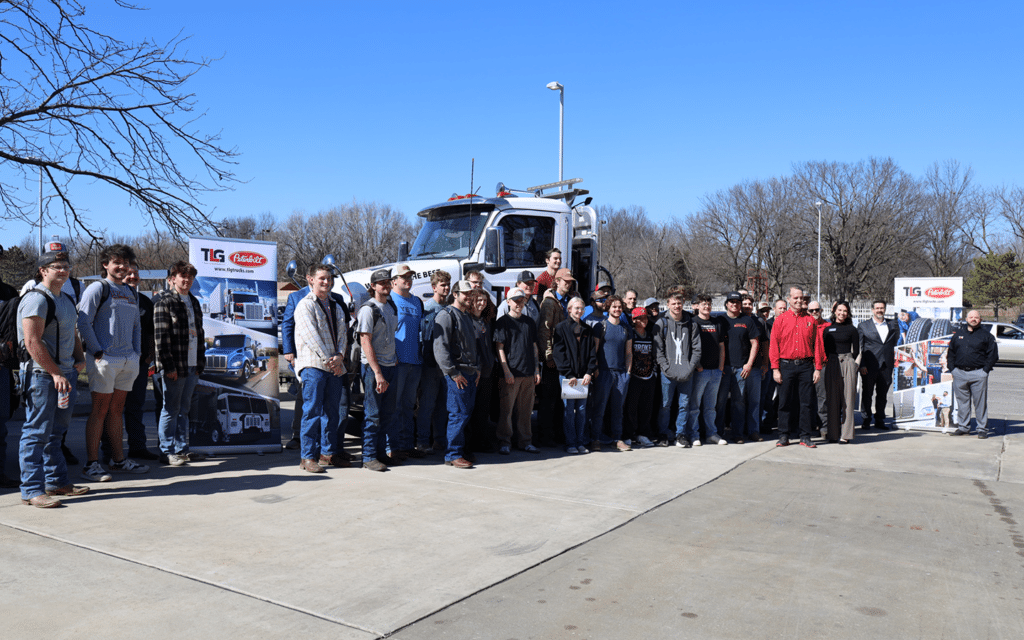
On March 2, 2026, the Larson Group (TLG) announced TLG Peterbilt donated a Peterbilt 579EV to Pittsburg State University’s Crossland College of Technology, supporting the Department of Automotive and Engineering Technology’s growing Diesel and Heavy Equipment program.
The 579EV brings industry-leading electric vehicle technology into the classroom, giving students hands-on experience with electric powertrains, high-voltage battery systems, charging infrastructure, thermal management systems, and the specialized diagnostics and maintenance requirements unique to electric commercial vehicles. These are the exact skills today’s employers are looking for.
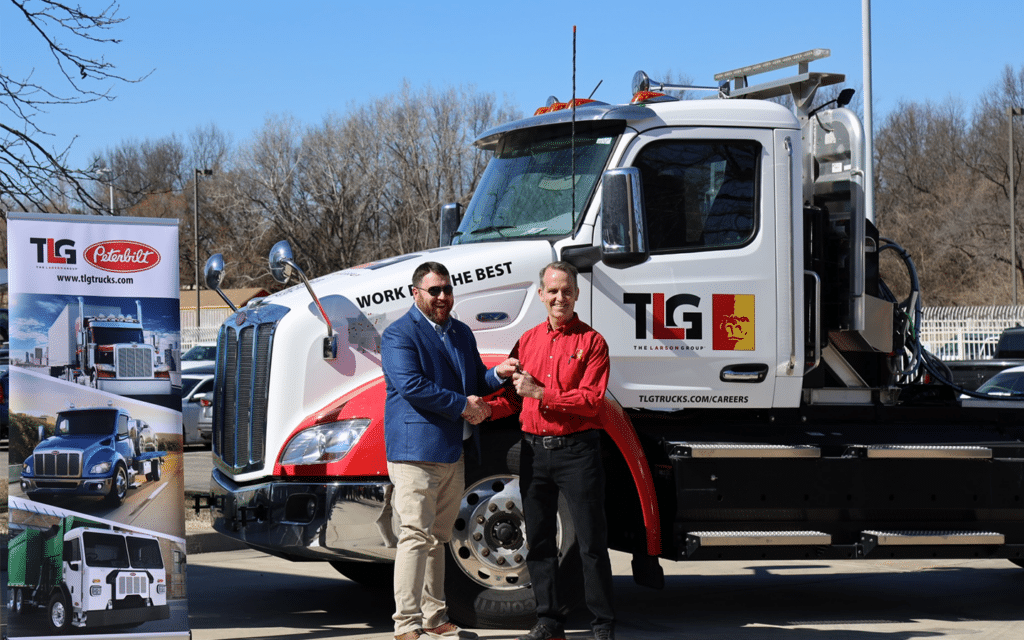
“We’re excited to support students, invest in their future, and strengthen our partnership with Pitt State,” said Melissa Larson, TLG’s Chief Operating Officer and Pitt State alumna. “The skills they’ll gain with this industry-leading equipment are exactly what employers like TLG are seeking.”
Pittsburg State University, known for its award-winning programs in technology, business, and science, is well-positioned to leverage this gift and prepare the next generation of technicians for a career in modern trucking.
“By giving our students access to the newest commercial EV technology, this donation ensures graduates are prepared with skills that employers are urgently seeking,” said Professor Tim Dell, who leads the Diesel & Heavy Equipment program.
As the trucking industry accelerates its shift toward electrification, the need for trained EV technicians has never been greater. Fleet operators are already feeling the pressure. Electric commercial vehicles are arriving on lots and loading docks faster than the workforce can keep up, and without qualified technicians to maintain them, even the best equipment investment can become a liability.
Electric trucks are no longer a future talking point. Fleet operators across the country are integrating EVs into their lineups, driven by emissions regulations, fuel cost savings, and growing customer demand for sustainable logistics. But the transition comes with a steep learning curve. Electric powertrains, high-voltage battery systems, thermal management, and specialized diagnostics require a fundamentally different skill set than traditional diesel maintenance. The technicians who keep your diesel fleet running are not automatically equipped to service an electric one.
The technician shortage is not new to trucking, but electrification is making it more urgent. According to industry analysts, the demand for EV-trained technicians is outpacing supply at a significant rate, and that gap is expected to widen as fleet electrification accelerates through the decade. For fleet operators, this translates directly to longer service wait times, higher repair costs, and increased vehicle downtime. Uptime is everything in trucking, and a technician shortage puts it at risk.
By 2028, U.S. electric vehicle manufacturers are projected to produce approximately 4.7 million EVs annually. This rapid growth is driving demand for charging stations, infrastructure, batteries, supply chain operations and more. Governors across the country are assessing workforce needs to ensure the EV sector supports economic growth, strengthens local industries, and expands opportunities for residents. Meeting this demand requires a larger, highly skilled workforce with well-paying roles accessible through community colleges, apprenticeships, and workforce training programs nationwide.
In November, the National Governors Association (NGA) and the National League of Cities joined forces to launch a State and Local Collaborative to support an inclusive EV workforce.
Peterbilt 579EV: Built for the Future of Freight
The trucking industry is changing, and the Peterbilt 579EV is built to change with it. Designed for fleet operators who are ready to make the move to electric without sacrificing the performance and reliability they depend on, the 579EV delivers a compelling case for electrification.
The 579EV is a Class 8 truck built for regional haul and drayage applications, rated at a GCWR of 82,000 lbs. and delivering up to 605 horsepower. With a range of 100 to 200 miles depending on configuration and duty cycle, it is well-suited for the routes most regional fleets run every day. A 14,600 lb. front axle and rear axle ratings between 38,000 and 46,000 lbs. give operators the flexibility to spec the truck to their specific load requirements. Regenerative braking extends range and reduces wear, while the low center of gravity improves stability and handling compared to traditional diesel configurations.
Inside the cab, drivers get the same driver-focused experience Peterbilt is known for, with an intuitive interface that includes real-time energy monitoring, route efficiency data, and charging status at a glance.
Charging downtime is one of the biggest concerns fleet operators raise about EVs. The 579EV addresses it head-on, reaching an 80% charge in approximately 90 minutes, keeping trucks moving and reducing the impact on daily operations. The truck also supports ePTO provisions at both 25 kW and 150 kW, making it a capable option for vocational applications that require auxiliary power on the job.
Over-the-air software updates and remote diagnostics round out the technology package, allowing fleet managers to monitor vehicle health proactively and reduce unnecessary dealership visits.

Electric Vehicle Marketing Consultant, Writer and Editor. Publisher EVinfo.net.
Services