Toyota’s Global EV Sales Rise 139% In March Due To Surging Fuel Prices
Rising fuel prices from the Iran war are pushing more drivers to reconsider their options, and Toyota is emerging as an unlikely beneficiary. Despite its historically cautious stance on full electrification, the company saw EV sales more than double in March.
Toyota reported global battery electric vehicle (BEV) sales of 35,525 units for the month, a 139% increase year over year and its strongest EV sales performance to date. The surge comes as higher gasoline and oil prices, driven in part by geopolitical tensions, continue to shift consumer behavior toward electric alternatives.
Growth was especially pronounced in Japan, where Toyota sold nearly 3,500 EVs, marking a 4,117% increase compared to March 2025. Overseas markets also contributed significantly, with more than 32,000 EVs sold globally outside Japan, more than doubling last year’s figures.
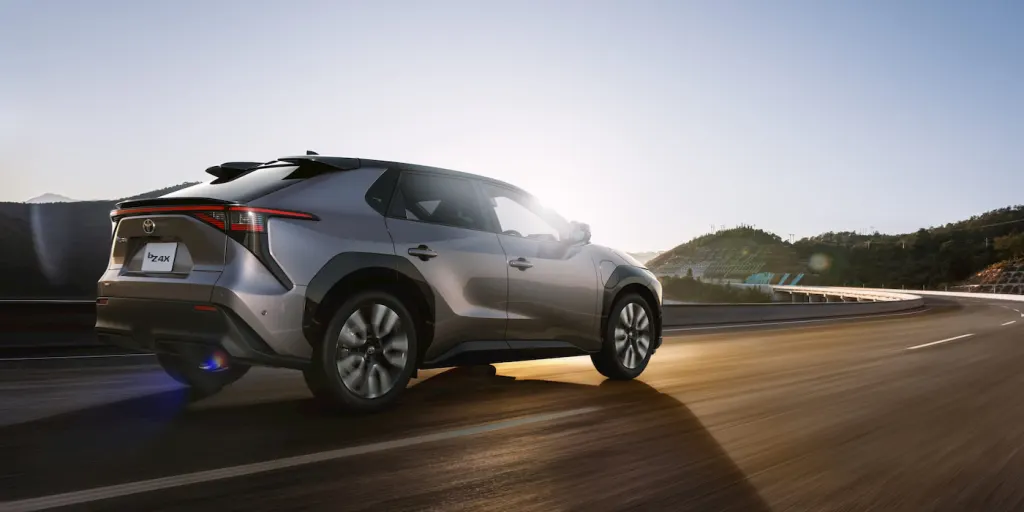
In Europe, Toyota’s EV momentum is also building. First-quarter BEV sales rose 85% to 25,640 units, led by the updated Toyota bZ4X. The refreshed model, introduced in late 2025, has played a central role in boosting demand, becoming the top-selling domestic EV in Japan during the second half of the fiscal year and maintaining that position for five consecutive months through March.
In the U.S., the updated version, marketed as the bZ, ranked as the third best-selling EV in Q1, trailing only Tesla Model Y and Tesla Model 3. Improvements to range, charging speed, and in-vehicle technology have made the model more competitive. The 2026 bZ now offers up to 314 miles of range, about a 25% increase over its predecessor, and includes a built-in NACS port, enabling access to Tesla’s Supercharger network.
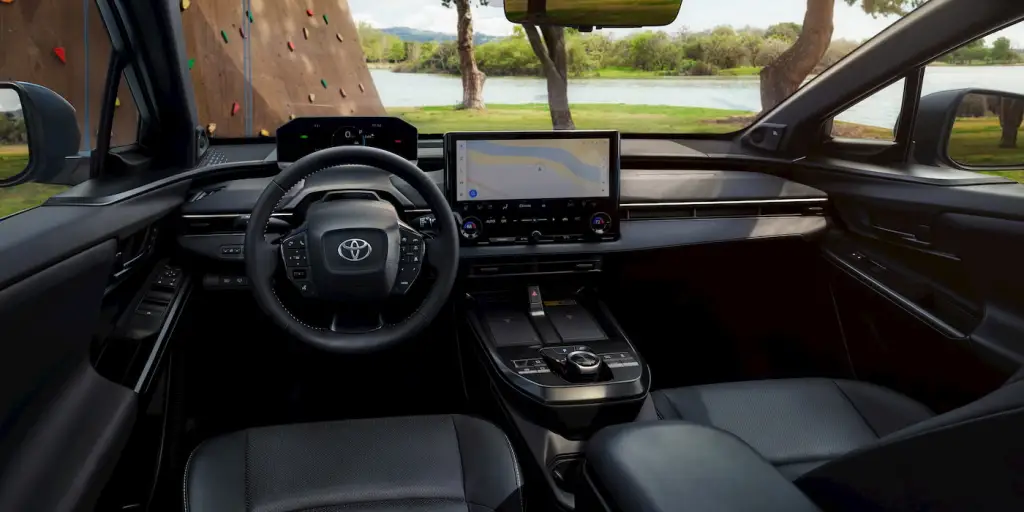
Toyota has also enhanced the interior experience with a standard 14-inch infotainment display and a redesigned center console. Pricing remains aggressive, with the model starting around $34,900 in the U.S., positioning it as one of the more affordable EV options.
Still, Toyota faces mounting competition globally. BYD alone sold 147,601 fully electric vehicles in March and is rapidly expanding overseas. Chinese manufacturers are gaining ground in key regions including Europe, Southeast Asia, and even Japan.
Speaking at the Beijing Auto Show, BYD executive vice president Stella Li emphasized that the company’s growth does not depend on entering the United States. Instead, BYD is focused on meeting rising demand in markets such as Brazil, the UK, and across Europe, where consumers are increasingly motivated by the daily savings EVs offer as fuel prices climb. According to Li, demand is currently outpacing the company’s production capacity.
To stay competitive, Toyota is broadening its EV lineup with models like the C-HR+, the off-road-focused bZ Woodland, and the Urban Cruiser, with a three-row Highlander BEV expected later this year. While progress is evident, intensifying competition from global automakers and lower-cost entrants will test Toyota’s ability to sustain its EV momentum.

Electric Vehicle Marketing Consultant, Writer and Editor. Publisher EVinfo.net.
Services