The U.S. EV Sales Drop May Be Leveling Out, Toyota Making a Comeback
On April 10, 2026, Kelley Blue Book (KBB) reported Americans bought 216,399 electric vehicles in the first quarter of 2026, down 27% from the same period a year earlier. The primary cause was the expiration of the $7,500 federal tax credit, which had pulled demand forward and inflated 2025 numbers as buyers rushed to claim it before it disappeared.
But the freefall may be stabilizing. Kelley Blue Book data shows Q1 sales were only 7.8% lower than Q4 2025, and EVs held steady at 5.8% of all new car sales, unchanged from the prior quarter. For context, EVs peaked at 10.6% market share in Q3 2025 at the height of the credit rush.
The rest of the world is moving in the opposite direction. The International Energy Agency estimates that one in four cars sold globally last year was electric, leaving automakers in an awkward position: managing a sluggish U.S. market while competing aggressively everywhere else. Honda has responded by scaling back its American EV plans. Hyundai is holding course, expanding its electric lineup while keeping gas-powered options available for a market still finding its footing.
“The U.S. EV market has clearly entered a new phase,” said Stephanie Valdez Streaty to KBB. Streaty is director of industry insights at Kelley Blue Book parent company Cox Automotive.
“With federal incentives gone, the first quarter reflected a necessary reset — sales slowed and market share shifted. What comes next will be driven less by policy and more by fundamentals: more affordable products, smarter pricing strategies, and continued investment in infrastructure. Those longer-term fundamentals continue to support EV growth. The timeline has shifted, but the direction hasn’t,” continued Streaty.
Cadillac, Lexus, and Toyota all made their first appearances in KBB’s reported top 10 EVs sold in the U.S. in Q1 2026.
The Price Gap Between EVs and Gas Cars Is the Smallest It Has Been in Years
Electric vehicle prices in the United States keep falling. The average transaction price for a new EV dropped to roughly $55,300 in February 2026, according to Kelley Blue Book data, down 0.6% from January and 1.4% from a year earlier.
The individual monthly moves are modest, but the direction is consistent. Analysts say the cumulative trend is bringing EVs closer to price parity with gas-powered vehicles than at any point in recent memory, as automakers adjust pricing and layer in incentives to keep demand moving after the federal tax credit expired.
The narrowing gap matters because sticker price has been one of the most stubborn barriers to EV adoption among mainstream buyers. As that barrier shrinks and fuel prices climb, the ownership math continues to shift in EVs’ favor.
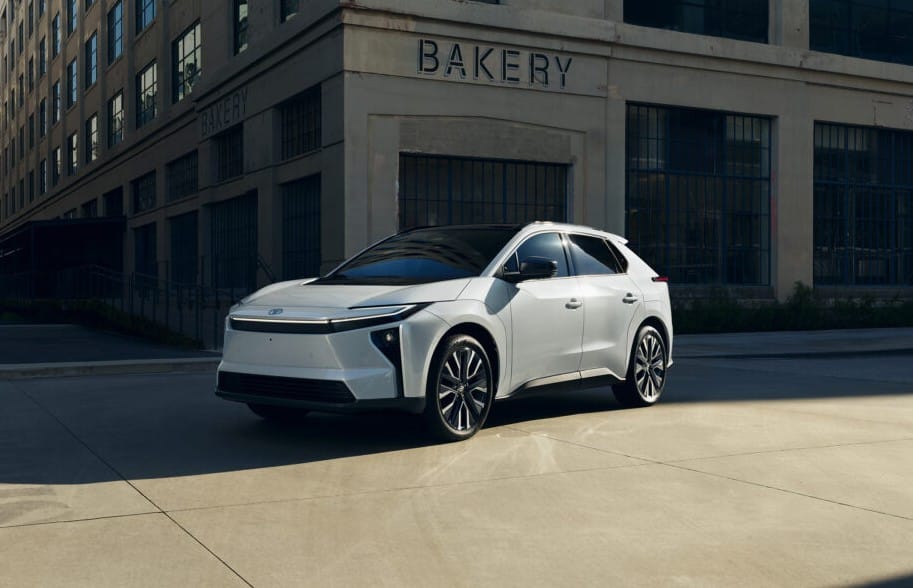
The Updated Toyota bZ4X EV Is Making a Comeback
Toyota spent years as the most prominent EV skeptic among major automakers. The updated bZ4X suggests that position is changing fast.
In the United States, the bZ4X name is shortened to bZ, and Toyota sold more than 10,000 bZ electric SUVs in the first quarter of 2026. This is more than Ford’s entire EV lineup combined, and more than both the Chevy Equinox EV and the Hyundai IONIQ 5. In Japan, the bZ4X ranked as the top-selling domestic EV for the second half of fiscal year 2025, with Toyota moving 7,241 EVs in Q1 2026 compared to just 469 in the same quarter a year earlier. In Australia, Toyota expects bZ4X sales to jump nearly fivefold this year, from 1,041 units in 2025 to a planned 5,000 deliveries. Globally, the model ranked ninth among the world’s best-selling EVs in February, ahead of the BYD Dolphin, IONIQ 5, and Volkswagen ID.4.
The turnaround traces back to a meaningful refresh launched in October, with longer range, faster charging, and more power. In Japan, government subsidies have added further momentum. The bZ4X now qualifies for up to 1.3 million yen in incentives, bringing its effective price to roughly $22,100, while BYD’s vehicles did not qualify for a subsidy increase this year.
Toyota currently offers three electric SUVs in the U.S., the bZ, C-HR, and bZ Woodland, with a three-row electric Highlander arriving later this year. The brand that held out longest on EVs is now building one of the more credible electric lineups in the mainstream market.
EVinfo.net’s Take: EVs Are Back Due to High Fuel Prices, Toyota and Hyundai Are Leading The Comeback
Something shifted this spring. Gas prices crossed $4 nationally and $5 in California, and the math on electric vehicles started looking different to a lot of American drivers. Used EV inquiries are up. Showroom traffic is up. The question that felt theoretical a year ago, whether an EV makes financial sense for an average household, is getting a different answer. A majority of people now realize that EV adoption makes sense across the board, especially in a financial sense.
The timing is notable because the U.S. EV market just came off a rough quarter. Sales fell 27% year over year in Q1 2026 after the incredibly dumb cut of the federal EV tax credit, and OEMs lost billions as a result. Yahoo Finance reported global automakers have written off roughly $55 billion on EV losses.
There’s a lot of factors at play here. The legacy automakers are partly responsible. They over-estimated EV demand, after moving too slowly initially into EVs. But the federal government’s foolish cutting of the tax credit, and horribly short-sighted relaxing of fuel emissions standards compounded the problem, setting off a downward spiral.
Meanwhile, China quietly gained ground. Chinese auto brands nearly doubled their European market share in one year and surged to almost 20% of new vehicle sales in Mexico, exploiting the chaos government and legacy automakers created for themselves.
But zoom out slightly and a different picture emerges. Quarter over quarter, sales dropped only 7.8%. Market share held flat. The floor appears to be in.
Now high wartime fuel prices are doing what smart policy, the EV tax credit, did before: changing the calculation at the point of purchase. And two automakers are particularly well positioned to benefit, as the high fuel prices show no sign of coming down anytime soon.
Toyota
Nobody expected Toyota to be here. The company spent years as the most visible skeptic of battery electric vehicles, betting instead on hybrids and hydrogen. That reputation is getting revised in real time.
The updated bZ4X has become a contender. Toyota will have four EVs on sale this year in the USA. The company is becoming an EV leader.
Hyundai
Hyundai has been consistent where others have wavered. While Ford, GM, and Stellantis have scaled back EV ambitions, Hyundai posted its fifth consecutive record sales year in the U.S. in 2025, with electrified vehicles accounting for 30% of retail sales. The IONIQ 5 ranked fifth among the best-selling EVs in the country.
The company is also building for the long term in ways that matter. Its Georgia plant already produces the IONIQ 5 and IONIQ 9, with hybrid production starting later this year and a target of 500,000 units of annual capacity by 2028. Battery cost targets for 2027 include a 30% reduction and 15% shorter charge times. With the federal tax credit gone, Hyundai is offering up to $10,000 off the 2026 IONIQ 5, which now starts at $35,000.
The Bigger Picture: The Rest of the World is Going EV
The rest of the world never slowed down. The International Energy Agency estimates that one in four cars sold globally last year was electric. BYD just demonstrated 10-minute charging in Europe with a production vehicle. The technological gap between what is available globally and what American drivers can access is widening, and that creates its own pressure on automakers to bring better products to market faster.
In March, The Seattle Times released an article titled Gas-guzzler revival risks dead-end future for U.S. automakers, and we could not agree more. The article said: “If U.S. automakers turn their backs on electrics, their sales outside the U.S. will shrivel.”
Mark Wakefield, head of the global automotive practice at consultant AlixPartners, said to Seattle Times: “If they just go back to Hemi Land and not do anything, it would be disastrous in a few years — a horrific disaster. While the American automakers “mostly understand the challenge in front of them, they don’t have full plans” to confront it, he said. “Hemi Land” in Wakefield’s comment means the gas powered cars that U.S. automakers have pivoted back to. “the challenge in front of them” refers to the growth of EVs around the rest of the world, especially China.
The U.S. EV comeback is not guaranteed, and the road is not straight. But the fundamentals are shifting: fuel prices are high, products are improving, and the two automakers doing the most credible work right now are Toyota and Hyundai. One converted late. One stayed the course. Both are winning.
America must try harder to catch up on the global EV race. If we don’t, it will mean less economic growth and less jobs. Especially now, that high wartime fuel prices gave the global EV revolution the biggest push it could possibly get. China will win bigger and the USA will lose more, if we don’t get our act together.

Electric Vehicle Marketing Consultant, Writer and Editor. Publisher EVinfo.net.
Services