BYD’s 10-Minute Charging Comes to Europe With Denza Z9GT
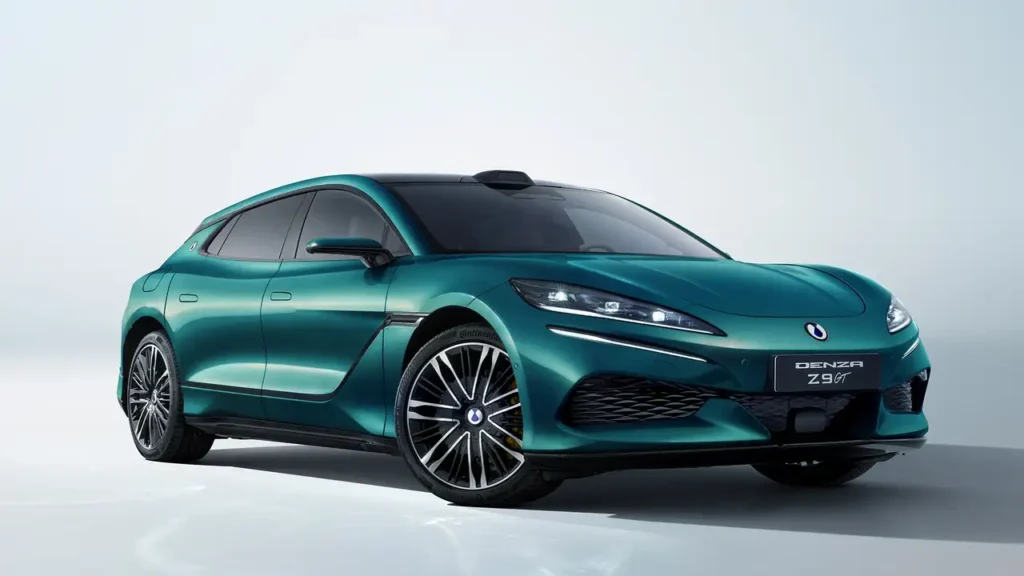
BYD introduced its Flash charging technology to Europe this week at an event in Paris, unveiling the Denza Z9GT as the first European-market vehicle capable of using the system. The Z9GT is a sporty station wagon from BYD’s premium Denza brand, and its charging performance is unlike anything currently available outside of China.
Equipped with BYD’s latest lithium iron phosphate Blade battery, the Z9GT charges from 10% to 70% in five minutes and from 10% to 97% in nine minutes. In temperatures as low as -30 degrees Celsius, where most EVs slow dramatically, it charges from 20% to 97% in 12 minutes. For context, the current norm in the United States for a 10% to 80% charge is 25 to 40 minutes. Even the quickest American options, like the Lucid Gravity charging at 400 kilowatts, take around 11 minutes to add 200 miles.
BYD demonstrated the car’s charging performance live for European media this week, and independent video confirmed the numbers held up. Starting from 10%, the Z9GT hit 50% in just over three minutes and 97% in nine minutes and 22 seconds, maintaining roughly 300 kilowatts even past 80% state of charge, a point where most EVs throttle back sharply.
The Z9GT’s battery is 122.5 kilowatt-hours. The tri-motor version offers 373 miles of WLTP range; the rear-wheel-drive variant stretches to 497 miles. The car also does zero to 62 mph in 2.7 seconds, features digital side mirrors, a refrigerated compartment, and rear-wheel steering for tight parking.
That charging capability means nothing without compatible infrastructure. BYD plans to install 3,000 Flash charging stations across Europe in the next 12 months, following 5,000 already deployed in China. The T-shaped hardware uses suspended cables and draws on both grid power and onsite LFP battery storage to deliver up to 1.5 megawatts through a single cable.
The Z9GT starts at 115,000 euros, roughly $135,000, and is available to configure now across several European markets.
EVinfo.net’s Take: Gas Prices Are Driving an EV Comeback in America. Could 10-Minute Charging Be the Thing That Makes It Permanent?
Something shifted at the pump this spring.
When the United States and Iran announced a ceasefire in the war on April 7, 2026, fuel prices didn’t follow. The U.S. Energy Information Administration warned that prices could keep climbing for months even after the Strait of Hormuz reopens. In California and other high-cost markets, gas is already above $5 a gallon. In many parts of the country, $4 is the new floor.
Analysts have long pointed to $4 per gallon as the threshold where the math on electric vehicles starts to look genuinely compelling. When consumers expect high fuel costs to stick around rather than spike and recover, they stop browsing and start buying. That’s exactly what’s happening now. Used EV sales are climbing. Dealer inquiries are up. The question that was theoretical a year ago, whether an EV makes financial sense for an average American driver, is getting a different answer than it used to.
But fuel prices are only one part of the EV hesitation equation. The other part is charging, and it’s stubborn.
Range anxiety has softened over time as charging networks have expanded. But the time cost of charging compared to a three-minute gas station stop remains a legitimate friction point, especially for buyers without home charging, those who live in apartments, or anyone who regularly drives long distances. The honest answer for most Americans today is that a full charge still takes 25 to 40 minutes at a fast charger, and that’s on a good day with the right equipment.
That may be about to change, at least as a matter of what’s technically possible. BYD demonstrated this week in Paris that 10-minute charging is not a concept or a roadmap promise.
None of this is coming to the United States tomorrow. The Denza Z9GT starts at 115,000 euros in Europe, and BYD doesn’t currently sell passenger vehicles in the U.S. market. American charging infrastructure operates on different standards, and building out a megawatt-capable network here would require significant investment and regulatory coordination.
But technology has a way of trickling down. The same features that debuted in six-figure European luxury cars tend to show up in mainstream vehicles within a few years. BYD’s Flash system exists. It works. The engineering problem of 10-minute EV charging has been solved in production hardware.
What that means for the American EV market, still finding its footing amid rising gas prices and renewed buyer interest, is that the last major psychological barrier to EV adoption may have an expiration date. Gas prices are already changing the conversation. If 10-minute charging eventually arrives at scale in the U.S., the conversation changes for good.
The EV comeback in the USA is real. How fast the rest of the world’s technology reaches American roads is the next question.

Electric Vehicle Marketing Consultant, Writer and Editor. Publisher EVinfo.net.
Services