March EV Sales From the UK to South Korea Surged 44% Year-over-year Due to High Fuel Prices
Online interest in electric vehicles (EVs) surged after the Middle East conflict sent oil prices sharply higher. Now, real-world data is beginning to confirm that shift in consumer behavior.
New figures from Bloomberg, released on April 28, 2026, show that EV sales climbed rapidly in March across several key markets. In countries such as United Kingdom, France, and South Korea, demand accelerated as fuel costs rose. During the first four weeks following the outbreak of the Iran conflict, consumers in France, Germany, and the UK purchased a combined 206,200 electric vehicles, a 44% increase compared to the same period last year. In South Korea, EV transactions more than doubled, while Italy saw sales reach 16,000 units, up 67% despite historically slower adoption.
“The March data suggest that scaling up electrification can happen at a meaningful pace when market and policy conditions align,” Peter Mock of the International Council on Clean Transportation said to Bloomberg. “The timing alongside the recent oil price shock is notable.”
Globally, rising demand in Europe, Australia, and parts of Asia helped offset weaker sales in China and the United States. According to BloombergNEF, consumers purchased 1.1 million EVs in March, a 2% increase year over year. Battery electric vehicles accounted for about 17% of all new car sales globally, roughly in line with last year.
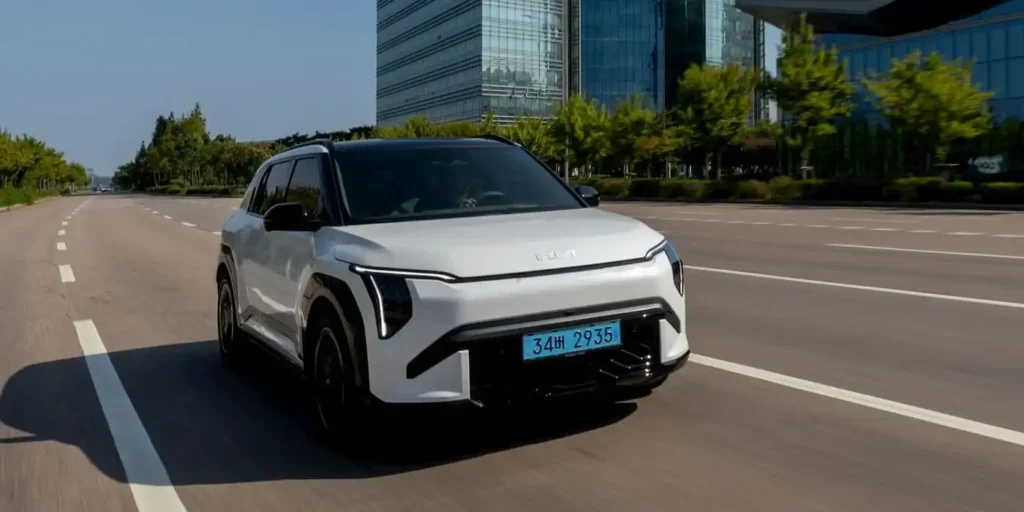
The surge was not entirely unexpected. Analysts had already observed a spike in EV-related searches in the weeks following the conflict. Automakers are also seeing the impact.
Toyota reported global battery electric vehicle (BEV) sales of 35,525 units for the month, a 139% increase year over year and its strongest EV sales performance to date.
While EV adoption slowed in China and North America, it accelerated in smaller and mid-sized markets where fuel price sensitivity is higher. Analysts attribute the trend to a combination of elevated gasoline prices and a growing supply of more affordable models, particularly from Chinese manufacturers. Exports of EVs and hybrids from China rose 140% year over year in March, with notable increases in shipments to Australia, Belgium, and Germany.
Speaking at the Beijing Auto Show, BYD executive vice president Stella Li emphasized that the company’s growth does not depend on entering the United States. Instead, BYD is focused on meeting rising demand in markets such as Brazil, the UK, and across Europe, where consumers are increasingly motivated by the daily savings EVs offer as fuel prices climb. According to Li, demand is currently outpacing the company’s production capacity.
The rising global interest in EVs is good news for Chinese manufacturers. Major export markets that saw a sizeable jump in Chinese EV shipments included Australia, up 67% from February; Belgium, up 63%; and Germany at 34%, according to Chinese customs data. The increases align closely with survey results showing interest in EVs surging as fuel prices have risen sharply.
Industry data suggests a tipping point may be emerging. According to dealership consultancy Ignition Dealer Services, consumer interest in EVs tends to rise sharply when gasoline prices approach $4 per gallon, reinforcing the link between fuel costs and electrification trends.

Electric Vehicle Marketing Consultant, Writer and Editor. Publisher EVinfo.net.
Services