it’s electric Wins City of Boston’s Climate Award
On April 29, 2026, it’s electric announced on its Linkedin account that the company has been named a Climate Award winner by the City of Boston MA, receiving recognition from highly respected Boston Mayor Michelle Wu for its leadership in climate action and its innovative approach to urban EV charging.
Boston holds particular significance for the company as its first deployment city. The team members who helped establish Boston as a national benchmark for curbside charging were present to accept the award, underscoring the city’s role in the company’s growth.
The recognition highlights key contributors who have played a central role in building and advancing the initiative:
🏆 Shannon Dulaney, Director of Public Affairs
🏆 Judy Chang, Project Director
🏆 Becky Jin, Operations Manager
The work of these contributors has been instrumental in shaping both the company’s trajectory and the broader evolution of urban EV charging infrastructure, said the company.

it’s electric is Curbside EV Charging Specifically Built for Cities
The biggest barrier to electric vehicle adoption in U.S. cities is not the vehicle. It is where to charge.
That is the problem it’s electric is built to solve.
In dense urban environments, millions of drivers rely on street parking. They do not have garages, driveways, or dedicated charging access. According to the company, roughly 40 million U.S. drivers fall into this category, effectively locked out of EV ownership by infrastructure limitations.
it’s electric approaches this challenge differently. Instead of relying on expensive utility upgrades or standalone charging stations, the company taps into existing buildings. Property owners allow chargers to be installed at the curb, powered by surplus electricity from their own panels. The result is a distributed, low-cost network embedded directly into city streets.
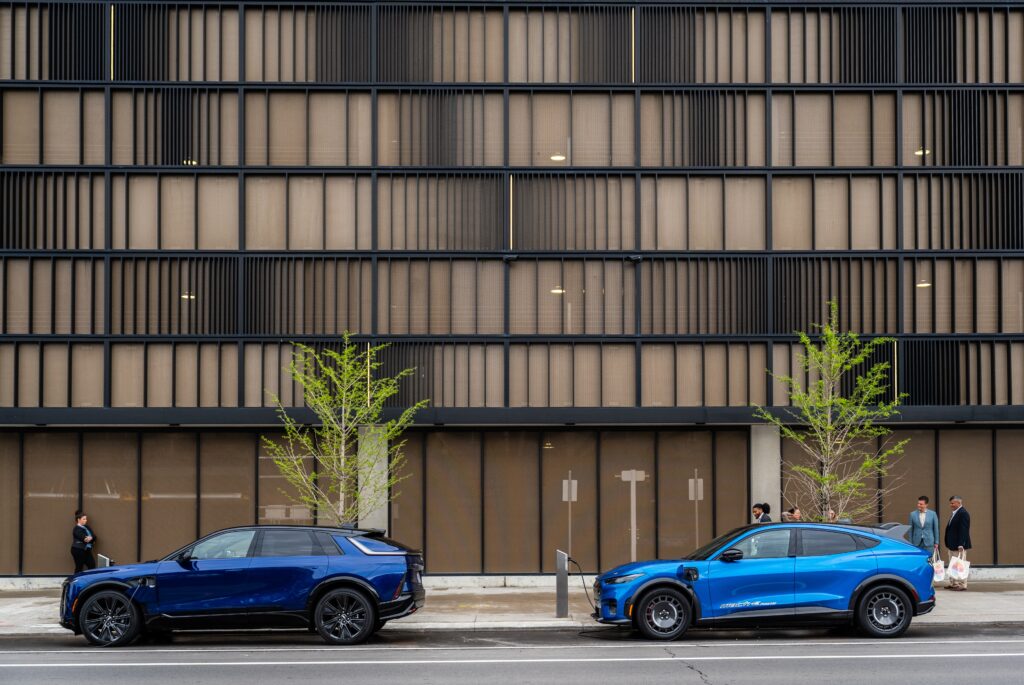
The model is as much economic as it is technical. Installation comes at no cost to the property owner, while hosts generate passive income from energy usage. This aligns incentives across stakeholders. Cities expand charging access without major infrastructure spend. Property owners monetize unused capacity. Drivers gain convenient, neighborhood-level charging.
Design is another differentiator. The hardware removes many of the friction points associated with traditional chargers. There are no bulky screens, no payment terminals, and no attached cables. Instead, users receive a lightweight personal cable, allowing them to plug in seamlessly across the network. The result is infrastructure that integrates into the urban environment rather than disrupting it.

This approach reflects a broader shift in how EV infrastructure is evolving. Early deployment focused on large, centralized charging hubs. That model works for highways and long-distance travel, but it does not solve the everyday reality of city living. Urban electrification requires proximity, density, and simplicity.
it’s electric is effectively turning the curb into infrastructure. Every eligible building becomes a potential node. Every street becomes part of the network.
That scalability is critical. The transition to electric mobility will not be won solely through vehicle innovation. It will be determined by how quickly and effectively charging becomes as accessible as parking.
The insight here is straightforward. If people cannot charge where they live, they will not switch. By bringing charging directly to the curb, it’s electric is addressing the problem at its source.
And in doing so, it is redefining what urban EV infrastructure can look like.