Walmart Expanded Its Retail-integrated EV Charging Network to 35 Locations, Totaling Approximately 300 Connectors
Charging an EV while shopping extends beyond convenience, illustrating what becomes possible when physical infrastructure and digital ecosystems are intentionally integrated.
On April 29, 2026, Walmart announced on its Linkedin account that the company has expanded it’s retail-integrated EV charging network to 35 locations, totaling approximately 300 connectors, supported by a technology stack designed for reliability and scalability. Real-time charger availability has been integrated into Google Maps, PlugShare, and Chargeway, placing live data directly within the platforms drivers already use. At the charger, a scan-and-pay approach enables a streamlined, hardware-light payment experience.
The network offers a view into how connected, scalable solutions are being built at the intersection of retail and technology.
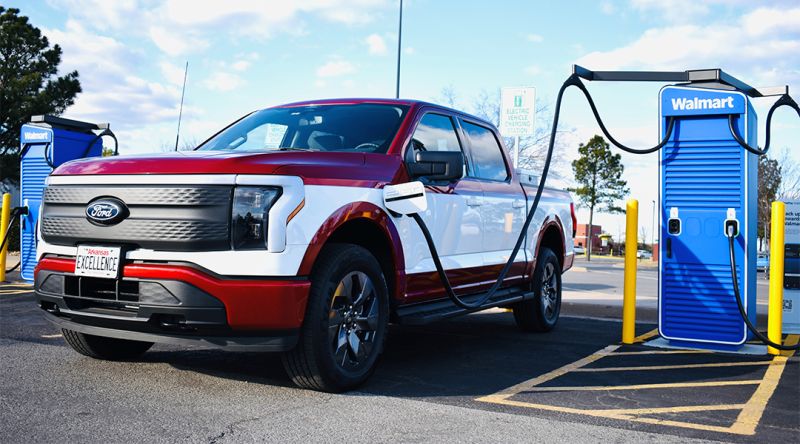
Walmart is advancing a nationwide EV charging strategy that connects retail convenience with scalable infrastructure, positioning its stores as accessible charging hubs for everyday drivers. With more than 4,700 stores and 600 Sam’s Club locations, most within 10 miles of a large share of the U.S. population, the company is well positioned to expand charging access across urban, suburban, and rural areas.
The initiative focuses on building a coast-to-coast fast charging network owned and operated by Walmart, with plans to deploy chargers across thousands of locations by 2030. This effort builds on an existing base of installed sites and reflects a broader push to make EV ownership more practical, affordable, and reliable for daily use.
At the center of the strategy is the integration of charging into the retail experience. Customers are able to charge their vehicles while shopping, turning dwell time into productive charging time. This approach directly addresses one of the key friction points in EV adoption, which is convenient and predictable access to charging in everyday locations.
Walmart’s model also emphasizes ownership of the full charging experience. By operating the network directly, the company can standardize performance, manage pricing structures, and improve the user journey through its digital ecosystem. This includes app-based access, real-time visibility of charger status, and ongoing operational optimization as the network scales.
As EV adoption continues to grow, this approach reflects a broader shift in infrastructure development. Charging is becoming part of a connected service ecosystem rather than a standalone utility. Walmart’s expanding network illustrates how retail environments, energy systems, and digital platforms can be integrated to deliver a more seamless charging experience for drivers.
EVinfo.net’s Take: Retail EV Charging Growing Fast, a Great Investment
Retail EV charging is emerging as one of the fastest growing segments in the electric mobility ecosystem, driven by the rapid expansion of EV adoption and the need for convenient, high-uptime charging in everyday locations. Among the most visible examples of this shift is the retail-integrated model being deployed by Walmart, where charging is embedded directly into store locations to align with existing customer behavior.
This approach is gaining traction because it solves a core constraint in EV infrastructure deployment. Drivers do not want charging that requires separate trips or long detours. They want reliable access in places where they already spend time, such as grocery stores, shopping centers, and big-box retail locations. Retail sites naturally provide the dwell time needed for effective charging sessions, which improves utilization rates and strengthens the economic case for infrastructure operators.
From an investment perspective, the segment is attracting attention due to several structural tailwinds. EV adoption continues to rise globally, public charging demand is increasing, and retail real estate offers scalable, repeatable deployment opportunities. Retail charging also benefits from diversified revenue potential, including energy sales, site hosting agreements, and increased foot traffic for retailers.
Walmart’s expansion into EV charging highlights this model in practice, with a growing network of sites designed to support fast charging while customers shop. The strategy reflects a broader trend where retail operators are becoming infrastructure partners in the energy transition rather than passive hosts.
While the sector is still developing and execution varies by operator, retail EV charging is widely viewed as a high-growth infrastructure category with long-term strategic value, particularly as EV penetration continues to accelerate and charging demand becomes more distributed across daily consumer locations.
WattUp USA Secures $130 Million to Expand Ultra-Fast EV Charging Across the Western US
Separately from Walmart, one great example of this fast growing sector is WattUp USA.
On March 11, 2026, WattUp USA announced a minimum $130 million structured capital facility arranged by Founders First Advisory, positioning the company to deploy charging infrastructure at 100 commercial sites in its first phase of expansion.
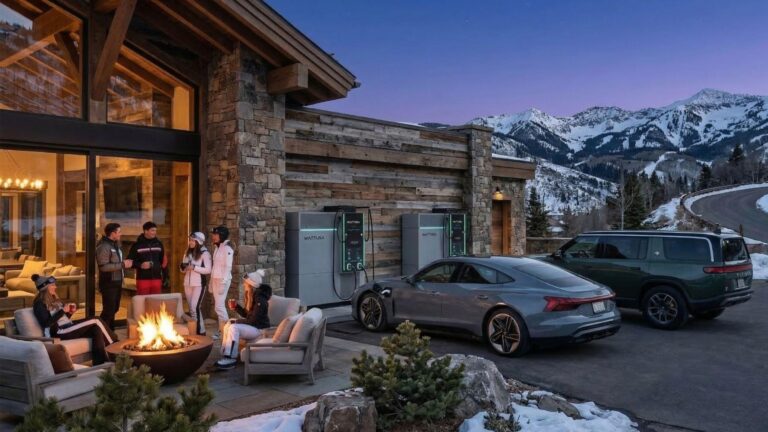
The company’s approach is straightforward: meet EV drivers where they already are. Rather than building standalone charging destinations, WattUp USA installs ultra-fast DC fast charging stations at shopping centers, grocery stores, restaurants, convenience stores, and mixed-use developments, locations where customers are already spending 20 minutes to an hour. A quick charge fits naturally into that window without changing anyone’s routine.
EVinfo.net was honored to work with the WattUp USA team and SnappConner PR on this release.
EV Industry Companies Need Good PR, SnappConner PR Recommended
A great product or service in a noisy market is still a quiet one. And the EV space is extraordinarily noisy right now. Established automakers, startups, charging networks, battery developers, and policy advocates are all competing for the same attention from the same audiences. The companies that break through are rarely the ones with the best spec sheet. They are the ones that have learned to tell their story clearly, consistently, and in the right places.
This is exactly what top PR firm SnappConner PR does well. Not spin. Not hype. Strategy. EVinfo.net highly recommends SnappConner PR.


Electric Vehicle Marketing Consultant, Writer and Editor. Publisher EVinfo.net.
Services