Affordable Volkswagen ID. Polo EV Arrives in Europe
The production version of the Volkswagen ID. Polo subcompact electric hatchback has officially been unveiled by the German automaker, marking a major step in its strategy to compete in Europe’s affordable EV segment.
Closely aligned in design with the 2023 ID. 2all concept, the ID. Polo is positioned as one of Volkswagen’s most significant new models for the European market, where demand for compact urban hatchbacks remains strong.
Priced from €24,995 (about $29,300), Volkswagen’s smallest new EV enters a highly competitive segment alongside models such as the Renault 5, Kia EV3, Hyundai Inster, and BYD Dolphin Surf. The vehicle is clearly optimized for city and suburban use rather than long-distance travel.
With dimensions comparable to the Chevrolet Bolt, the ID. Polo offers a maximum range of up to 282 miles (455 kilometers) when equipped with its largest battery pack. It is designed primarily as an urban-focused electric car, emphasizing efficiency, accessibility, and practicality over long-range touring capability.
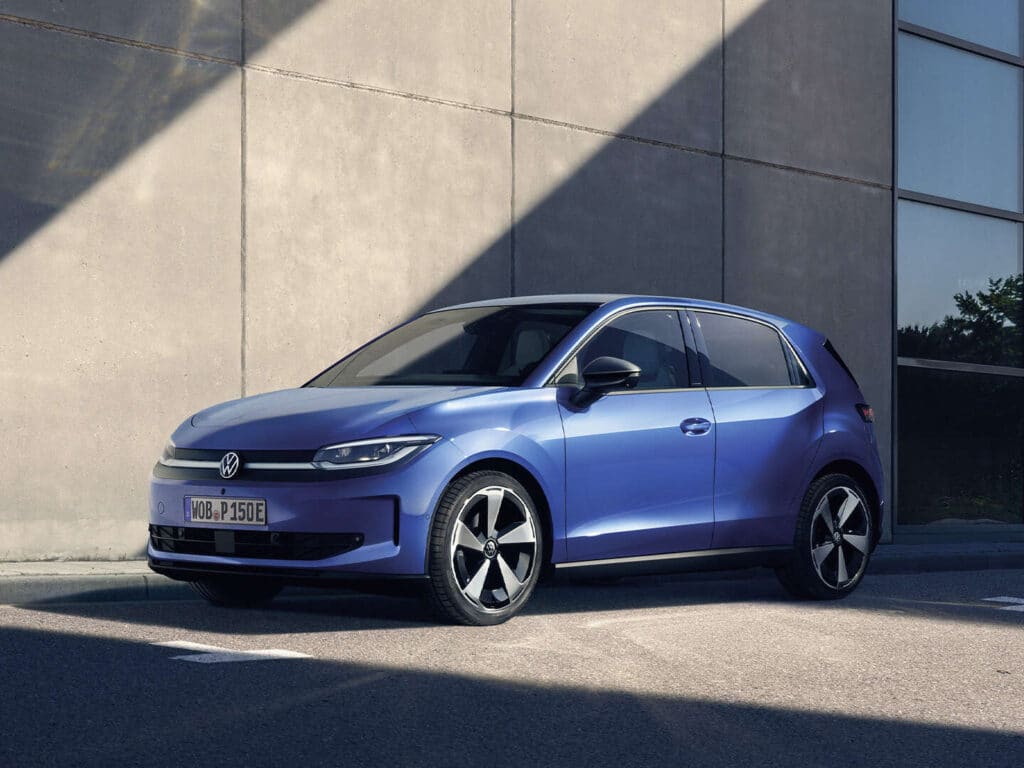
With more than 20 million units sold, the Polo enters a new chapter as it is reimagined for an electric future. Developed in Wolfsburg, the ID. Polo combines clean design, generous interior space, and high build quality with a starting price of 24,995 euros in Germany.
The model also introduces new technologies to its segment, including a WLTP range of up to 454 km, Connected Travel Assist with traffic light recognition, efficient one-pedal driving capability, and vehicle-to-load functionality that enables the car to supply external devices such as e-bikes. Pre-sales begin today in Germany.
Thomas Schäfer, Member of the Board of Management of Volkswagen AG, CEO of Volkswagen Passenger Cars and Head of the Brand Group Core, stated that the ID. Polo brings a long-standing bestseller into the electric era. He emphasized that the model aims to make electric mobility more accessible through clear design, intuitive operation, strong quality, and technology transferred from higher vehicle classes.
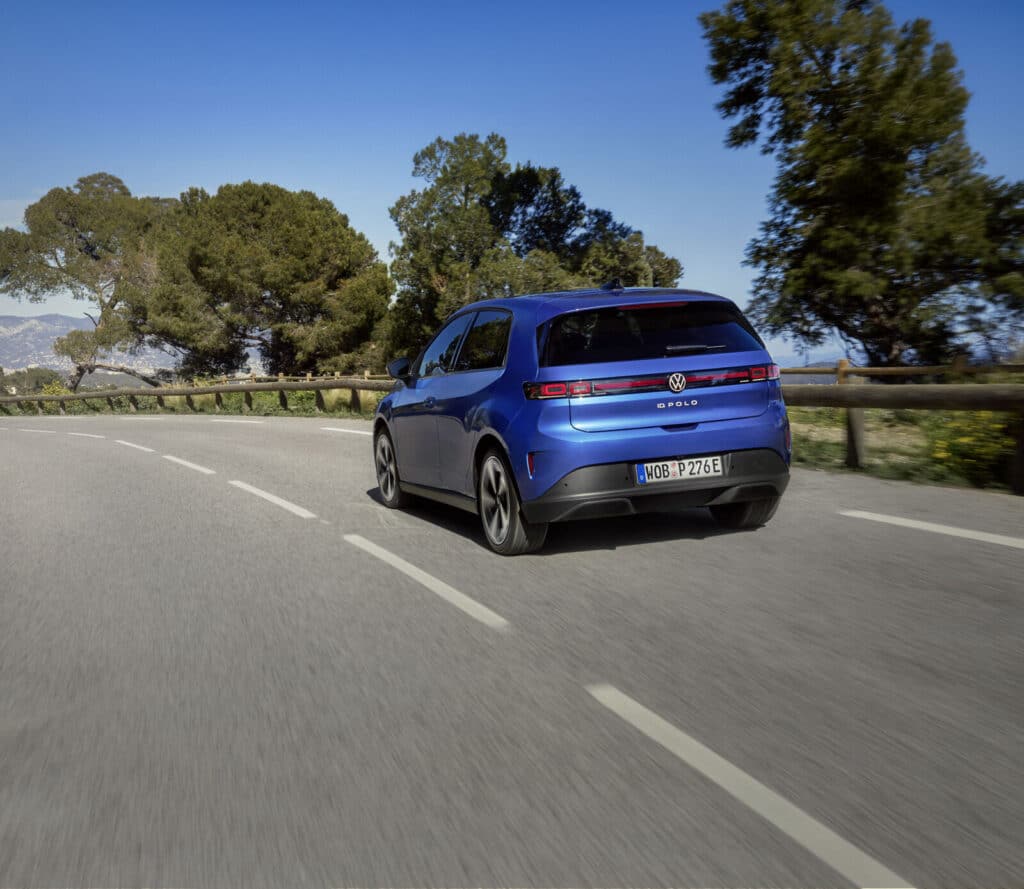
Range and charging
The ID. Polo is offered with a new front-wheel drive system and three power outputs: 85 kW (116 PS), 99 kW (135 PS), and 155 kW (211 PS).
The 85 kW and 99 kW versions use a 37 kWh (net) LFP battery and support DC fast charging from 10 to 80 percent in about 23 minutes, with up to 329 km range.
The 155 kW variant uses a 52 kWh (net) NMC battery, enabling up to 454 km range and DC fast charging from 10 to 80 percent in about 24 minutes.
Dimensions and practicality
The ID. Polo measures 4,053 mm in length, 1,816 mm in width, and 1,530 mm in height, with a 2,600 mm wheelbase.
Compared with its combustion-engine predecessor, it offers improved space efficiency through the MEB+ platform. Luggage capacity increases to 441 litres, up from 351 litres, and expands to 1,240 litres with the rear seats folded.
This makes the vehicle more versatile for daily use and family travel while maintaining a compact footprint suitable for urban environments.
Design
The model debuts Volkswagen’s Pure Positive design language, led by Chief Designer Andreas Mindt. It features clean proportions, a recognizable C-pillar inspired by early Golf models, and a modern light signature that emphasizes its technological character. The result is a compact car designed for clarity, stability, and long-term visual appeal.
Interior and user experience
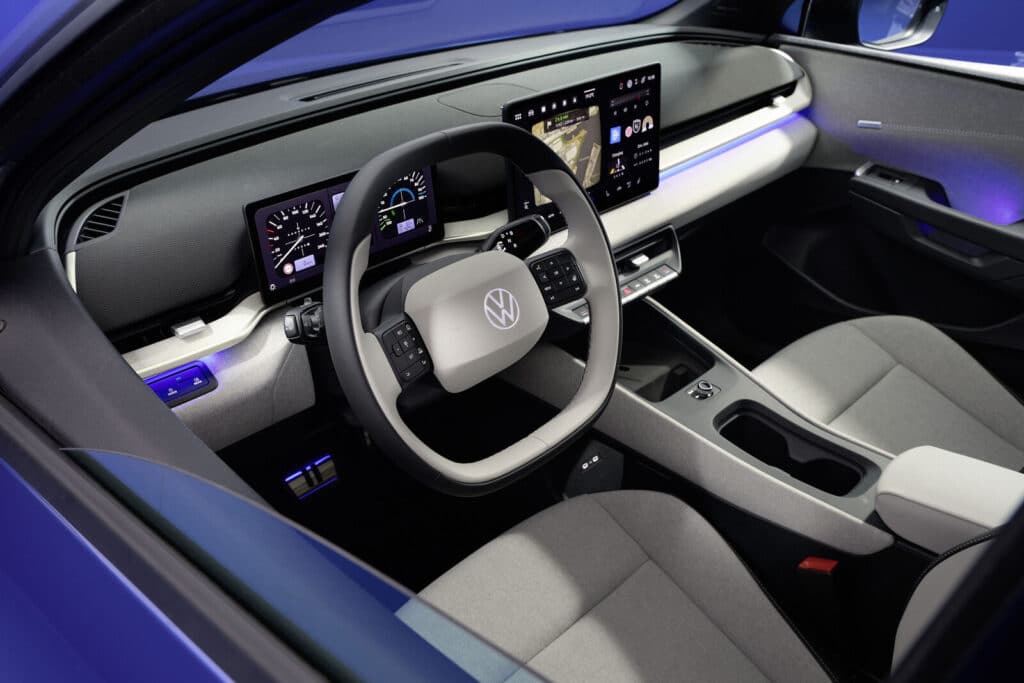
The interior follows a minimalist, high-quality design approach with improved ergonomics and materials. A 26 cm digital instrument cluster is positioned ahead of the driver, while a 33 cm central infotainment display is integrated into the dashboard.
Controls are designed for accessibility and usability, combining physical buttons with digital interfaces. Additional features include customizable display themes and Volkswagen branding integrated into interior detailing.
Assistance systems
The ID. Polo includes multiple driver assistance systems enabled by the MEB+ platform and new software architecture. Optional Connected Travel Assist supports longitudinal and lateral guidance and can respond to traffic lights within system limits. One-pedal driving is also included for simplified deceleration control.
Equipment lines
Trend – Entry level with DC fast charging, LED lighting, Lane Assist, Side Assist, digital cockpit, infotainment system, and automatic climate control.
Life – Adds Adaptive Cruise Control, rear-view camera, parking assistance, inductive smartphone charging, voice control, and additional comfort systems.
Style – Includes IQ.LIGHT LED matrix headlights, illuminated design elements, premium interior materials, heated features, dual-zone climate control, and enhanced lighting functions including expanded ID. Light interaction.
Optional features
Available options include a Harman Kardon sound system, panoramic glass roof, massage function seats, and electrically adjustable driver seat with memory function.
Vehicle-to-load
The ID. Polo supports vehicle-to-load functionality up to 3.6 kW, allowing it to power external devices such as e-bikes or outdoor equipment via onboard outlets or charging adapters.
Availability and pricing
Pre-sales in Germany begin immediately. The launch model starts at 33,795 euros for the ID. Polo Life with the 155 kW powertrain and 52 kWh battery. Entry-level variants and additional configurations will follow in summer, starting from 24,995 euros.
Brand Group Core
The ID. Polo reflects collaboration within Volkswagen’s Brand Group Core, which includes Volkswagen, Volkswagen Commercial Vehicles, SEAT/CUPRA, and Škoda. The model demonstrates shared architecture and scaling benefits aimed at making electric mobility more accessible while increasing feature availability across entry segments.

Electric Vehicle Marketing Consultant, Writer and Editor. Publisher EVinfo.net.
Services