Zeekr 9X Earns China’s Highest Owner Recommendation Score as Global Expansion Accelerates
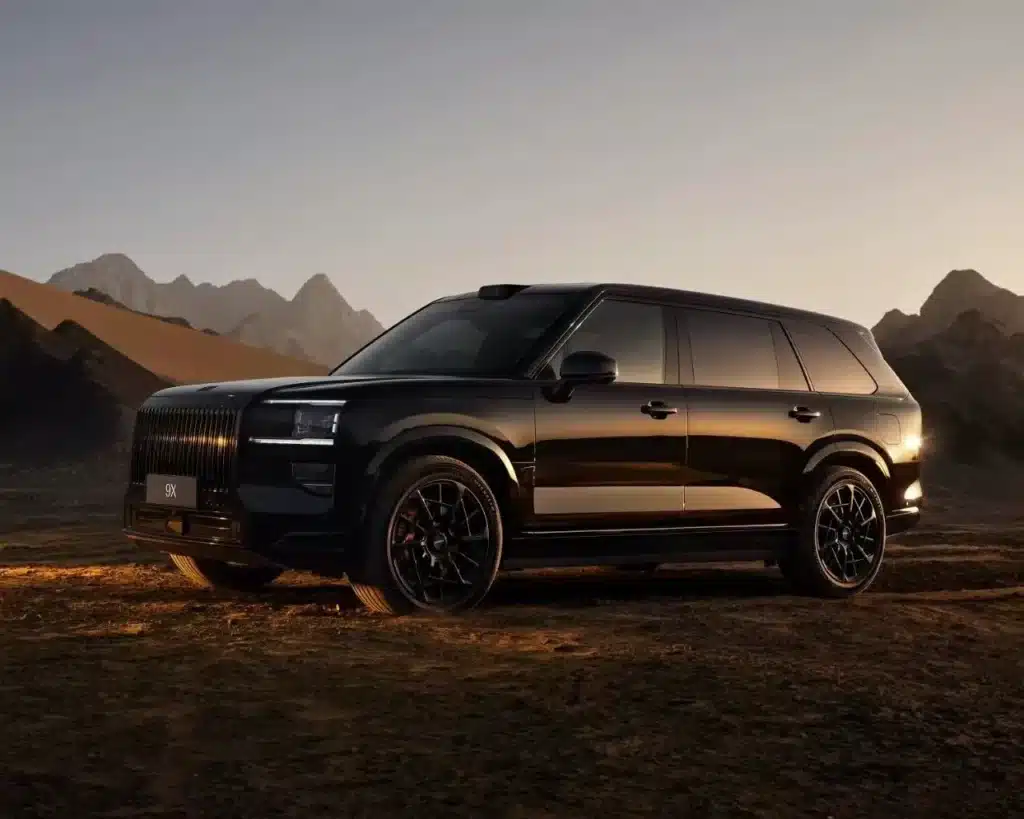
The Zeekr 9X has achieved the highest owner recommendation rating among China’s premium new energy vehicles (NEVs), underscoring the growing strength of the brand as it continues to expand both domestically and internationally. According to Geely Auto Group, the luxury SUV earned a Net Promoter Score (NPS) of 83.9 in the 2026 First-Half New Energy Vehicle Brand Health Study conducted by Chinese market research firm LandRoads.
The study surveyed more than 10,000 NEV owners across China and evaluated customer satisfaction, brand perception, and owner loyalty across multiple vehicle segments. Among vehicles priced above RMB 500,000 (approximately $73,000), the Zeekr 9X received the highest recommendation score, highlighting strong customer confidence in the premium EV.
Geely attributes the vehicle’s success to several customer-focused initiatives introduced by Zeekr, including greater transparency around product updates, more stable pricing policies, and improved communication with owners. These efforts come at a time when rapid product refreshes and aggressive price adjustments have become common throughout China’s highly competitive EV market, often creating uncertainty among consumers regarding long-term vehicle value.
The strong customer response coincides with growing sales momentum for the brand. Zeekr has now recorded five consecutive months of year-over-year and month-over-month sales growth in China. The company’s flagship lineup, which includes the Zeekr 009 luxury MPV, the 9X SUV, and the Zeekr 8X, now accounts for nearly half of the brand’s total sales volume, reflecting increasing demand for premium electric vehicles.
Beyond its home market, Zeekr continues to accelerate its global expansion strategy. The brand is now present in more than 50 countries and regions spanning Europe, the Middle East, Southeast Asia, Oceania, and Latin America. Its international portfolio currently includes the Zeekr 001, 009, X, 7X, and 7GT, supported by an expanding network of sales, delivery, and aftersales operations.
Geely also confirmed that the Zeekr 9X is preparing for its first overseas deliveries, with select Middle Eastern markets expected to receive the vehicle during the second half of 2026. The launch marks another important milestone in Zeekr’s efforts to establish itself as a leading global premium EV brand.
With rising customer satisfaction, consistent sales growth, and a rapidly expanding international footprint, the Zeekr 9X is emerging as one of China’s most successful premium electric vehicles and a key driver of the brand’s global ambitions.
EVinfo.net’s Take: China’s Auto Industry Surges While America Falls Further Behind
Over the past decade, China has transformed itself from the world’s largest automotive market into the global leader in electric vehicle production, battery manufacturing, and clean transportation technology. Meanwhile, the United States, despite pioneering much of the innovation behind modern EVs, risks surrendering its competitive advantage because of increasingly bad federal policies.
China’s success did not happen by accident. The country invested heavily in battery production, charging infrastructure, renewable energy, and domestic manufacturing. Chinese automakers such as BYD, NIO, XPeng, and Zeekr have rapidly expanded their capabilities while competing aggressively in both domestic and international markets. Today, China produces the majority of the world’s EV batteries and has become the largest exporter of electric vehicles.
At the same time, the U.S. automotive industry faces growing uncertainty. Since 2025, federal policy changes have created headwinds for EV adoption by weakening incentives, reducing support for clean transportation initiatives, and creating uncertainty for automakers making long-term investment decisions. While American companies continue investing billions in EV manufacturing, shifting policy signals make it harder for businesses to plan future product development and factory expansion.
The consequences extend far beyond vehicle sales. The global automotive industry is increasingly centered around batteries, software, semiconductors, charging infrastructure, and renewable energy integration. These sectors represent high-value jobs, technological leadership, and long-term economic growth. Countries that dominate EV manufacturing are likely to capture a larger share of future transportation revenues.
There are also public health and energy security implications. Transportation remains one of the largest sources of air pollution and greenhouse gas emissions in the United States. Expanding EV adoption reduces harmful emissions while lowering fuel costs for consumers. When powered by renewable energy, EVs also increase national security, reducing dependence on volatile global oil markets that can be disrupted by geopolitical conflicts and supply shocks.
China’s rise demonstrates what sustained industrial policy can accomplish. While no country’s approach is perfect, long-term investment and policy consistency have helped create a globally competitive automotive sector. The United States still possesses world-class engineering talent, innovative automakers, and abundant renewable energy resources. However, maintaining leadership will require policies that encourage domestic manufacturing, support clean transportation, expand charging infrastructure, and provide businesses with the certainty needed to invest for the future.
The global automotive race is no longer about who can build the best gasoline vehicle. It is increasingly about who can lead the transition to electrified transportation. The decisions made today will determine where the jobs, factories, and technological breakthroughs of tomorrow are created.

Electric Vehicle Marketing Consultant, Writer and Editor. Publisher EVinfo.net.
Services