EVs and Renewable Energy Enhance National Security During Geopolitical Conflicts
The conflict between the United States, Israel and Iran in 2026 highlights important facts. Gas vehicles and fossil fuel power plants are vulnerable to price shocks and oil shortages caused by geopolitical conflicts and wars. EVs and renewable energy, when combined with battery power for homes and businesses, protect drivers, homeowners and business owners from uncertainty and price shocks.
When most people think about electric vehicles (EVs), they think about the cleaner air, lower ownership costs, and cutting-edge technology that EVs offer. But there is another powerful reason why EV adoption matters: national security. The more any country electrifies its transportation system, the less dependent it becomes on foreign oil, unstable global markets, and supply chains that can be weaponized in times of crisis and wartime.
For decades, economies around the world have been tied to oil imports from volatile regions, which cause massive pollution. That dependence has shaped foreign policy and left nations vulnerable to supply disruptions, price shocks, and geopolitical pressure. By shifting to EVs powered by domestically generated electricity, especially from clean and cheap renewables like wind, solar, and hydro, any country can insulate itself from these external risks. Energy independence becomes a reality when vehicles run on power generated within a nation’s own borders. Electrification also strengthens the resilience of critical infrastructure.
Unlike gasoline, which must be transported through pipelines or shipped across oceans, electricity can be produced and distributed locally. A decentralized grid with renewable generation, battery storage, and vehicle-to-grid technology reduces the risk of a single point of failure.
In emergencies, electric vehicles themselves can act as mobile power sources, supporting homes, hospitals, and first responders, when equipped with vehicle to grid (V2G) bidirectional charging technology. V2G is growing fast all over the globe.
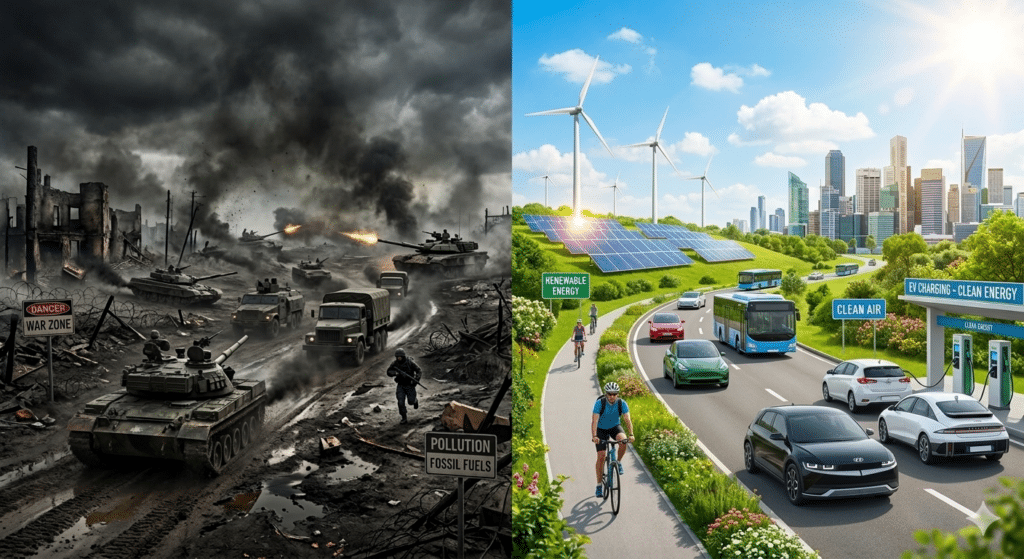
The 1970s oil crisis was a global wake-up call. When Middle East supplies were disrupted, economies worldwide seized up, exposing how deeply nations had become dependent on a resource controlled by others. That vulnerability has not disappeared. EVs change the equation by running on electricity that can be produced domestically, so even if global oil markets experience disruptions, drivers can keep moving.
Every time a driver charges an EV instead of filling a tank with imported fuel, energy spending stays within the local economy. That money supports domestic energy production, local jobs, grid improvements, and renewable energy development. Expanding EV charging networks also creates employment in manufacturing, construction, engineering, and maintenance, while giving local governments new sources of tax revenue and infrastructure investment.
The case is clear. EVs and renewable energy are the strongest tools any nation has for protecting its economy, strengthening its defenses, and ensuring its energy future remains in its own hands. EVs are the most cost effective and eco friendly vehicles available today, and are growing fast globally. Global electric vehicle (EV) sales reached a staggering 20.7 million units in 2025, representing 20% year-on-year growth, according to new data from Benchmark Mineral Intelligence.
“The world’s addiction to fossil fuels is one of the greatest threats to global stability and prosperity,” said
António Guterres, United Nations Secretary-General in February 2026.
Over the last year, a concerning pattern has emerged in US federal transportation and environmental policy. Instead of accelerating the transition away from fossil fuels, the U.S. administration is loosening incentives and standards that protect public health and the climate. These decisions are not minor regulatory adjustments. They will increase harmful smog, worsen air pollution, undermine climate progress, and cost drivers more money over time.
These foolish policies also reduce American national security, by cutting back on EVs and renewable energy, which enhance American national security.
There’s never been a better time than now to drive electric and install solar energy on your home or business. Not only will you save money and the environment, but you will protect yourself from the higher prices of geopolitical conflicts and wars, and the risk of not having fuel for your vehicle. It’s also the most patriotic thing you can do, protecting yourself and your fellow citizens from fuel shortages and pollution.

Electric Vehicle Marketing Consultant, Writer and Editor. Publisher EVinfo.net.
Services