Hybrid Sales Surge From Rising Gas Prices As GM Sits Out The U.S. Hybrid Market
Americans have faced significant increases in gasoline and diesel prices, as the ongoing conflicts in Ukraine and Iran continue to tighten global oil supplies, according to analysts.
On September 14, Reuters reported Russia hit petrol stations in Kyiv and Ukraine struck a Russian oil refinery, as the warring sides carried on with strikes on each other’s energy targets despite an announcement by the U.S. President that they had agreed to stop, adding more problems for global oil supply to the already dire situation at the Strait of Hormuz.
AAA reported a current average of $4.4386 for regular gas on September 17, 2026, and a year-ago average of $3.2003.
Hybrid vehicle demand is rising sharply in the United States as skyrocketing gasoline prices and rising inflation squeeze the pocketbooks of struggling Americans. The BBC reported on September 16, 2026, that U.S. interest rates have been raised for the first time in more than three years and could be increased further in a bid to slow rising prices.
High fuel prices are pushing more consumers toward hybrid vehicles that combine gasoline engines with electric motors, because of the superior gas mileage the vehicles offer over purely gasoline-powered vehicles. Inflation is rising primarily because diesel fuel powers the delivery of food and all sorts of products to Americans all around the country.
General Motors, however, remains largely absent from the hybrid market as it continues to emphasize gasoline-powered trucks and SUVs alongside its electric vehicle lineup. Reuters reported the news on September 16, 2026.
GM’s U.S. market share fell to 16.8% during the first half of 2026 from 17.6% a year earlier. Meanwhile, supplier sources and forecasting firms expect GM will not have a hybrid vehicle available for U.S. customers until near the end of the decade.
In August, hybrids accounted for 19% of U.S. retail vehicle sales, up from approximately 16% during the months before the Iran war began in late February. In May, hybrids reached 20% of sales, meaning one in every five vehicles sold was a hybrid. According to J.D. Power, hybrids sold from dealer lots more than twice as quickly as non-hybrid gasoline vehicles during the second quarter.
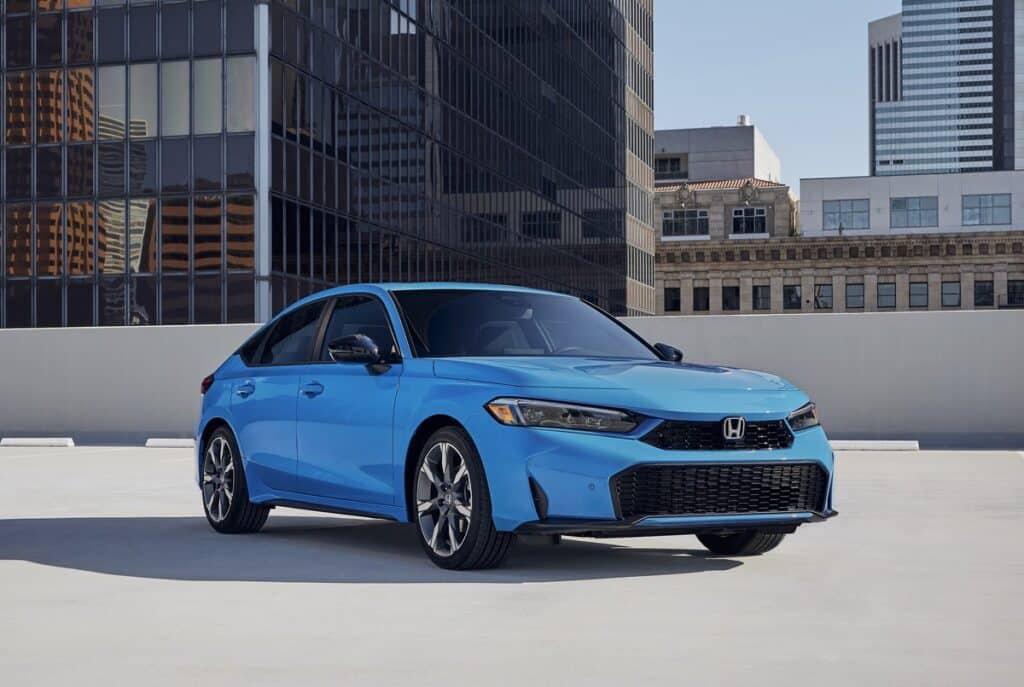
Rising Gas Prices Drive Hybrid Demand
Florida auto dealer Bill Wallace told Reuters the majority of customers visiting his dealerships have recently been asking about hybrid options as they look for ways to reduce the impact of higher gasoline prices.
Wallace operates 16 dealerships, including Hyundai, Kia and Mazda stores. Those brands offer customers multiple hybrid choices. His Chevrolet and Cadillac dealerships, however, have a very different situation.
GM’s Chevrolet and Cadillac brands offer broad selections of fully electric vehicles, but GM currently has only one hybrid model, the Corvette sports car.
The rise in hybrid demand has accelerated since the Iran war began in late February and gasoline prices increased by approximately 40%.
GM executives have historically argued that hybrids add too much cost and complexity. The company instead chose to invest heavily in EVs based on its expectation that the market would eventually transition to all-electric vehicles.
GM CEO Mary Barra described hybrids as an “interim solution” during a 2019 Barclays conference. She said customers generally were not interested in hybrids and that GM wanted to move directly to EVs to help the environment.
By late 2024, however, it had become clear that EV sales were not growing as quickly as GM had expected. Barra said the automaker would introduce plug-in hybrids for the North American market by 2027.
This month, Barra told Fortune that GM would have hybrids in important vehicle segments but did not provide a timeframe.
Supplier sources and forecasting firms now project that GM will not have a hybrid on sale in the United States until near the end of the decade. A GM spokesperson declined to comment on the projection.
Automakers Expand Hybrid Offerings
GM is not the only automaker that has struggled with EV sales, but many of its competitors have hybrids available as an alternative, with some manufacturers planning to expand their hybrid offerings.
Toyota Motor, which pioneered modern hybrid technology with the Prius in the late 1990s, has credited hybrid sales with contributing to its strong U.S. performance this year.
During the first half of 2026, Toyota’s “electrified” vehicles, consisting mostly of hybrids along with EVs, accounted for more than half of the company’s U.S. sales for the first time.
The automotive industry has also seen a proliferation of hybrid models in the popular compact SUV segment. Toyota’s RAV4 and Honda’s CR-V are among the hybrid offerings in the category, while GM offers gasoline-only versions of compact SUVs such as the Chevrolet Trax and Buick Envista.
Nissan is also accelerating the introduction of its new hybrid Rogue compact SUV by several months, with a planned rollout this autumn. A company spokesperson said the decision was made in response to growing consumer demand for hybrid SUVs.
“Everybody’s coming up with a hybrid in that space,” Srini Rajagopalan, vice president of customer success for OEM solutions at J.D. Power, told Reuters. “This is becoming a little bit more than just a phase or a fad.”
GM Continues To Bet On EVs For The Long Term
GM’s U.S. market share declined to 16.8% during the first half of 2026 from 17.6% during the same period a year earlier, while hybrid leaders Toyota and Honda increased their shares.
Automotive analyst John Murphy of Murphy Automotive Partners expects hybrids to account for 34% of U.S. vehicle sales in 2031.
Murphy told Reuters GM’s emphasis on highly profitable gasoline-powered trucks and SUVs makes sense from a business perspective, while the company’s EV lineup could position it well if regulations become more stringent in the coming years.
GM’s strategy “is not as clear a major mistake as I think some people believe,” Murphy said.
So far, investors have responded positively to GM’s focus on gasoline-powered trucks and SUVs, which has contributed to strong profits and pushed the company’s stock price close to a record level. At the same time, GM’s U.S. vehicle sales have declined this year, and some dealers say they are losing customers to competitors that offer hybrid models.
“There’s no question that they’re losing market share,” Wallace said.
A GM spokesperson said the company’s strategy is to build a stronger and more profitable business by delivering vehicles that customers want.
New Jersey GM dealer David Ferraez told Reuters dealers would be hesitant to increase the number of EVs on their lots because they have been difficult to sell.
“I’m hoping that GM can adapt and come up with a way to build hybrids,” he said.
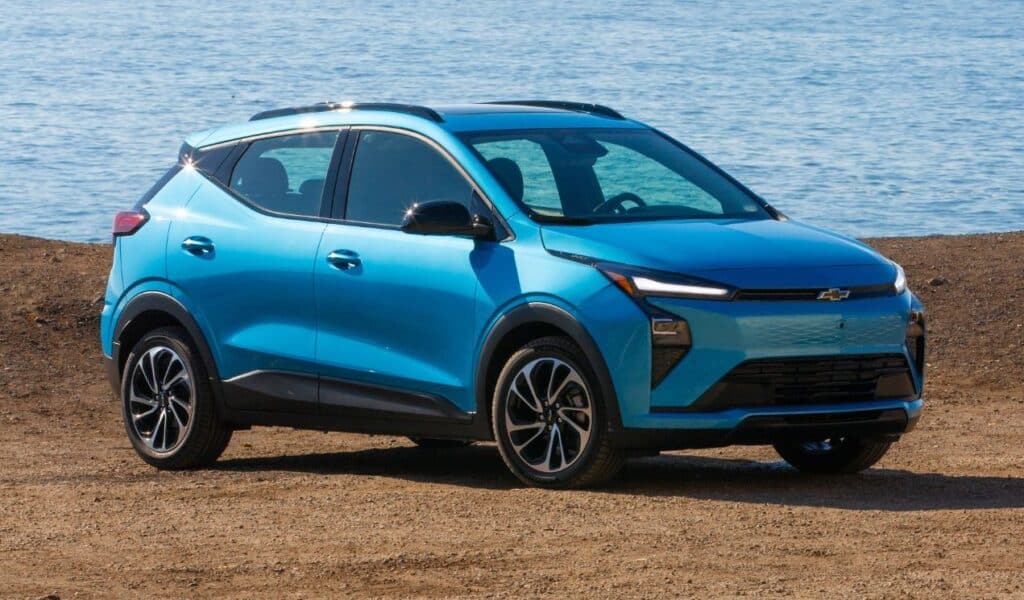
EVinfo.net’s Take: Hybrids Are A Temporary Solution, While BEVs Are Easier to Adopt Than Many Americans Realize
The surge in hybrid sales shows that Americans want relief from high gasoline costs. Hybrids can reduce fuel consumption, but they remain a transitional technology. Battery-electric vehicles (BEVs) eliminate gasoline use, offer a simpler drivetrain, require less routine maintenance and cost less to operate in the vast majority of cases.
For many Americans, the biggest obstacle to buying an EV is not the vehicle itself but the perception that EV ownership is difficult. That is changing rapidly.
Charging infrastructure continues to expand, charging speeds are increasing, and charging reliability is improving. More homes, workplaces, apartments and businesses are gaining access to charging. Longer-range EVs and a growing used-EV market are also making electric transportation more accessible.
For drivers who can charge at home, EV ownership can be particularly simple. Instead of making regular trips to a gas station, drivers can plug in at home and start each day with a charged vehicle. Public charging provides additional flexibility for longer trips.
Yale Climate Connections reported that in all 50 states, the cost of home-charging an EV is considerably cheaper than fueling a car with gasoline.
The economic advantages extend beyond gasoline savings. BEVs eliminate oil changes, spark plugs, exhaust systems and many other components associated with internal combustion engines, creating vastly less expensive maintenance costs.
The environmental case is equally important. BEVs produce no tailpipe emissions, reducing pollution where people live and drive. Their total emissions depend on electricity generation and manufacturing, but those emissions can decline as the electric grid becomes cleaner.
Hybrids, including plug-in hybrids, can help consumers transition to electric transportation. But conventional hybrids still depend entirely on gasoline, while plug-in hybrids retain an internal combustion engine.
For millions of Americans, there is no need to wait for EV technology to become practical. BEVs are already capable of meeting everyday transportation needs, while the technology and infrastructure continue making BEV ownership easier.
Hybrids may be a useful bridge, but BEVs are the destination for transportation that is simpler, less expensive to operate and better for the environment.

Electric Vehicle Marketing Consultant, Writer and Editor. Publisher EVinfo.net.
Services