Global Commercial Electric Truck Market Accelerates As Technology And Economics Improve
Road freight is essential to modern economies, but its energy consumption and emissions continue to increase. At the same time, growing concerns over energy security and the development of new supply chains for critical materials and energy technologies are influencing government and corporate strategies around the world. Fossil fuel powered freight truck costs continue to rise, while electric trucks become increasingly attractive for the cost savings they offer, and a variety of other reasons.
A new report from BloombergNEF, Zero-Emission Commercial Vehicles Building Momentum: 2026 Factbook for Investors, produced in partnership with Smart Freight Centre, the Dutch Ministry of Infrastructure and Water Management and Traton SE, examines the rapidly developing clean truck market.
The September 17, 2026 report finds that technology improvements, infrastructure investment, changing market conditions and emerging financing models are supporting strong growth in zero-emission trucks, although significant barriers remain.
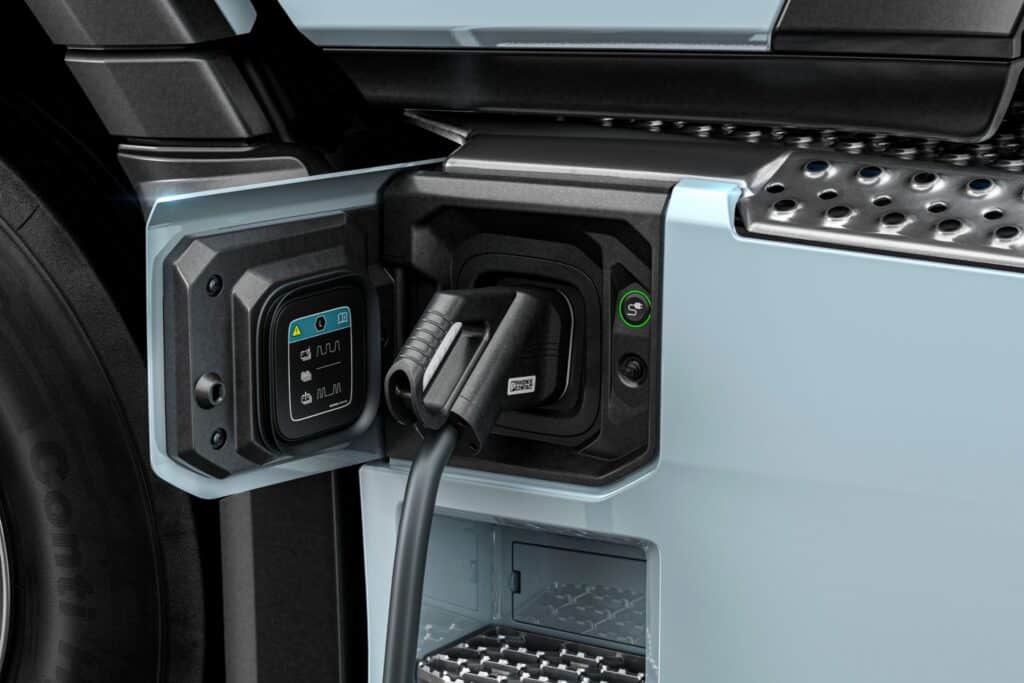
Zero-Emission Truck Sales Continue To Rise
Global sales of medium- and heavy-duty zero-emission trucks increased 75% during the first half of 2026 compared with the same period in 2025. Zero-emission trucks are expected to account for more than 9% of global truck sales in 2026.
China remains the largest market, while sales are also increasing across several European countries. India, Brazil and Southeast Asia are beginning to see stronger activity, although volumes remain relatively small. Nearly all zero-emission trucks sold during the first half of 2026 were battery-electric models.
Global Heavy-Duty Commercial Vehicle Sales Rebound, Led By China
Global medium- and heavy-duty truck sales returned to growth in 2025, reaching 4.2 million vehicles, a 4% increase from 2024. BloombergNEF expects the market to expand another 7% in 2026, pushing global sales to just over 4.5 million vehicles.
China is leading the recovery. Truck sales in the country increased 23% in 2025 to 1.3 million vehicles and are continuing to grow in 2026. Government policies supporting fleet replacement and electric truck adoption are helping accelerate the market.
China’s 2026 vehicle scrappage program offers incentives of up to 140,000 yuan, or approximately $20,800, for replacing an older truck with an electric model. The incentives are helping encourage fleet operators to retire older vehicles while accelerating the transition to zero-emission transportation.
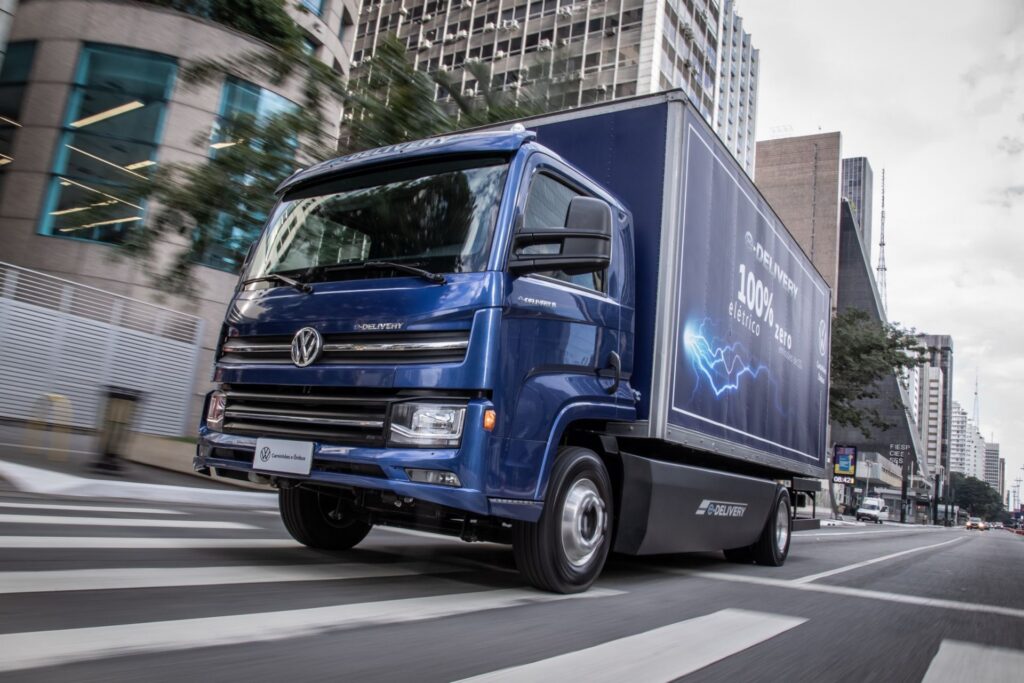
Electric Trucks Can Already Be Competitive
Battery-electric trucks are becoming economically competitive across a growing range of applications. Although electric trucks can still cost more than diesel models under average market conditions, rapidly rising diesel fuel costs, high vehicle utilization and differences in daily driving patterns make electrification more and more financially attractive.
Depending on vehicle capital costs and energy prices, battery-electric trucks could already be economically competitive for nearly 50% of some fleets. Falling battery prices are expected to further improve the economics, although charging costs can vary significantly between depot and public charging.
Battery Technology Is Improving
Truck battery prices continue to decline, although the pace of reductions has slowed in recent years. In China, commercial-vehicle battery packs averaged $108 per kWh, compared with $182 per kWh in other markets.
Increasing production volumes and growing electric truck sales should drive additional cost reductions. Battery technology is also improving as manufacturers gain experience with commercial applications and expand production expertise.
Electrification Is Reshaping The Truck Market
Electric trucks are creating opportunities for new manufacturers to enter an industry historically characterized by high barriers to entry. China’s electric truck market is more fragmented than its overall truck market, with manufacturers from adjacent industries, including buses and machinery, gaining significant market share.
Chinese manufacturers are also using exports to enter Southeast Asian, South American, African and European markets. However, opposition to Chinese-made vehicles is emerging in some markets. Chinese manufacturers exported approximately 2,000 heavy-duty electric truck tractors during the first half of 2026.
The US Is Falling Behind
The US electric truck market remains considerably smaller than China and Europe, with only a few hundred electric trucks sold during the first half of 2026. The report points to limited vehicle availability, high upfront costs and a weakening regulatory environment as major factors.
Federal policy is unlikely to provide stronger support in the near term, although state incentives and other measures remain available. Meanwhile, investment in truck charging infrastructure continues as fleets prepare for new vehicles.
Relatively low electricity prices and high annual vehicle mileage could provide favorable conditions for electric trucks in the US if vehicle availability and infrastructure continue to improve and diesel prices stay high for some time, which experts predict.
Financing Remains A Major Challenge
Financing electric fleet deployment is developing, but approaches remain highly customized. Fleet operators often need transportation contracts that provide predictable revenue, while financiers may also consider the value of environmental benefits such as emissions reductions.
The financing market for electric trucks remains much less developed than the established diesel truck market. Fleet operators, charging developers and financial institutions are nevertheless developing new structures to support deployment.
Fuel-Cell Truck Sales Continue To Decline
Global fuel-cell truck sales continued to fall in the first half of 2026, declining 55% year over year to approximately 530 vehicles. China accounted for about 95% of global sales, with 507 units delivered during the period. Even so, Chinese sales were less than half the level recorded during the first half of 2025.
The sharp sales peak during the fourth quarter of 2025 was likely driven by expectations that supportive policies would expire. Sales subsequently continued their downward trend through 2026.
Fuel-cell truck sales in the US and Europe totaled fewer than two dozen vehicles during the first half of 2026. Most startups have exited the fuel-cell truck market, while established manufacturers continue to develop hydrogen-powered vehicles.
Daimler Truck plans to begin customer deployment of its NextGenH2 truck toward the end of 2026. However, the company has cautioned that hydrogen fueling infrastructure remains in an early stage.
Global Diesel Prices Hit Record Highs, Making a Better Case for Electric Trucks
Electric trucks are becoming increasingly attractive around the globe, as diesel prices in Europe and the US have surged to record levels as conflicts in Iran and Ukraine disrupt fuel production, refinery operations and shipping routes. Reuters reported on September 21, 2026, that European diesel futures have more than doubled since early 2026, while US retail diesel prices have surpassed $6 per gallon.
Diesel inventories are also extremely tight. Stocks at Europe’s Amsterdam-Rotterdam-Antwerp hub reached their lowest seasonal level on record, while US diesel inventories fell to their lowest level since records began in 1982.
The International Energy Agency warns that many refineries are already operating near capacity, leaving limited options for increasing supplies. Analysts expect the diesel shortage and elevated prices to continue into at least early 2027, with additional Red Sea disruptions, agricultural demand and winter heating demand potentially pushing prices higher.
Energy Security Adds Momentum
Energy security has become an increasingly important consideration for governments and businesses. Road freight consumes approximately 19 million barrels of oil each day, leaving the sector exposed to geopolitical disruptions, fuel supply constraints and price volatility.
Electrifying road freight can reduce that exposure by shifting energy demand from petroleum toward electricity. Accelerating this transition will require continued investment in domestic electricity generation, charging infrastructure and supply chains for batteries and other critical technologies.
The global clean truck market is moving beyond early demonstrations toward commercial-scale deployment. Falling battery costs, improving vehicle technology and expanding infrastructure are making electric trucks viable for an increasing number of applications, while energy security is adding another reason for governments and businesses to accelerate the transition.

Electric Vehicle Marketing Consultant, Writer and Editor. Publisher EVinfo.net.
Services