Rideshare Drivers Face Soaring Fuel Costs as Electric Vehicles Offer a Way Out
U.S. rideshare drivers using gasoline-powered and hybrid vehicles are absorbing skyrocketing fuel costs as the Iran war pushes up petroleum prices. For drivers working with Uber and Lyft, gasoline is a major business expense. Every increase at the pump cuts into earnings, particularly for drivers who spend long hours on the road and accumulate thousands of miles each month. Switching to a battery-electric vehicle (EV) offers a way to reduce exposure to volatile oil prices and lower operating costs.
AAA reported on October 21 a regular gasoline price average of $4.2644 vs. $3.0478 a year ago, an increase of $1.22 (+39.9%).
Hybrids deliver better fuel economy than conventional gasoline vehicles, but they still depend on petroleum. Battery-electric vehicles eliminate gasoline purchases entirely, replacing them with electricity that can cost significantly less per mile. EVs also generally require less routine maintenance because they do not need engine oil changes and have fewer moving parts associated with conventional powertrains. Actual savings depend on electricity rates, charging access, vehicle efficiency, insurance, financing, and how many miles a driver travels.
Uber Invests in EV Infrastructure and Vehicle Partnerships
Uber is promoting electrification through automaker partnerships, financial incentives, charging-network agreements, and infrastructure investments. In February 2026, the company announced plans to invest more than $100 million in dedicated DC fast-charging infrastructure for autonomous vehicles and fleet operations. Initial charging hubs are planned for U.S. markets including the San Francisco Bay Area, Los Angeles, and Dallas.
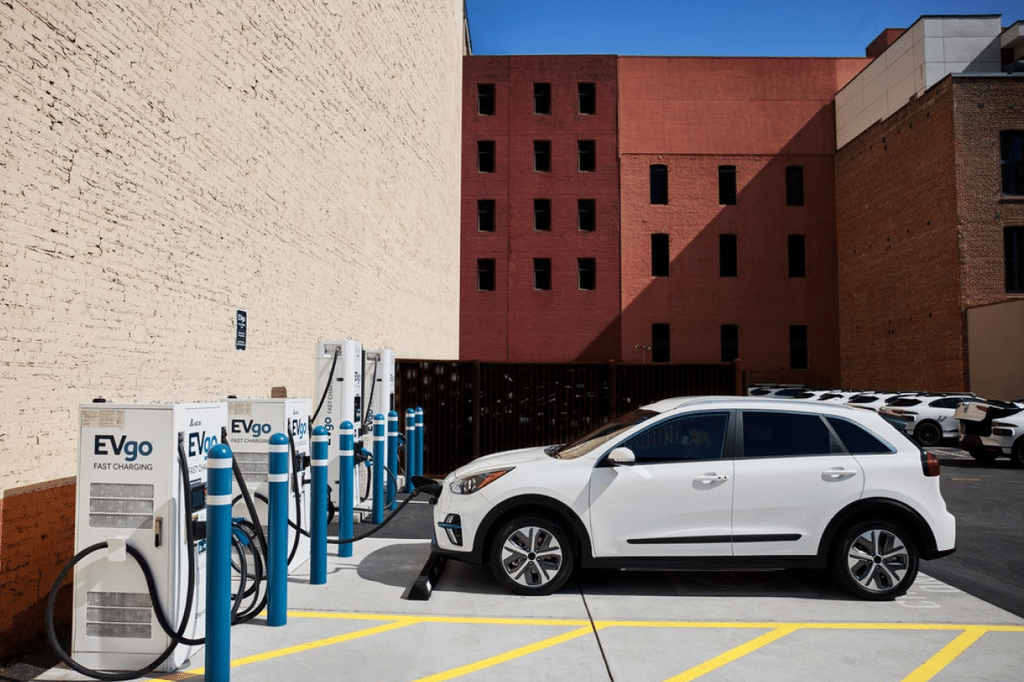
Uber has also partnered with public charging networks, including EVgo in the United States, Electra in France and Spain, IONITY in the United Kingdom, and Allego in the Netherlands. These partnerships aim to increase charging utilization, improve access to charging infrastructure, and provide discounts for drivers.
The company’s broader electrification strategy includes major investments in electric vehicles and autonomous driving. In March 2026, Uber announced an agreement with Rivian worth up to $1.25 billion to support the deployment of as many as 50,000 autonomous R2 electric vehicles by 2031, subject to milestones and other conditions. The initial agreement included a $300 million investment.
Uber has also invested $300 million in Lucid and $300 million in autonomous-driving technology company Nuro to support plans for as many as 20,000 Lucid Gravity electric SUVs equipped with Nuro’s autonomous driving technology. Although these investments primarily advance the company’s future robotaxi business, they demonstrate Uber’s commitment to an increasingly electric transportation network.
Lyft Offers Financial Incentives and Charging Discounts
Lyft is also investing in EV adoption as part of its commitment to achieving a 100% electric vehicle platform by 2030. During 2024 and 2025, the company committed an additional $80 million to support EV drivers and encourage drivers using conventional vehicles to make the switch. Lyft reached 100 million EV rides on its platform in September 2025, ahead of schedule.
The company’s driver support includes EV ride challenges that provide additional earnings for completing qualifying trips. Some regional promotions have offered bonuses of $100 to $150 for meeting weekly ride targets. Lyft has also reported that EV drivers earn an average of 20% more in tips per ride, according to its platform data.
Charging costs are another important consideration for drivers. Lyft has established partnerships with charging networks such as EVgo and Electrify America, offering eligible drivers discounts that can reach 40% to 45% off standard credit card rates at participating stations, depending on the applicable program. Drivers using the Lyft Direct business debit card can also qualify for charging-related cash back, with reported rewards ranging from 1% to 12% depending on driver reward status.
For drivers who can charge at home, Lyft has partnered with charging equipment manufacturers such as Wallbox to provide discounted Level 2 home chargers and installation assistance. Home charging can make EV ownership more economical and convenient, particularly for drivers who start each shift with a fully charged battery.
California’s RIDE Program Offers Significant Financial Assistance
California is preparing additional support through its Rideshare Incentives for Driving Electric (RIDE) program. Applications are scheduled to open November 2, 2026, according to the supplied program information.
Eligible drivers may qualify for up to $20,300 toward purchasing or leasing a new zero-emission vehicle, or up to $14,200 toward a qualifying used EV. The program also includes an additional $1,170 annually for up to four years to help cover charging expenses.
The initiative targets low- to moderate-income rideshare drivers who log substantial passenger-travel mileage, with a reported minimum requirement of 4,500 miles annually. These incentives could significantly reduce the upfront financial barrier to switching from gasoline to electric transportation. Drivers should confirm current eligibility rules, application dates, and funding availability before making purchasing or leasing decisions.
EV Rentals Can Help Drivers Avoid Large Upfront Costs
Purchasing an electric vehicle is not financially practical for every rideshare driver. Down payments, financing, insurance, and uncertainty about charging access can make the transition difficult, even when long-term operating costs are lower.
Lyft’s Express Drive rental program provides another route by allowing eligible drivers to rent vehicles through participating rental partners rather than taking out a personal auto loan. Expanding access to electric vehicles through rental fleets can help drivers experience EV operation and evaluate charging costs before committing to ownership. Eligible drivers may also be able to use features such as Lyft’s Green Mode, which connects passengers with lower-emission rides where available.
Rental economics still require careful evaluation. Weekly rental charges, mileage limits, insurance, charging expenses, and platform requirements all affect profitability. Drivers should compare the total cost of an EV rental with the cost of operating their existing vehicle rather than focusing on fuel savings alone.
Electric Vehicles Reduce Exposure to Oil Price Shocks
The Iran war illustrates how geopolitical conflict can quickly affect transportation costs far beyond the regions directly involved. Rideshare drivers cannot control international oil prices, but they can choose vehicles that reduce their dependence on gasoline.
Battery-electric vehicles offer the strongest protection against gasoline price increases because they use no petroleum for propulsion. Lower maintenance requirements, home-charging options, public charging discounts, manufacturer incentives, and government assistance can strengthen the financial case.
Uber and Lyft have important roles to play by expanding charging access, increasing EV incentives, and making affordable electric vehicles available to drivers who cannot purchase one outright. Policymakers can accelerate the transition by supporting charging infrastructure and targeted assistance for high-mileage drivers.
For rideshare drivers, electrification is not simply an environmental choice. It is a business strategy that can reduce exposure to unpredictable fuel expenses and help preserve earnings. As gasoline prices rise, the financial advantages of driving electric become increasingly difficult to ignore.
EVinfo.net’s Take: My Own Experience With a Suffering Lyft Driver
I took a Lyft ride yesterday, and was saddened to hear from my driver that he is absorbing the higher fuel costs of the President’s unnecessary war that the President has no clue how to get out of. It’s absolutely shameful. These higher fuel prices are also increasing the cost of all delivered goods throughout the country, making life more difficult for farmers, truckers, and nearly all Americans.
Fortune reported on October 17 that the Iran war has cost the average U.S. household the equivalent of almost $2,000, and the energy portion goes up $50 a week.
I’m glad Uber, Lyft and the state of California are working to fix the situation through more EV adoption. EVs don’t just lower costs for rideshare and all drivers, EVs also clean the air and fight global human caused climate change. As an EV driver, the proof is in the pudding. My own receipts prove EVs save money. I hope more rideshare drivers can too.

Electric Vehicle Marketing Consultant, Writer and Editor. Publisher EVinfo.net.
Services