Ex-Tesla Team Launches EV Charging Company in UK With £60M Funding
Three former members of Tesla’s UK Supercharger team have raised £60 million to launch Hubber, a new company focused on developing high-powered urban charging hubs across UK cities. Founded in 2024 by Harry Fox, Connor Selwood, and Hugh Leckie, Hubber aims to address what it calls the country’s “urban charging infrastructure deficit.” The company’s first site will open on 20 August in Forest Hill, south-east London, with 30 hubs planned in the initial rollout.
The founders bring deep experience from their time at Tesla, where they oversaw the delivery of more than 100 Supercharger sites and 1,200 ultra-rapid chargers nationwide. After Tesla closed its UK Supercharger division in April 2024, the team decided to establish Hubber, with a focus on meeting the surging demand for city-based ultra-fast charging.
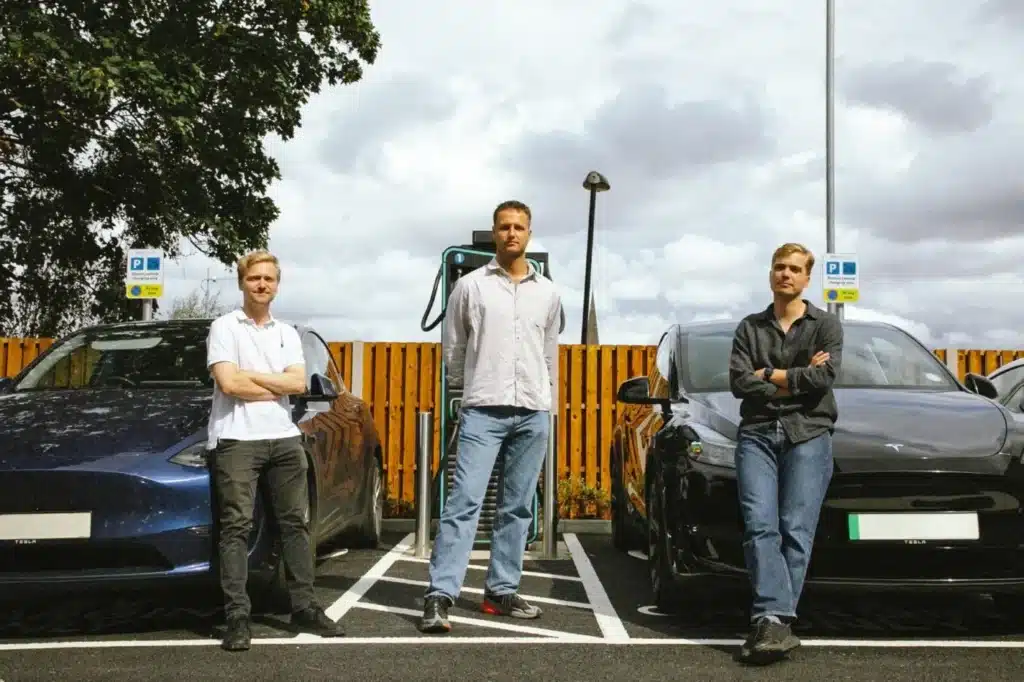
“Early ultra-fast charging focused on motorways and ‘range anxiety,’ but today the real pressure is in cities,” said Harry Fox, CEO of Hubber. “The fleets doing the most miles—taxis, ride-hail, delivery vans, buses—are electrifying fast, yet city infrastructure is lagging. Large, high-powered hubs are the key to enabling continuous, efficient and scalable operations, but persistent delays leave a critical shortfall just as demand is surging.”
Hubber’s £60 million investment round is led by James Bayliss, former Head Trader at Elliott Advisors (UK), and Christopher Fox, former CFO of the British Business Bank. The capital will fund the acquisition and development of 30 hubs with a combined 100 MW of grid capacity. The company is partnering with Antin-owned RAW Charging to deliver its first site.
Urban EV charging faces unique challenges, including limited land availability, costly grid connections, and complex planning approvals. Hubber’s model seeks to overcome these hurdles by combining land acquisition with pre-secured megawatt-scale grid connections and modular site delivery, making hubs ready for charge point operators or fleet partners.
“Urban EV charging remains one of the UK’s biggest infrastructure challenges,” said lead investor James Bayliss. “This uniquely skilled team now has the capital to address it, and we expect their work to make a significant and lasting impact on the country’s electrification.”
For more information, visit hubber-infra.co.uk.
EVs and EV Charging Growing Rapidly in the UK
The UK’s transition to electric mobility is accelerating at a remarkable pace, with both electric vehicle (EV) adoption and charging infrastructure expanding to meet surging demand. Drivers, fleets, and policymakers are aligning around the shift to cleaner transport, and the momentum is now clearly visible across the country’s roads and cities.
EV registrations continue to climb year-on-year as consumers embrace cleaner, lower-cost driving. Battery-electric vehicles now represent a significant share of new car sales, with uptake driven by improving affordability, longer driving ranges, and the UK’s commitment to phase out new petrol and diesel cars by 2035. Fleet operators, from delivery companies to taxi services, are electrifying at speed, recognizing both the financial and environmental benefits of going electric.
Alongside vehicle growth, the UK is experiencing a surge in charging infrastructure investment. According to Zapmap, the country now has tens of thousands of public charge points, with ultra-rapid hubs expanding quickly along motorways, urban centers, and fleet depots. Oil majors, utilities, startups, and dedicated charging companies are competing to roll out high-powered stations that can recharge EVs in minutes rather than hours. Cities like London, Manchester, and Birmingham are seeing a rise in both kerbside chargers and large-scale hubs, addressing the needs of urban drivers without access to home charging.
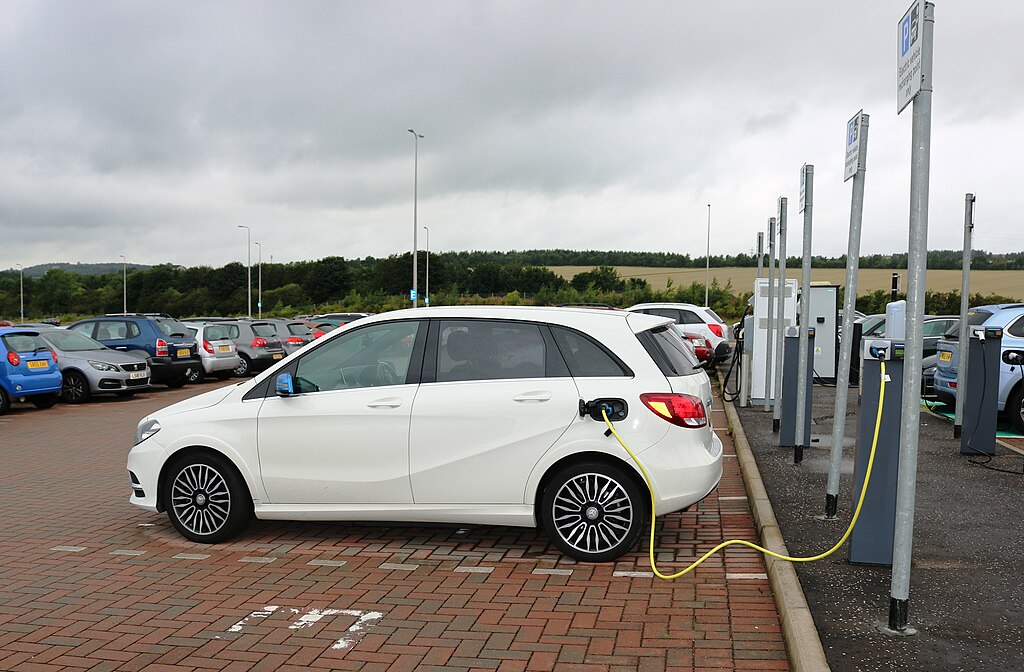

Despite challenges, including grid capacity, planning delays, and land availability, the growth trajectory remains strong. Innovative models, from vehicle-to-vehicle charging to modular urban hubs, are emerging to fill gaps in the network. Government grants and private investment are also playing a crucial role in accelerating deployment.
Drivers across England received a major boost in July 2025, as the government unveiled a £63 million investment package to accelerate electric vehicle (EV) adoption, slash charging costs, and support working families as part of its Plan for Change.
The UK’s EV and charging market is no longer just about early adoption, it is entering a phase of mainstream growth. With drivers demanding convenience and reliability, and with billions flowing into infrastructure, the country is positioning itself as one of Europe’s leaders in electric transport. The road to mass electrification is well underway, and the pace is only set to quicken.
EVinfo.net’s Take
The closing of Tesla’s Supercharging was one of many disastrous mistakes made by Tesla’s CEO in the last few years, which now threaten the company’s survival.
If US federal leaders were at all smart or willing to listen, they could learn about the many benefits of EVs from the UK’s leaders.
We congratulate the UK’s impressive EV adoption, and look forward to more exciting news.

Electric Vehicle Marketing Consultant, Writer and Editor. Publisher EVinfo.net.
Services