Stellantis, BMW Offering Discounts to Offset Loss of EV Tax Credit
BMW and Stellantis are stepping in to offer rebate programs that replicate the now-defunct $7,500 federal EV tax credit. With the EPA credit having expired, both automakers aim to prevent a sudden spike in electric vehicle prices.
Stellantis is extending a rebate across its full range of electric and plug-in hybrid models, including Alfa Romeo Tonale, Chrysler Pacifica, Dodge Charger Daytona, Dodge Hornet R/T, Jeep Wrangler 4xe, Jeep Grand Cherokee 4xe, and the Jeep Wagoneer S. The rebate applies only to vehicles in current inventory and may end once stock runs out.
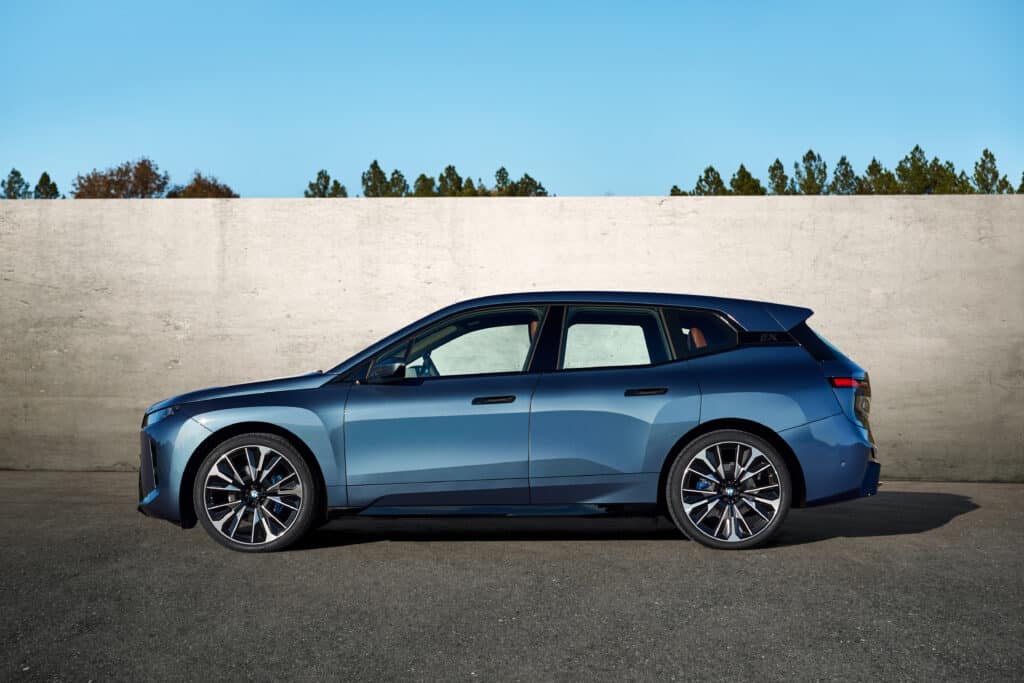
BMW’s program offers $7,500 off the MSRP for its fully electric lineup, and a $5,000 credit for the 750e xDrive PHEV sedan (but not for the 550e or X5 xDrive50e). The rebate is valid for purchases through BMW Financial Services (not for leases). Buyers must take delivery by November 1, while Stellantis requires delivery by November 3.
Hyundai is tackling the loss of the federal EV tax credit with deep price cuts and direct rebates on the Ioniq 5, trimming sticker prices by as much as $9,800 depending on trim and offering up to $7,500 in bonus cash incentives. Lease offers remain aggressive, with dealers advertising low monthly payments on select models to keep demand strong.
At the same time, Ford and GM have devised a workaround to keep the $7,500 benefit alive for lease customers. By having their financing arms purchase vehicles before the tax credit’s expiration, they qualify for the incentive and then pass the savings through in lease deals. Ford’s program is scheduled to run until the end of 2025, while GM is coordinating similar efforts with its dealers, effectively extending the value of the credit for several more months. Both strategies are designed to cushion buyers from higher EV prices in the wake of the federal credit’s sunset.
Rivian is offering a $6,500 lease rebate on select R1T and R1S models to customers who take delivery of their vehicles before October 31.
Jon McNeill, a GM Board Member, Believes the US Electric Vehicle Industry Is Strong Enough to Expand Without Federal Subsidies
Jon McNeill, a GM board member, believes the U.S. electric vehicle industry is strong enough to expand without federal subsidies. Yahoo Finance reported the news on October 4, 2025.
In a CNBC interview Thursday, he argued that the market’s growth won’t stall even though the $7,500 federal EV tax credit has expired. He cited increasing model variety and the arrival of lower-priced vehicles as reasons momentum will continue.
McNeill pointed to Europe’s experience, noting that after nations like Germany scaled back incentives, EV adoption still rose. “The market’s established,” he said, predicting the U.S. will mirror that trend and sustain growth on its own.
According to McNeill, American buyers now have 65 EV models to choose from, and when hybrids are included, roughly one in four new cars sold is electrified. While the end of the tax credit prompted a surge in purchases last quarter, it benefitted GM, which doubled its EV volume year-over-year, much of it from more affordable models.
McNeill added another selling point: EVs’ ability to power homes and supply the grid through bidirectional charging, including V2G. He described using his Silverado EV to run his house for two weeks, saying this kind of bidirectional capability reduces the need for backup generators.
McNeill added that utilities are already experimenting with incentives, citing his own discount for letting his power company tap 20% of his truck’s battery. Though still rare, he expects this feature to spread. He also suggested supportive policies will likely come from states rather than Washington, since energy grids are highly localized and state governments often move faster on incentives. Colorado has already stepped up its EV incentives in light of the loss of the federal EV tax credit.
EVinfo.net reported that Colorado is increasing its Vehicle Exchange rebates to $9,000 for new EVs and $6,000 for used EVs, starting November 3. The program targets low- and middle-income residents who trade in older or high-emission vehicles. The move comes as federal incentives expire and Colorado phases down its broader statewide EV tax credit.