How U.S. Auto Workers Can Thrive in the Shift to Battery Electric Vehicles
Battery electric vehicles are rapidly reshaping the U.S. automotive industry. In 2024, Americans bought roughly 1.56 million electric vehicles (EVs), about 10 percent of all light-duty sales, signaling that the nation has passed the long-anticipated BEV tipping point. Despite policy uncertainty in 2025, momentum has held strong. More than 438,000 EVs were sold in the third quarter alone, a 41 percent jump from the previous quarter as consumers moved to take advantage of the expiring federal tax credit.
Advances in battery technology, greater production scale, and global pressure to electrify are making BEVs more appealing than internal combustion engine vehicles. But this shift also carries major implications for the people who build vehicles. Key questions remain about which ICEV jobs are most vulnerable, what new skills BEV manufacturing will require, where opportunities are emerging, and how workers can move into new roles without being left behind.
A new World Resources Institute (WRI) report examines these challenges and outlines policies that can help create a diverse, well-prepared BEV workforce while supporting workers most at risk. The findings are based on labor market data, a national employer survey, and interviews with industry stakeholders. Between May and August 2024, WRI surveyed 330 employers involved in BEV or EV battery manufacturing to understand workforce needs and industry expectations about the transition.
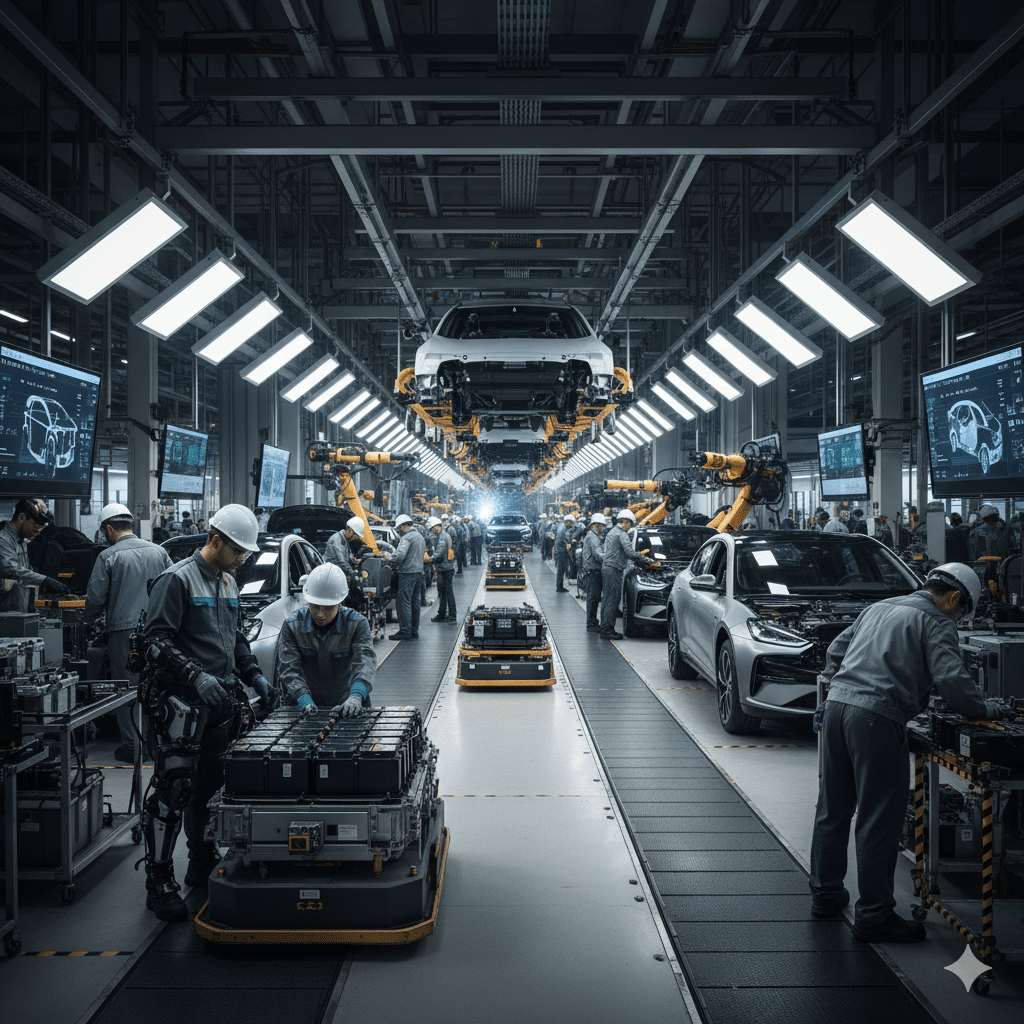
Workers in Gasoline Engine and Engine-Parts Manufacturing Face the Greatest Disruption, but Many Have Clear Pathways Into Battery Manufacturing
About 7 percent of workers in OEMs and Tier 1 suppliers hold jobs tied directly to gasoline engines and components such as pistons, crankshafts, and fuel injection systems. These components do not exist in BEVs. About 65 percent of the broader OEM and Tier 1 workforce will see moderate changes due to differing manufacturing processes. The remaining workers will see minimal impact.
The report shows that many vulnerable ICEV workers can transition into roles in battery production or adjacent fields such as electronics, software, and data management. Jobs like team assemblers or CNC operators exist in both ICE and BEV manufacturing, though they require new technical competencies and industry-specific knowledge.
With targeted retraining, new jobs in battery manufacturing could offset a large portion of losses. By 2032, demand for team assemblers in battery production could replace roughly 63 percent of positions lost in gasoline engine manufacturing. Wages in these growth occupations also tend to be higher, reflecting the need for more specialized skills.
New BEV Jobs Are Not Always in the Same Places Where ICEV Jobs Are Being Lost, Creating Geographic Challenges
BEV manufacturing continues to expand in long-standing auto states like Michigan and in newer hubs such as Georgia. Some workers may be able to move directly into BEV roles within their current facilities or counties. Others face difficult decisions because new opportunities may be far from their homes. Many displaced workers prefer to remain in their communities even when suitable jobs exist elsewhere.
To address regional imbalances, state and local leaders must combine retraining efforts with economic development strategies that bring new industries to areas facing ICEV job losses. This includes industries that share skills and supply chains with BEV manufacturing, such as batteries, advanced materials, aerospace, automation, and semiconductors. Michigan’s Community and Worker Economic Transition Office and Ohio’s Auto and Advanced Mobility Workforce Strategy offer useful models.
Automation and Digital Technologies Are Reshaping Manufacturing, and Bev Workers Will Need New Technical Skills
Automation is expanding quickly across the automotive sector. BEV production adds new layers of complexity. Battery assembly requires precise, repetitive tasks ideal for robotics. AI and machine learning are increasingly used to optimize design and predict maintenance needs.
More than half of surveyed employers said that new hires need extensive BEV-specific knowledge. Seventeen percent identified familiarity with computer systems, robotics, and AI as the most important skill. Other needs include training in advanced manufacturing processes, mechanical and electrical systems, safety procedures, and battery technology.
Workforce programs must incorporate robotics, automation, and data literacy training. States can expand apprenticeships, offer industry-aligned credentials, and work with employers to ensure training responds directly to industry needs.
Training Programs Must Grow Significantly, Particularly for Small and Mid-Sized Manufacturers
Almost half of surveyed firms offer training for both existing and prospective workers, often through on-the-job programs. Only one in four has formal partnerships with state agencies or educational institutions, and these partnerships are concentrated among large companies.
Small and medium-sized enterprises face larger barriers to offering training, including limited resources, difficulty staying current with technology, and a lack of programs suited to their needs. This contributes to a growing skills gap in the U.S. automotive sector.
Governments can help by offering financial incentives for training, simplifying program administration, and supporting SME-focused training. States can also create shared apprenticeship programs for groups of smaller companies, with third-party organizations coordinating administration and working with educators to standardize training.
Most Manufacturers View the BEV Transition as an Opportunity
Although the survey predates the recent rollback of federal clean energy policies, more than half of respondents saw the transition as an opportunity. Only about 10 percent viewed it as a threat. ICEV-focused companies were far more likely to express concern.
Even with shifting federal policies, automakers remain optimistic about long-term BEV growth. With the federal tax credit eliminated, states and local governments play an increasingly important role in sustaining consumer demand through incentives and expanded charging infrastructure.
Immediate Workforce Planning Is Essential
Technological transitions unfold over years and often experience periods of rapid uptake followed by slower phases. The shift to BEVs is already well underway and will continue. Proactive planning is necessary to manage job shifts, address skill gaps, and ensure fairness for workers.
Automakers must lead on workforce training, but they cannot do it alone. Governments, colleges, and training institutions are essential partners in aligning curricula with industry needs, expanding vocational training, and building apprenticeship pipelines. With coordinated efforts, the U.S. can develop a strong and inclusive BEV manufacturing workforce capable of powering the next generation of American industry.
For full findings, see the report:
U.S. Automotive Manufacturing Workers in the Transition to Battery Electric Vehicles: An Assessment of the Impact and Opportunities


Electric Vehicle Marketing Consultant, Writer and Editor. Publisher EVinfo.net.
Services