Ford Europe Strongly Hints at New Fiesta EV, Unveils Transit City EV Van
After disappearing from UK roads in 2023, the iconic Ford Fiesta could be preparing for a comeback, this time as an affordable electric vehicle.
For nearly 50 years, the Fiesta was one of Britain’s most popular cars, known for its practicality, affordability, and appeal to young drivers and commuters. More than 22 million units were produced globally after the model first launched in 1976, and for years it dominated UK sales charts.
Ford discontinued the Fiesta in 2023 as the company shifted focus toward higher-margin vehicles and an all-electric future. At the time, demand for small hatchbacks had declined as consumers increasingly favored SUVs and larger vehicles.
Now, Ford appears ready to pivot back toward affordable mass-market cars.
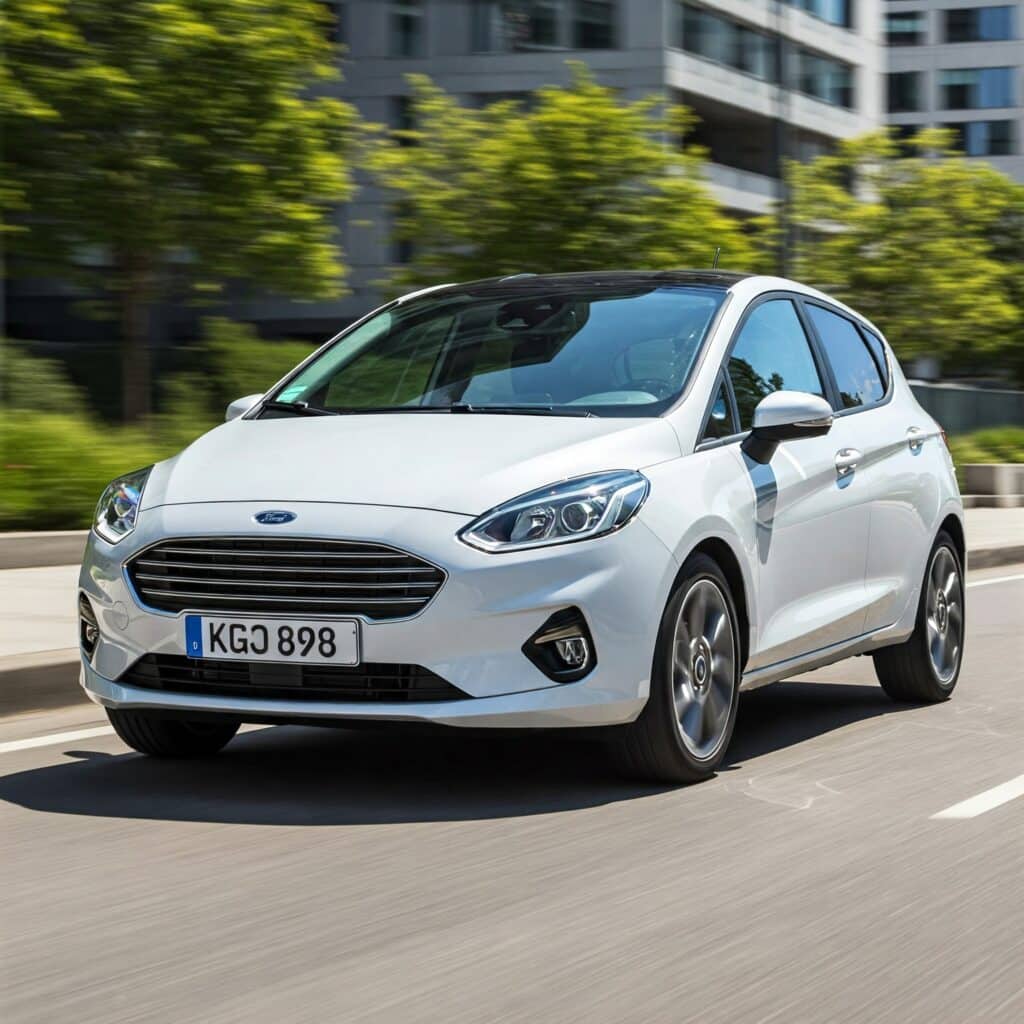
Speaking to the BBC, Ford Europe president Jim Baumbick hinted strongly that the Fiesta name could return as part of the automaker’s new European strategy. While he stopped short of officially confirming the model, he acknowledged the strong emotional connection drivers still have with the Fiesta brand.
“I know there’s so much love for the Fiesta and the Fiesta name,” Baumbick said to the BBC, adding that Ford would have “news to share in the future.”
Ford plans to introduce seven new vehicles in Europe, including three fully electric models: a compact hatchback widely referred to as the “electric Fiesta,” a small SUV, and an electric commercial van called the Transit City. The remaining vehicles will use multiple powertrain options, including hybrid systems.
The strategy marks a significant shift for Ford after a difficult period in Europe. The company previously aimed to become fully electric by 2030, but slowing EV demand, rising costs, and increased competition from Chinese automakers such as BYD and Chery forced Ford to reassess its plans. In 2024, the company announced thousands of job cuts across Europe.
Ford is now advocating for a more gradual transition to electrification, supporting technologies such as plug-in hybrids and extended-range EVs alongside fully electric vehicles.
Despite growing pressure from Chinese automakers rapidly expanding across Europe, Ford believes its long-standing presence and brand recognition will help it compete.
Baumbick emphasized Ford’s commitment to remaining a major player in Europe for decades to come, saying the company’s goal is to build “a sustainably profitable business” for the next 100 years.
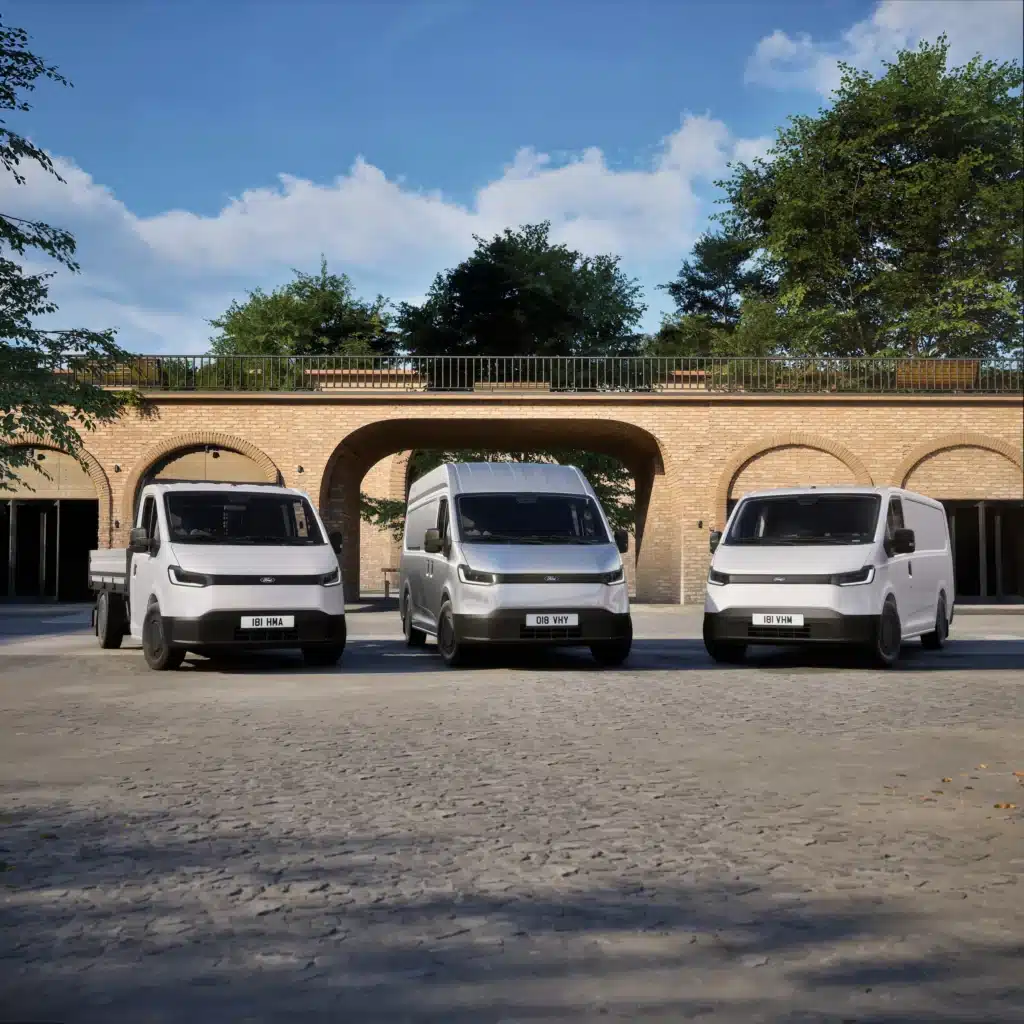
Ford Has Unveiled the All-new Transit City, a Compact All-electric Commercial Van
Ford has unveiled the all-new Transit City, a compact all-electric commercial van designed specifically for urban deliveries and city-based businesses in Europe. The van is positioned between the smaller E-Transit Courier and the larger E-Transit Custom, with a focus on affordability, efficiency, and low operating costs for fleets operating in increasingly restrictive low-emission zones.
The Transit City will launch in three configurations:
- L1H1 compact van
- Larger L2H2 high-capacity van
- Chassis cab for custom commercial conversions
Payload capacity ranges from roughly 1,085 kg to 1,600 kg depending on the configuration, while cargo space reaches up to 8.5 cubic meters. Ford says the van is purpose-built for “last-mile” delivery operations and tight urban environments.
Power comes from a 56 kWh lithium-iron-phosphate (LFP) battery paired with a front-mounted electric motor producing about 148 hp. Ford targets up to 254 km (158 miles) of range, which it says aligns with real-world urban fleet usage where most drivers travel under 70 miles daily. DC fast charging can recharge the battery from 10% to 80% in about 33 minutes.
Ford simplified the lineup by offering a single well-equipped trim level to reduce purchasing complexity and costs. Standard features include:
- 12-inch touchscreen infotainment system
- Apple CarPlay and Android Auto
- Heated driver seat
- Rear-view camera
- Keyless start
- One-pedal driving
Ford also claims servicing costs could be around 40% lower than comparable diesel vans.
The Transit City is being built in partnership with Chinese automaker Jiangling Motors (JMC) and reflects Ford’s broader European strategy of producing practical, lower-cost EVs tailored for commercial use rather than premium long-range vehicles. Early reactions online have largely praised the van’s practical city-focused design, though some discussions centered on its Chinese manufacturing origins and modest range.
Orders for the Transit City opened in May 2026, with starting prices around €26,400 (about $31,000 USD). Initial customer deliveries are expected later this year.
EVinfo.net’s Take: High Fuel Prices Made Small, Efficient Vehicles Practical and Affordable in 1970s, That May Be Happening Again Today
Electric vehicles are proving to be an ideal fit for delivery vans because most delivery routes are predictable, repetitive, and operate within limited daily driving ranges. Fleet operators can charge vans overnight at centralized depots, reducing fuel costs and minimizing downtime compared to traditional gasoline or diesel vehicles.
EV delivery vans also offer lower maintenance costs due to fewer moving parts, quieter operation in residential neighborhoods, and zero tailpipe emissions, which is increasingly important in cities adopting stricter clean air regulations. We expect Ford’s Transit City to be very successful in Europe.
For decades, compact cars like the Ford Fiesta dominated European roads for one simple reason: high fuel prices made small, efficient vehicles practical and affordable.
Now, as global oil markets face renewed instability tied to the ongoing Iran conflict, Ford may be preparing to revive that winning formula with a new generation of affordable electric vehicles. High fuel prices have once again become a major concern for consumers worldwide.
The original Fiesta succeeded because it arrived during an era shaped by oil shocks and rising fuel costs. Introduced in 1976 following the global energy crisis of the 1970s, the Fiesta offered drivers a lightweight, fuel-efficient alternative to larger gas-hungry vehicles. Over the next four decades, it became one of the UK’s best-selling cars and a symbol of affordable transportation.
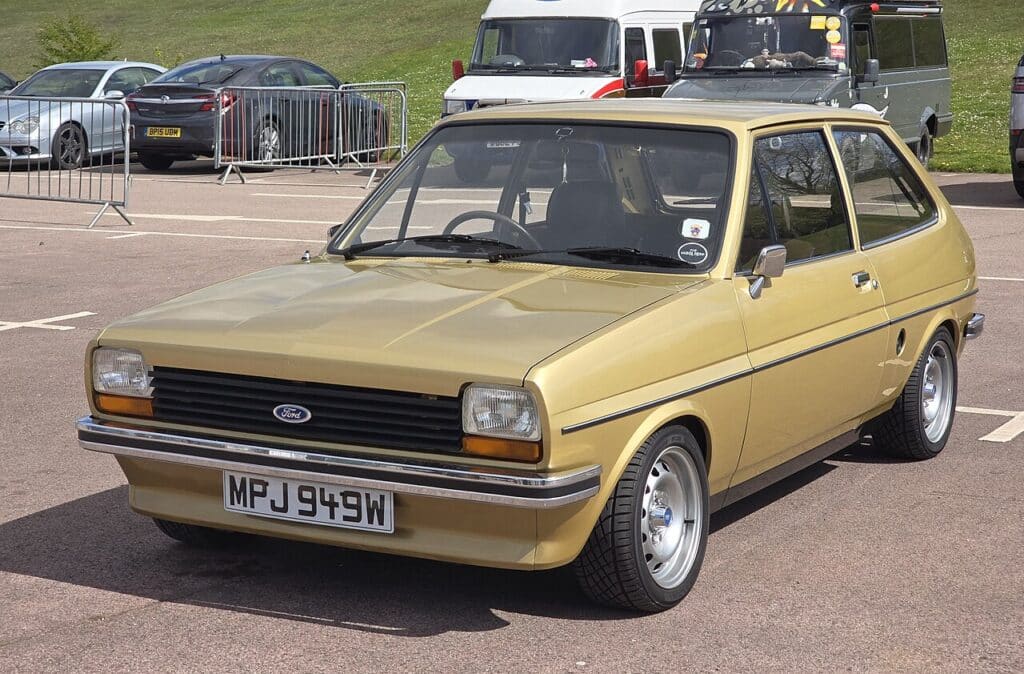

Today, history may be repeating itself.
The Iran war has created major disruptions across global energy markets, particularly around the Strait of Hormuz, a critical route for roughly 20% of the world’s oil supply. Analysts warn that tightening inventories and supply disruptions could continue pushing fuel prices higher through 2026.
Oil prices recently climbed above $110 per barrel amid fears of prolonged supply constraints, while gasoline prices across the United States and Europe have risen sharply in recent months.
That environment creates a powerful opportunity for affordable EVs.
Unlike large premium electric SUVs, compact EV hatchbacks offer lower ownership costs, reduced electricity consumption, and far lower operating expenses compared to gasoline vehicles during periods of volatile fuel prices. For commuters and urban drivers, the math becomes increasingly attractive as gas prices rise.
If fuel prices remain elevated due to geopolitical instability, compact EVs could experience the same surge in demand that once made the original Fiesta a household name.
In many ways, the electric Fiesta would not represent a radical reinvention. It would simply bring the Fiesta back to its roots: affordable mobility during an energy crisis.

Electric Vehicle Marketing Consultant, Writer and Editor. Publisher EVinfo.net.
Services