Hundreds of Public EV Chargers Are Coming to San Diego, CA
San Diego, California, has begun construction on a long-anticipated citywide network of electric vehicle (EV) charging stations, set to be installed by leading EV charging company Everged at public parking lots near beaches, libraries, and recreation centers.
The RFP, started in 2023, was executed in June 2024. The project has been intentionally paced to allow Everged and city officials to take the necessary time to strategize, assess site readiness, and ensure every charger is deployed for maximum impact. This deliberate planning phase reflects Everged’s and the city’s commitment to smart infrastructure growth—prioritizing efficiency, accessibility, and long-term performance over speed.
While some City Council members inquired about future costs, officials affirmed that the city’s financial exposure remains low, with Everged’s strategic approach designed to mitigate risk and optimize returns across the 10-year partnership.
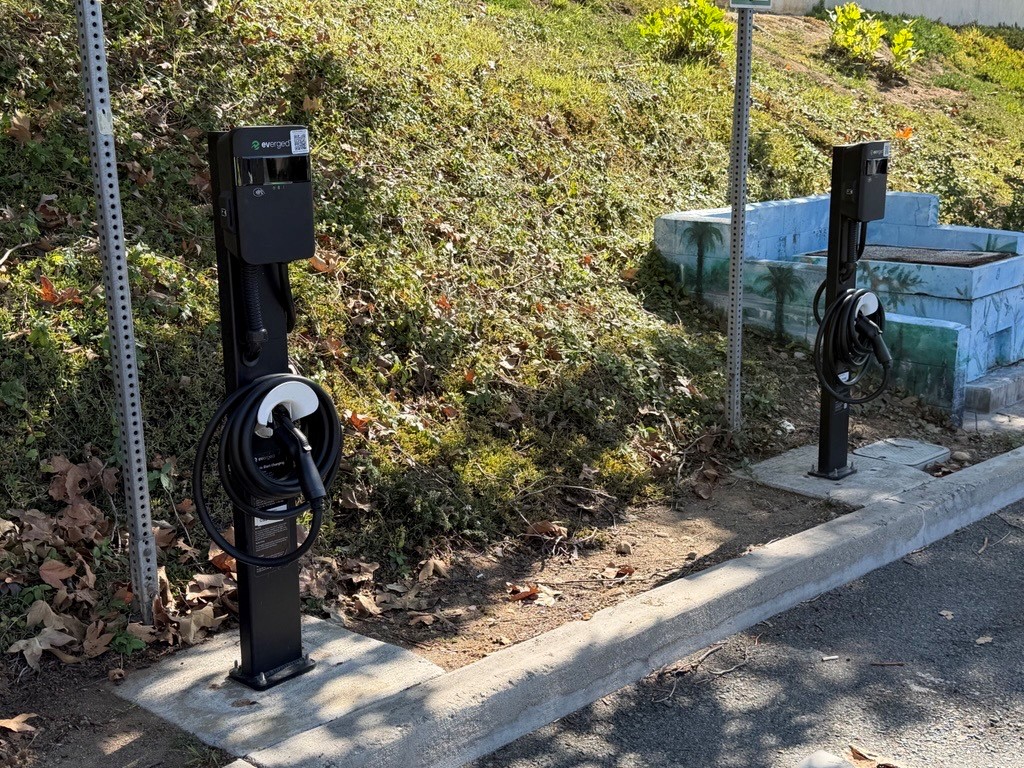
The goal is to give residents the confidence to buy or lease an EV, even if they lack a garage or home charging option, by ensuring a reliable and accessible public network. City leaders also aim to address the socioeconomic divide that has seen most EV ownership concentrated in wealthier neighborhoods such as Carmel Valley, La Jolla, Rancho Bernardo, and downtown.
San Diego’s current expansion of public EV chargers marks an important step in closing long-standing gaps in access to clean transportation. The CSD EV Charging Program is designed to ensure that residents across every neighborhood — including communities south of Interstate 8 — have reliable, convenient places to charge, particularly where apartment living or limited off-street parking make at-home charging difficult.
The new chargers will be distributed across every neighborhood, with a focus on areas dense with apartments and condos where residents are more likely to depend on public charging.
“We needed to think about the transition to clean transportation through the lens of what the city can and can’t do,” said Anna Lowe, a city program manager for EVs. “We can’t help with the cost of buying an EV, but we can help with charging an EV. Access to chargers should never be the constraint.”
A city analysis of ZIP codes confirmed that EV ownership is heavily concentrated downtown and in northern suburbs, with far fewer EVs registered in southeastern San Diego and San Ysidro. “San Diego has a lot of EVs, but they’re not equitably distributed,” Lowe said. “The city wants to be part of the solution.”
“The City’s focus is on equity,” said Jefferson Smith, CEO of Everged. “By installing chargers at libraries, recreation centers, and other community hubs, we’re making clean mobility part of everyday life, not a luxury limited to a few areas.”
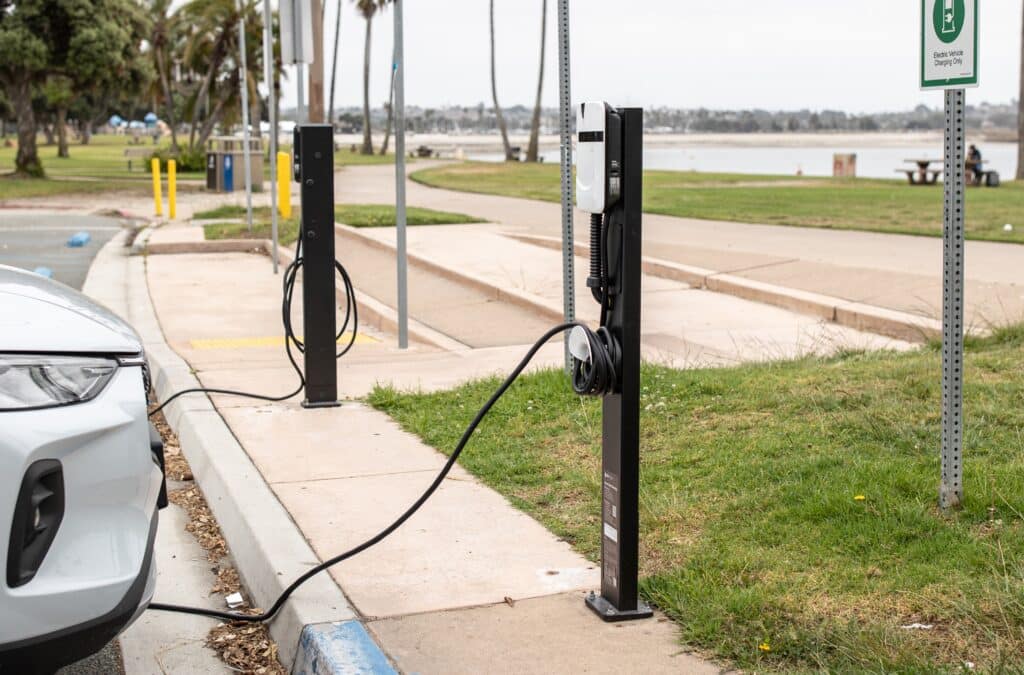
Plans call for 750 to 800 charging portals at 59 locations, including 20 libraries and 39 pools or recreation centers, with construction expected to begin early next year. This follows recent upgrades to 58 existing chargers across 12 city sites.
Everged is investing millions of dollars into new charging infrastructure across San Diego, covering equipment, installation, and long-term maintenance at no capital cost to the City.
“This isn’t a short-term project,” said Peter Ruzich, COO of Everged. “We’re investing real dollars into public sites because reliable charging is essential to the success of electric mobility. It’s not just about putting chargers in the ground — it’s about keeping them working and serving the people who rely on them.”
Ruzich added that San Diego’s approach reflects a shift happening across California.
“Early charging networks were treated like construction projects — you build them and move on,” said Ruzich. “But EV charging is more like a utility. It requires continuous monitoring, data, and accountability.”
Everged will maintain and repair the chargers, with outages reportable through the city’s Get It Done! app. About half of the new chargers will support Tesla vehicles, while the rest will accommodate other EV models. The system will remain adaptable as charging standards evolve.
Current city charging rates are about 50 cents per kilowatt hour, similar to other public stations. Everged works with the city to set reasonable rates and pricing.
San Diego’s climate action plan targets having 16% of all vehicle miles driven by zero-emission vehicles by 2030 and 25% by 2035. The city also aims to fully electrify its light-duty fleet and 75% of its heavy-duty vehicles by 2035.
As California moves toward its 2035 zero-emission vehicle target, San Diego’s blend of public leadership and private investment offers a model for how cities can expand access while ensuring reliability.
“People notice when chargers are broken,” Ruzich said. “Fixing that isn’t flashy, but it’s what makes the system real — and what builds public trust.”
Once installation at public sites is complete, Everged will expand to chargers at police, fire, and city office facilities.
Residents can take an online survey at sandiego.gov/general-services/energy/zev/evcharging, and a webinar for EV drivers is planned.