UK’s Drive2X Pilot Proves How Renewable Energy Could Stop Being Wasted
The rapid expansion of renewable energy is increasingly outpacing demand, particularly from wind and solar generation. When grid capacity is limited and large-scale energy storage is insufficient, this surplus clean power must be curtailed, resulting in wasted generation. The scale of the issue is significant and growing.
In the UK alone, wind farms were forced to curtail 4.3 terawatt hours of electricity in 2023, roughly five percent of their total annual output. That amount of energy could have powered 1.5 million homes for an entire year. Instead, the unused power cost consumers an estimated £300 million and left energy providers facing substantial constraint payments. Similar challenges are emerging across Europe, North America, Australia, and other regions where renewable capacity is expanding faster than grid infrastructure.
On the Isle of Wight, off England’s south coast, a pilot project is testing a potential solution: bidirectional charging. This approach allows electric vehicles not only to consume electricity but also to store it and supply it back to homes, businesses, or the grid when needed.
On the Isle of Wight, technology developed through the Europe-wide DriVe2X program is being used to test four bidirectional chargers installed at two hotels and a visitor boat mooring. The island was chosen in part because of its strong seasonal tourism patterns.
More than two million visitors travel to the Isle of Wight each year, creating significant swings in electricity demand between off-peak and peak tourism seasons. Many of these visitors arrive with electric vehicles, which can serve as temporary energy storage assets, helping to absorb and redistribute additional power needed during busy periods.
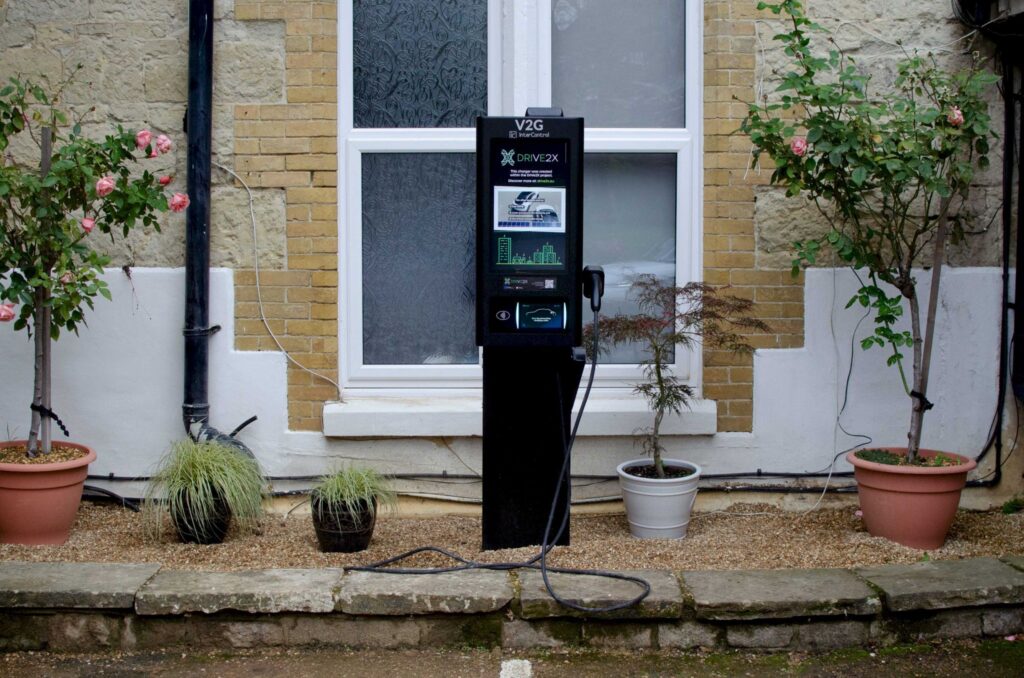
Participants in the trial, including both visitors and local residents, can set their planned departure times and minimum battery levels. This allows the bidirectional charging system to store and supply energy while ensuring each vehicle retains sufficient charge for its next journey. The approach directly addresses a common concern around bidirectional charging, namely the risk of finding a depleted battery when it is time to leave.
Now entering its final phase, the trial follows a community-first approach supported by local partner Future Isle of Wight, a community-owned organization helping guide how the technology can be scaled to deliver tangible benefits for residents.
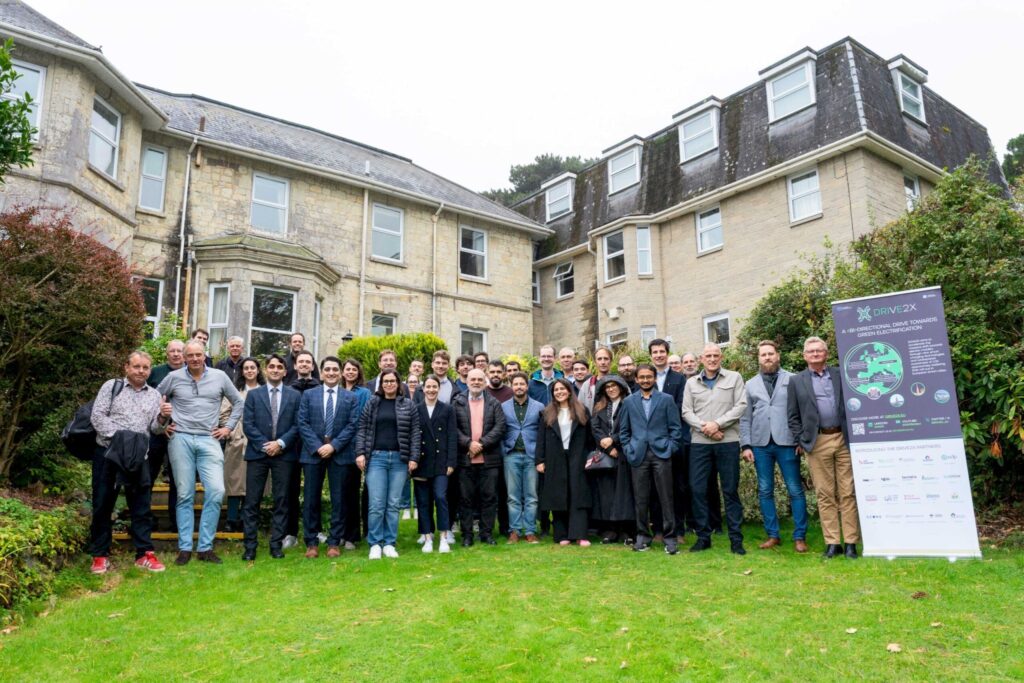
In September, the DriVe2X team gathered on the Isle of Wight for a week of intensive collaboration and knowledge sharing.
The agenda included the DriVe2X General Assembly, alongside a UK–EU Engagement Session focused on smart charging and vehicle-to-everything (V2X) technologies, co-organized with UK Research and Innovation. The engagement session brought together more than 20 organizations, spanning research institutions, technology innovators, and policymakers, to exchange insights and advance coordinated progress in the field.
Elsewhere in Europe, additional DriVe2X test sites are examining where two-way charging can provide the greatest impact. At Porto Airport in Maia, Portugal, a long-stay parking facility is testing how bidirectional charging can help manage fluctuating energy demand tied to passenger traffic. In Budapest, Hungary, vehicle-to-home systems are being evaluated in a number of smart homes.
By 2040, an estimated 36 million electric cars and vans are expected on UK roads. Today’s EVs can already store enough electricity to power a typical household for seven to ten days. Collectively, future EV batteries could provide around 2.5 terawatt hours of storage, enough to absorb much of the UK’s surplus solar and wind generation. Since vehicles are parked roughly 95 percent of the time, this idle capacity represents a largely untapped energy resource.
Similar trials are underway across Europe, including at airports, smart homes, and urban centers. While more than 100 vehicle-to-grid projects exist globally, scaling them will require affordable equipment, streamlined grid connections, and strong consumer protections.
Bidirectional charging could allow EV owners to buy electricity during low-cost, off-peak periods and use it later during peak demand. Research from the University of Michigan suggests vehicle-to-home charging could save drivers up to 40-90% over an EV’s lifetime. Utilities and grid operators also stand to benefit, with studies estimating European power systems could save up to €4 billion through vehicle-to-grid and smart charging programs.
Most EVs today only support one-way charging, and bidirectional systems require additional hardware, regulatory clarity, and vehicle compatibility.
If these challenges are addressed, bidirectional EVs could become mainstream within the next two decades. UK government projections suggest EVs could provide up to 40 gigawatts of flexible power by 2050, comparable to the output of dozens of nuclear reactors. Realizing that future depends on making the technology seamless, trustworthy, and financially beneficial for everyday drivers.

Electric Vehicle Marketing Consultant, Writer and Editor. Publisher EVinfo.net.
Services