Chinese EV Maker Chery Prepares to Expand into Canada
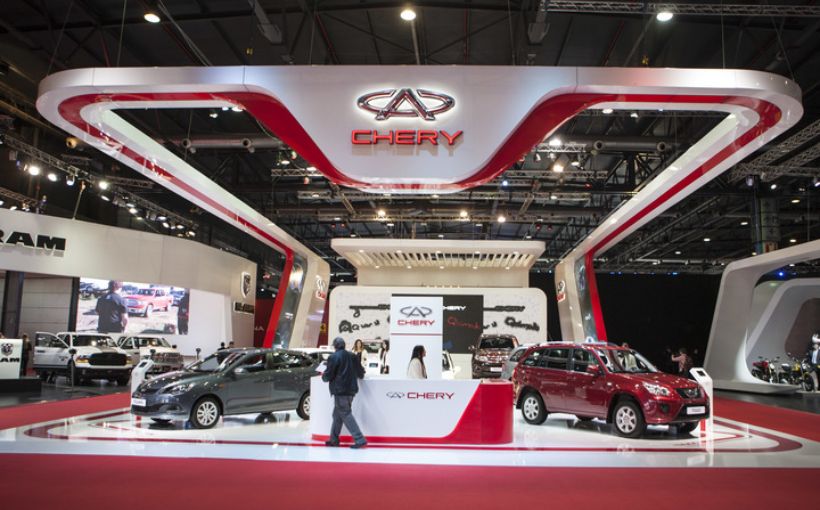
Chinese automaker Chery is taking preliminary steps toward entering the Canadian market, according to The Globe and Mail‘s January 22 report, signaling a possible shift in Canada’s automotive landscape following recent changes to federal policy on Chinese electric vehicles.
As part of a new EV trade arrangement with China, Prime Minister Mark Carney has reduced tariffs on Chinese EV imports to 6.1% from 100%. Under the agreement, up to 49,000 Chinese EVs will be permitted to enter Canada annually, with the quota set to increase over the next five years. While notable, that cap remains small compared with the millions of EVs, hybrids, and gasoline vehicles imported each year from the United States.
In a recent statement, the Prime Minister’s Office said the deal is expected to spur significant Chinese joint-venture investment in Canada within three years, supporting domestic manufacturing jobs and accelerating the build-out of Canada’s EV supply chain.
People familiar with Chery’s plans told the Globe that recruiters tied to the company have quietly approached Canadian auto-industry executives about senior leadership roles, suggesting groundwork for a local operation is underway. Chery is also said to be planning a Toronto-area office, along with a full sales launch and distribution platform that could include its Omoda and Jaecoo brands.
The agreement has also raised political and trade questions ahead of the reopening of the Canada–United States–Mexico Agreement (CUSMA) later this year.
Domestically, the prospect of Chinese EVs entering Canada has drawn criticism from auto industry groups and Ontario Premier Doug Ford, who argue the policy could undermine local production and complicate future trade negotiations. Unifor, however, has expressed support for the deal and the tariff reduction. Unifor is Canada’s largest private sector union, with more than 320,000 members across the country, working in every major sector of the Canadian economy.
Andrew King, managing partner at DesRosiers Automotive Consultants, told the Globe that global automakers already producing vehicles in China are likely to benefit first. In the near term, companies such as Tesla and Volvo could take advantage of the lower tariffs. Tesla could ship Model 3 vehicles from its Shanghai plant to Canada, avoiding a 25% tariff on U.S.-built versions, while Volvo could resume exports of the EX30 and Polestar 2, both previously shipped from China before tariffs were raised.
Shahin Alizadeh, CEO of Toronto-based Downtown Auto Group, criticized the federal government for failing to provide sufficient clarity on the new Chinese EV import policy.
EVinfo.net’s Take: Chery’s Canada Move Signals the Global Surge of Chinese EVs, and a Strategic Opening Created by Bad U.S. Foreign Trade Policy
Chery’s early steps toward entering the Canadian market are more than a routine market expansion. They are evidence of a much larger shift underway: the rapid global spread of affordable, high-quality Chinese electric vehicles, and a growing vacuum being left by U.S. economic and industrial policy missteps.
Over the past decade, Chinese automakers have quietly transformed themselves from low-cost domestic players into globally competitive manufacturers. CNBC reported on February 6, 2026, that the Chinese automotive industry has become the largest exporter of vehicles globally since 2023 and has been increasingly bringing electric models around the globe.
“The Chinese auto industry presents an existential threat to the traditional [automakers],” Terry Woychowski, a former GM executive who serves as president of automotive at engineering consulting firm Caresoft Global, told CNBC.
China’s expansion of EVs has enjoyed a nearly 800% increase globally, largely fueled by sales in China growing from roughly 572,300 in 2020 to 4.95 million in 2025, according to GlobalData, reported CNBC. Outside of China, EV sales have surged by more than 1,300%, from less than 33,000 to more than 474,000, said GlobalData.
CNBC also reported that while China has grown, Detroit’s “Big Three” automakers (GM, Ford and Chrysler parent Stellantis) have collectively fallen from a global market share of 21.4% in 2019 to an estimated 15.7% in 2025, according to a report by S&P Global Mobility.
Companies like BYD, Chery, Geely, and SAIC now produce EVs that are not only cheaper than Western alternatives, but often equal or superior in battery technology, software integration, and manufacturing efficiency. Chery’s interest in Canada reflects this new reality. Chinese EV brands no longer need to prove they can compete. They are now choosing which markets to enter next.
Canada is an Attractive Market for China
Canada is an attractive target. It is EV-curious but undersupplied, geographically vast, and heavily dependent on imports. Recent tariff adjustments and quota-based access for Chinese EVs create a narrow but meaningful opening. For Chinese manufacturers, this is a beachhead strategy. Establish presence, build brand recognition, and prepare for scale as political and trade conditions evolve.
The uncomfortable truth for Washington is that U.S. policy is helping make this possible.
Rather than competing head-on through innovation, cost reduction, and infrastructure buildout, the United States has leaned heavily on protectionism and anti-China rhetoric. High tariffs, restrictive trade rules, and fragmented EV policy have raised vehicle prices for consumers while slowing adoption. At the same time, inconsistent support for charging infrastructure and repeated political attacks on EVs have introduced uncertainty into what should be a generational industrial transition.
The result is not a stronger U.S. auto sector, but a slower one.
While China has spent years building vertically integrated EV supply chains, including batteries, power electronics, software, and manufacturing, the U.S. has treated electrification as a political football. Anti-EV messaging, rollbacks of emissions standards, and hostility toward clean energy investment undermine long-term competitiveness. Markets do not wait. When the U.S. hesitates, others move.
Canada’s openness to Chinese EVs illustrates this dynamic clearly. Faced with high vehicle prices and limited consumer choice, policymakers are prioritizing affordability and supply. Chinese automakers can deliver both. If American companies cannot compete on cost or speed, they risk being sidelined not just in emerging markets, but in their own backyard.
This trend has broader implications. EVs are not just cars. They are platforms for software, energy storage, grid services, and advanced manufacturing jobs. Falling behind in EV adoption weakens the entire industrial ecosystem, from semiconductors to energy infrastructure. A slower transition means fewer jobs, higher transportation costs, and declining export competitiveness. 2025 was the worst year for hiring since 2020, a December jobs report shows.
Chery’s Canada strategy should be seen as a warning signal. Global EV momentum is accelerating, and China is setting the pace. By clinging to anti-EV policies and short-term trade barriers, the United States is not containing its rival. It is creating the conditions for China to gain ground in allied markets.
Economic leadership is earned through execution, not obstruction. If U.S. policy continues to resist electrification instead of embracing it, the long-term consequence will be further economic erosion, while Chinese EVs become a normal, accepted presence across global roads, including North America’s.

Electric Vehicle Marketing Consultant, Writer and Editor. Publisher EVinfo.net.
Services