Billy Caruso, Restoring ‘VIN 212,’ a Rare 1990’s GM EV1 Electric Vehicle, Interviewed by EVinfo.net
EV enthusiast Billy Caruso recently purchased a battered GM EV1 that surfaced at a Georgia impound lot and fetched more than $100,000 at auction. Caruso is restoring the exceedingly rare electric vehicle, and the restoration project is now involving General Motors itself. GM made the announcement on March 11, 2026.
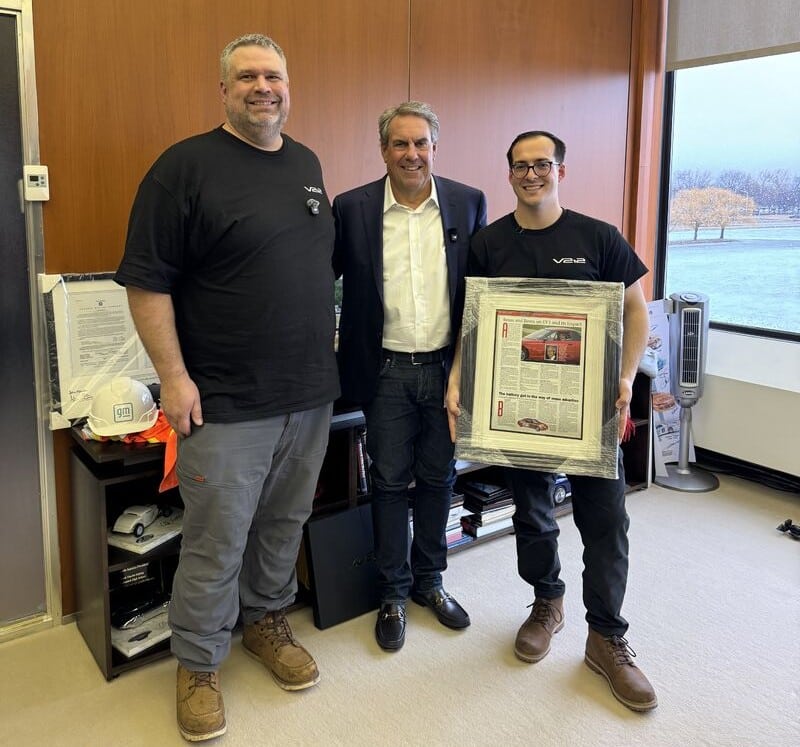
The car in question is VIN 212, one of the scarcest surviving specimens of the EV1, the first modern electric vehicle (EV) purpose-built by a major automaker. GM leased roughly 1,000 of them beginning in late 1996, later recalled and crushed nearly the entire fleet, and preserved only a small number of non-drivable units in museums and universities. VIN 212 escaped that fate.
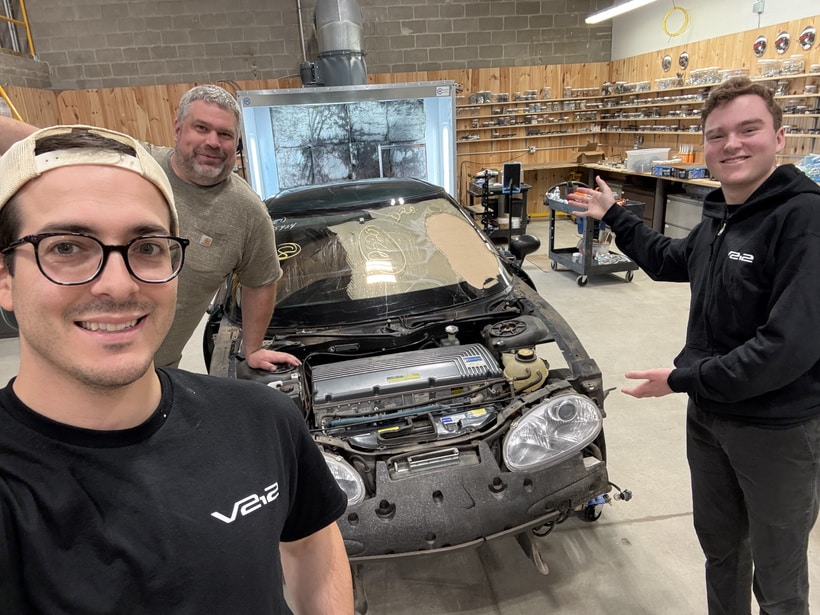
Caruso bought the car at auction and then assembled a team around restoring it: his father Big Mike, fellow enthusiasts Daren and Freddie Murrer, and Jared Pink, the founder of Questionable Garage. He has also been receiving help from the community of old-EV fans and owners and has invited many of his supporters to join in on the fun.
The YouTube channel has built a following thorough technically rigorous restorations. Caruso’s Project V212 has a pointed target: get VIN 212 back on the road and in front of the public by November 2026, marking 30 years since the EV1 first arrived.
Follow progress at v212.org and the EV1 archive put together by Caruso. If any readers have anything to contribute to the archive, the team would welcome it. Visit:
https://v212.org/museum/ev1/ev1.html#news
Billy Caruso Interviewed by EVinfo.net
EVinfo.net had the great honor of interviewing Billy Caruso about his restoration of VIN212.
Bill Pierce:
How did the purchase come about?
Billy Caruso:
I received a text message from my friend the night before the auction ended. I couldn’t believe it when I saw a green EV1 in an impound auction. I immediately registered and placed a test bid. The next morning I placed the winning bid. I detail the entire ordeal in the first few posts on the V212 Patreon (https://www.patreon.com/c/V212EV1)
Bill Pierce:
Please describe any challenges so far with the restoration and the roles of the team members.
Billy Caruso:
This is an extremely challenging restoration, from the corrosion in the aluminium frame to broken glass to missing electronics, we are not short of challenges. As owner of this EV1 I am leading the effort and bringing many minds together.
Bill Pierce:
EVinfo.net reported on your visit to GM. How did it go? Did GM provide or will the company provide any needed parts?
Billy Caruso:
The GM visit was fantastic. The company has provided some essential parts like the glass and BTCM, but our car is still incomplete. We are working with GM on retrieving more parts in the near future as our build progresses.
Bill Pierce:
Are you an EV driver? If so which EVs have you owned?
Billy Caruso:
Yes! In fact I have never owned a car that was not an EV. I own too many to count, but my first one was a 2018 Tesla Model 3 AWD. My current daily driver is a 2024 Chevy Silverado EV 3WT. I love the fact they are computers on wheels, completely silent digital systems. I wish they were all as efficient as my Solectria Force, but I sure do enjoy the utility of a massive pickup truck that can power my house.
Bill Pierce:
Do you plan to restore the original battery or use a modern battery?
Billy Caruso:
Modern Lithium Iron Phosphate Battery. The battery will be custom made. My plan is to use the same EVE154ah modules along with an Orion BMS2. This setup is currently in both my 1998 Chevy S10 Electric and 2002 Toyota RAV4 EV.
Bill Pierce:
What do you plan to do with VIN212 after it’s restored? Do you plan to use Vin212 to promote EV adoption?
Billy Caruso:
I plan to enjoy driving V212 after its restoration and bring it across the country so everyone can experience it. It is truly The EV1 for the People.
I have always dreamed of opening up the California Electric Vehicle Museum, where I can share my cars with the world. The goal of this future organization is to preserve history and promote a brighter future. https://cal-ev.org/
Bill Pierce:
Thank you Billy for the interview, it is a great honor. I am beyond thrilled to hear you will use the EV1 to promote EV adoption. Thank you SO MUCH for that. I can’t wait for the California Electric Vehicle Museum to open, and will certainly be reporting on it.

The Car That Started It All: The Story of the GM EV1
Long before electric vehicles started showing up all across the world in recent years, General Motors built a car that most Americans never saw, never drove, and never got the chance to buy. The EV1 was not a concept. It was not a conversion of an existing gas-powered model. It was the first modern mass-produced, purpose-built electric vehicle from a major automaker, a car designed from the ground up to run on electricity. And then GM took nearly all of them back.
The story begins in 1990, when California passed sweeping clean air regulations. The California Air Resources Board enacted a mandate stating that the seven leading automakers marketing vehicles in the US must produce and sell zero-emission vehicles to maintain access to the California market. GM responded by debuting the Impact concept at that year’s Los Angeles Auto Show, a sleek, silver-bullet-shaped prototype that stopped people in their tracks. By 1996, the Impact had evolved into the production EV1.
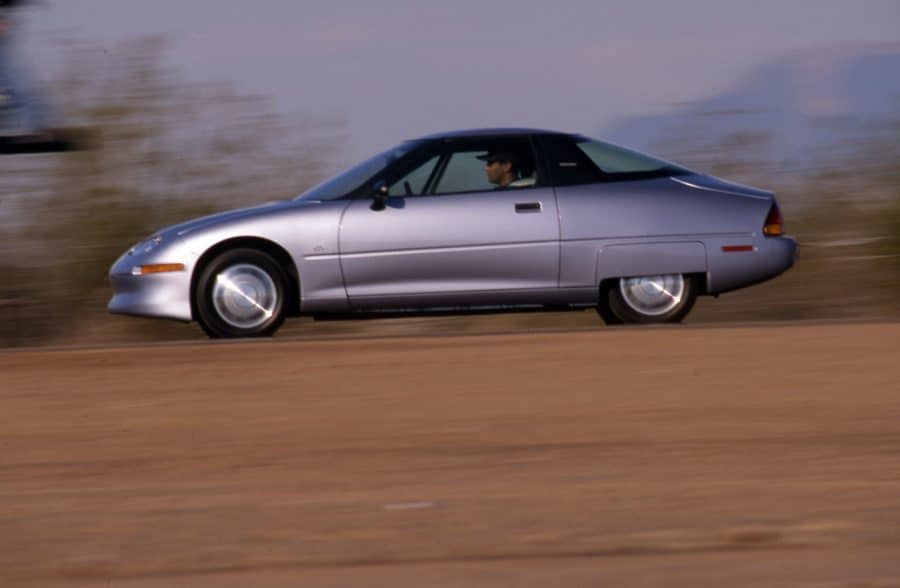
The car was unlike anything else on the road. The two-door teardrop design was engineered to squeeze the most out of the batteries, and the EV1 remains one of the slipperiest cars ever to hit the market, with a drag coefficient of just 0.19, better than any of today’s EVs. It featured regenerative braking, low-rolling-resistance tires, and fully electronic controls at a time when virtually every control in a car was still mechanically actuated. Only 1,117 EV1s were built, and they were leased only, with no purchase available.
The people who drove them were devoted. One lessee described it as the most reliable car he had ever owned, comparing the experience to having a gas station in his own garage. Demand from enthusiasts was genuine and vocal. But GM believed that electric cars occupied an unprofitable niche of the automobile market, and when leases expired in the early 2000s, the company took the cars back. Most were hauled to Arizona and crushed. Supporters held a vigil outside a GM facility in Southern California that one former employee called “EV1 death row.”
The controversy never fully faded. The 2006 documentary “Who Killed the Electric Car?” examined the forces behind the program’s cancellation, pointing to industry lobbying, oil company influence, and a California regulatory reversal. GM maintained that a lack of available replacement parts made keeping the cars on the road a safety concern.
What is harder to dispute is the EV1’s legacy. The engineering lessons from that bet compounded over the decades that followed, contributing to hybrid technology, and eventually the battery-electric vehicles GM produces today. GM was awarded 23 different patents for advanced technology and features associated with the EV1’s development, including the first heat-pump automotive climate system and electro-hydraulic regenerative braking.
About 40 EV1s survived the crusher, donated to universities and museums with their powertrains deactivated. One lives at the Smithsonian. Others are at the Petersen Automotive Museum in Los Angeles.
The EV1 was ahead of its time in almost every way. It proved that a major automaker could build a compelling electric vehicle, and it proved how quickly one could walk away from it. Thirty years later, every major automaker is building EVs. The road to that moment runs straight through a car most people never knew existed.

Electric Vehicle Marketing Consultant, Writer and Editor. Publisher EVinfo.net.
Services