Everged Leading Vitally Important EV Charging Cybersecurity
Xiid Corp. has announced three new strategic partnerships that extend its post-quantum secure networking platform into electric vehicle infrastructure, healthcare AI, and multi-cloud enterprise environments.
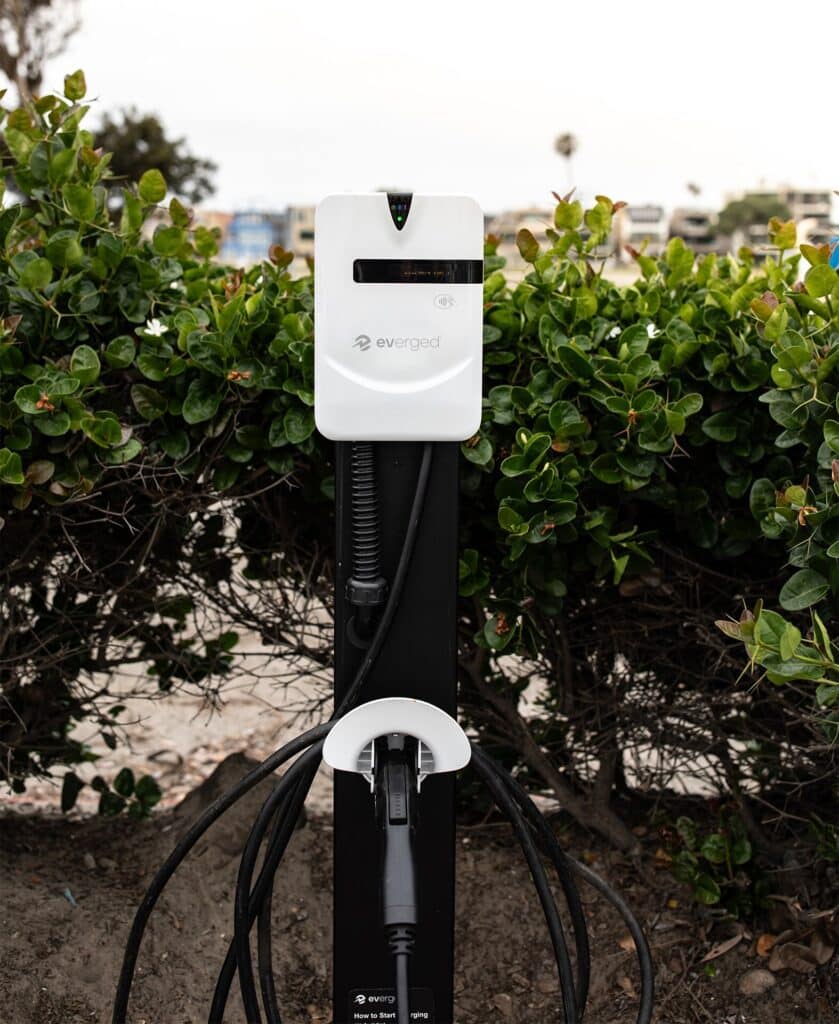
The first partnership pairs Xiid with eVerged LLC to address cybersecurity vulnerabilities across the EV charging ecosystem. As the global EV market moves toward $6.5 billion by 2030, charging stations, billing systems, and connected vehicles have become increasingly attractive targets. The joint solution embeds Xiid’s SealedTunnel technology into eVerged’s charging infrastructure, making systems non-discoverable and protecting data transport across public and private installations, fleet operations, and utility billing networks.
Charging station operators gain stronger security across installations, reducing downtime and liability. EV drivers receive protection of sensitive data and safe, uninterrupted charging. Businesses, municipalities, and fleets get a scalable model to meet compliance and security mandates, while utilities and billing providers benefit from integrity of data transport and transactions across distributed charging networks.
“EV charging is a critical link in the clean energy future, but the scale of its impact makes it a vulnerable target,” said Xiid CEO Steve Visconti. “Together with eVerged, we’re delivering end-to-end protection – making charging systems undiscoverable, eliminating lateral movement risks, and ensuring billing integrity.”
“eVerged was founded on the belief that security must be built into EV infrastructure from day one,” added eVerged President James Dion. “Xiid ensures eVerged customers – whether drivers, enterprises, or municipalities – can charge with confidence, knowing their data, transactions, and vehicles are fully protected. Our goal is to consistently be the most secure platform in the world and Xiid is a critical part of making that goal a reality.”
The second partnership brings Xiid’s Terniion platform to Consent Vault Inc., a biomedical data analytics company serving oncology clinics and clinical researchers. Terniion keeps Consent Vault’s AI inference endpoints, training pipelines, and data repositories off the public internet entirely, routing all data through outbound-only, process-to-process, triple-encrypted tunnels.
Healthcare was the most targeted sector for cyberthreats in 2024, making the protection of AI data ingestion pipelines and document stores a critical priority. The approach lets clinicians and researchers work with sensitive patient data without altering their workflows or exposing that data to outside threats, meeting the security expectations of pharmaceutical sponsors, community oncology practices, and payers.
The third partnership involves Neutron Engineering, a cloud and DevOps consultancy building a new Multi-Cloud Landing Zone architecture with Terniion as its secure access and segmentation layer. Rather than relying on traditional VPN meshes and complex firewall rule sets, the joint solution uses ephemeral, process-to-process connectivity that can be replicated across accounts, regions, and cloud providers.
Control planes and workloads remain unreachable from untrusted networks while developers, site reliability engineers, and automation tools retain the access they need. The collaboration will initially focus on regulated and security-sensitive customers, with plans to extend into CI/CD pipelines, infrastructure automation, and operational runbooks using Aclave for credential-less authentication.
Why Cybersecurity Is Vital for EV Charging
Electric vehicles are no longer a niche product. With millions of EVs on the road and charging networks expanding rapidly across highways, parking garages, retail centers, and private homes, the infrastructure supporting clean transportation has become a significant part of the digital landscape. And like any networked system handling sensitive data and financial transactions at scale, it has become a target.
The threat is not theoretical. EV charging stations are connected devices. They communicate with vehicles, with billing platforms, with utility grids, and with cloud-based management systems. Every one of those communication pathways represents a potential entry point for attackers. A compromised charging station could expose driver payment data, disrupt service across an entire network, or in more serious scenarios, be used to manipulate power draw in ways that destabilize local grid infrastructure.
Billing integrity is one of the most immediate concerns. Charging transactions involve real money, real account data, and in fleet and commercial contexts, significant volumes of financial information moving across networks constantly. Without strong encryption and secure data transport, that information is vulnerable to interception and manipulation. Drivers and fleet operators need to trust that what they are charged accurately reflects what they used, and that their payment credentials are not being harvested in the background.
Beyond billing, there is the question of operational continuity. Charging networks serve drivers who depend on them to reach their destinations. A cyberattack that takes stations offline, corrupts session data, or prevents authentication does not just cause inconvenience. For drivers with limited alternative charging options, it can strand them entirely. For fleet operators managing dozens or hundreds of vehicles, downtime translates directly into lost productivity and revenue.
The grid connection adds another dimension to the risk. Large-scale charging installations draw significant power, and smart charging systems are increasingly designed to communicate with utilities to balance load and respond to grid conditions. If those communication channels are compromised, an attacker could potentially interfere with load management in ways that have consequences well beyond the charging network itself.
The solution is not to slow down EV adoption. The solution is to build security into the infrastructure from the ground up rather than treating it as something to be addressed after the fact. That means making systems non-discoverable from the public internet, encrypting data transport end to end, eliminating lateral movement risks so that a breach in one part of the network cannot spread to others, and ensuring that every layer of the ecosystem from the vehicle to the cloud operates within a zero trust framework. The zero trust framework is based on the principle “never trust, always verify,” assuming that threats exist both inside and outside the network.
The EV charging ecosystem is still maturing, and the decisions being made now about how to architect and secure it will shape its resilience for years to come. Getting security right at this stage is far easier, and far less costly, than retrofitting it onto a sprawling network after an attack has already demonstrated the consequences of getting it wrong.

Electric Vehicle Marketing Consultant, Writer and Editor. Publisher EVinfo.net.
Services