Canada Announces $10.6 Million for 14 EV Charging Infrastructure Projects
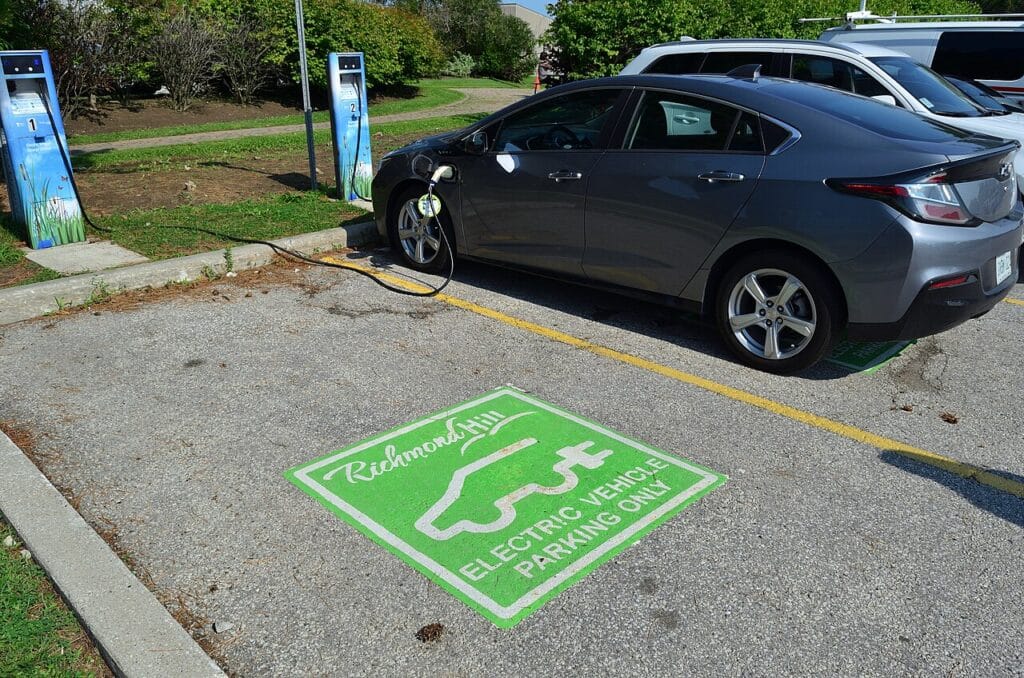
The Canadian federal government announced $10.6 million in funding for 14 EV charging infrastructure projects across Canada, with the money going toward the installation of more than 1,600 chargers nationwide. The announcement was made at the EV and Charging Expo in Toronto on April 8.
An additional $1.1 million from Natural Resources Canada will fund a continuation of Plug’n Drive’s cross-country EV test drive tour, which brings multiple EV models to small and medium-sized communities where adoption rates have lagged. The tour gives residents a chance to compare vehicles, speak with experts, and assess whether an EV fits their daily life before committing to a purchase.
The investments are part of a broader federal Auto Strategy positioning Canada as a leader in vehicle electrification, autonomous driving technology, and battery supply chains.

“Canada’s new Auto Strategy laid out our plan for a connected, electric, clean future that creates jobs and makes it easy and affordable for Canadians to get around. Today’s announcement shows how we are getting more EV chargers built every month so that Canadians can choose EVs with confidence,” said the Honourable Tim Hodgson, Minister of Energy and Natural Resources.
“With today’s announcement, we are investing in EV chargers where Canadians need them most in Toronto and beyond, making it easier for drivers to get to where they live, work and play. This is how we build a strong and climate-competitive future,” said Karim Bardeesy, Parliamentary Secretary to the Minister of Industry.
EVinfo.net’s Take: Canada’s EV Charging Investment Gives It a Real Edge Over a Retreating United States
The federal tax credit that drove U.S. EV sales was foolishly cut at the end of September 2025. No replacement is expected for at least three long years. American EV sales fell 27% year over year in the first quarter of 2026 as a direct result. New federal infrastructure funding for charging is not on the near-term horizon. States are filling some of the gap, but patchily and unevenly.
The contrast with Canada is sharp. Where Washington has stepped back, Ottawa is stepping in.
The 1,600 new chargers funded by this announcement matter for two reasons. The first is practical: range anxiety and charging access remain the most stubborn barriers to EV adoption among buyers who are interested but not yet committed. Every new charger in an underserved community reduces that friction. The second reason is psychological. Government investment signals staying power. It tells consumers, automakers, and infrastructure companies that the policy environment is stable enough to plan around.
Canada has spent years building out the supply chain infrastructure to support a domestic EV industry. Battery material processing, critical mineral extraction, and EV manufacturing investment have all been priorities. The federal Auto Strategy frames this explicitly as a competition, one that Canada intends to win against the United States, Europe, and Asia. And with these moves, Canada is winning, and the US is losing.
US federal government policy toward Canada since January 20, 2025 has been an unmitigated disaster. Horribly bad and hostile trade policy, illegal tariffs, tariff threats, the ridiculous statement by the US President that Canada could become “the 51st US state.”
EVinfo.net rejects all of these mistakes. Canada has been the greatest friend and trading partner to the United States from the beginning. Americans must vote better in the November midterms and every election beyond that, to rebuild our formerly friendly and prosperous relationship with Canada. We must regain sane and competent leadership.
The Jobs and Economic Losses That Are Already at Stake
The jobs, the factories, and the supply chains that come with leading the EV transition are worth an enormous amount of money.
The United States is currently at risk of giving a significant portion of that away.
EV manufacturing is not just about assembling cars. It is a dense ecosystem of battery production, cell manufacturing, materials processing, software development, charging infrastructure construction, and maintenance. Each of those categories supports tens of thousands of jobs, many of them in exactly the kind of manufacturing communities that federal policy has spent decades trying to revitalize.
The Inflation Reduction Act, whatever its political controversies, triggered a wave of factory announcements across the American South and Midwest. Battery plants in Georgia, Tennessee, Kentucky, and Michigan. Cell manufacturing facilities that had not existed before. Supply chain investments that were explicitly designed to pull critical mineral processing and battery production out of China and into the United States.
Pulling back federal support did not freeze those investments in place. Companies making billion-dollar factory decisions are acutely sensitive to policy signals. When the policy signal is ambiguity or retreat, capital goes elsewhere. Some of it goes to Canada, which is actively courting it. Some goes to Europe, which has its own industrial strategy. Some stays in Asia, where it was before the IRA changed the math.
E2 Reported Largest Annual Reversal of US Clean Energy Investment Since 2022
E2’s Year-End 2025 Overview reported the largest annual reversal of clean energy investment since E2 began tracking in 2022. E2 is a national, nonpartisan group of business leaders, investors, and professionals from every sector of the economy who advocate for smart policies that are good for the economy and good for the environment.
Cancellations outpaced announcements 3-to-1 | For every dollar of new clean energy investment announced in 2025, nearly three were pulled — $34.8 billion in cancellations and downsizes against just $12.3 billion in new commitments.
38,031 manufacturing jobs eliminated | Project reversals and factory closures wiped out more clean energy jobs last year than in all prior tracked years combined, producing a net loss exceeding 15,000 positions.
Manufacturing bore the brunt | At $30.2 billion, factory and production facilities accounted for nearly all cancelled investment and job losses — exposing the fragility of capital-intensive domestic clean energy supply chains.
EVs and batteries led the retreat | Electric vehicle and battery/storage projects each topped $21 billion in lost investment, together driving the majority of 2025’s cancellations.
Losses crossed party lines | Republican-held districts absorbed $19.9 billion in cancelled investment and roughly 24,500 jobs; Democratic-held districts lost $10.6 billion and 12,600 jobs. States that had led clean energy manufacturing growth — Michigan, Illinois, Georgia, New York, and Arizona — saw some of the sharpest reversals.
December delivered a final blow | A late surge of EV and battery cancellations in December alone erased $5.1 billion and 8,000 jobs, closing the year at historically unprecedented levels of investment loss.
The Market Is Not Waiting
One in four cars sold globally last year was electric. That number will be higher this year, and higher still the year after. The automakers building those vehicles need batteries. The supply chains for all of those materials are being built right now, and the countries investing in them are claiming durable economic positions that will be very difficult to displace later.
China understood this decades ago. It invested aggressively in battery manufacturing, critical mineral processing, and EV production when the market was small and the returns were uncertain. Today it dominates all three. The lesson is not that China did something unfair. The lesson is that industrial leadership in a capital-intensive technology sector goes to the countries that show up early and stay consistent.
The United States showed up. The IRA was a serious attempt to compete. Walking it back mid-game does not restore some neutral baseline. It cedes ground to competitors who are not slowing down, and will end in disaster if the rollbacks are not undone soon.
EV Leaders Based in Canada
Clockwork Energy is focused squarely on one of the biggest pain points in the EV transition, charger reliability. Rather than competing with existing charging hardware or backend platforms, Clockwork operates as a software reliability layer that sits on top of current systems. It integrates with chargers, networks, communications equipment, and monitoring tools to give operators a clear, real-time view of how their infrastructure is performing. By continuously monitoring charger behavior, detecting anomalies early, and automating diagnostics, Clockwork helps prevent outages before drivers ever experience them. The goal is simple but critical: make EV charging work the first time, every time.
BluWave-ai addresses a different, but equally important, layer of the electrification challenge. Based in Canada, the company applies artificial intelligence and real-time analytics to optimize how electricity is generated, stored, and consumed. As renewable energy and electric vehicles add variability to the grid, BluWave-ai’s technology helps utilities, grid operators, and fleet managers balance supply and demand more efficiently. Its AI models process vast amounts of data, including energy prices, weather patterns, and load behavior, to make smarter decisions in real time.
Montreal, Quebec-based Relion was created when Benoit Lacroix partnered with Jesse White to address one of the EV industry’s most persistent challenges: reliable charging infrastructure. Together, they have assembled a team of driven professionals focused on solving the operational complexity of EV charging through collaboration, accountability, and a strong commitment to customer success. Today, Relion provides operations and maintenance (O&M) solutions that blend advanced technology, strategic partnerships, and deep technical expertise, all guided by a user-centered approach designed to maximize uptime, performance, and long-term value for charging operators.

Electric Vehicle Marketing Consultant, Writer and Editor. Publisher EVinfo.net.
Services