China’s Car Giant BYD Says It Can Thrive Without U.S. Market
Rising global fuel prices linked to the Iran war are accelerating demand for electric vehicles all around the globe, and Chinese automakers are moving quickly to capture that momentum.
As one example out of many, sales of electric cars soared 51% in Europe in March 2026, amid a rise in petrol and diesel costs driven by the Iran war.
On April 24, 2026, the BBC reported that as the world’s largest EV producer, China is seeing increased demand across Asia, Europe, and Latin America, even as its manufacturers remain largely excluded from the U.S. market. BYD, which surpassed Tesla as the top global EV seller last year, is at the center of this expansion.
Speaking at the Beijing Auto Show, BYD executive vice president Stella Li emphasized that the company’s growth does not depend on entering the United States. Instead, BYD is focused on meeting rising demand in markets such as Brazil, the UK, and across Europe, where consumers are increasingly motivated by the daily savings EVs offer as fuel prices climb. According to Li, demand is currently outpacing the company’s production capacity.
To address one of the biggest barriers to EV adoption, charging speed, BYD is advancing its “flash charging” technology. The system can add hundreds of kilometers of range within minutes, a capability the company views as critical to converting hesitant buyers and expanding its competitive reach.
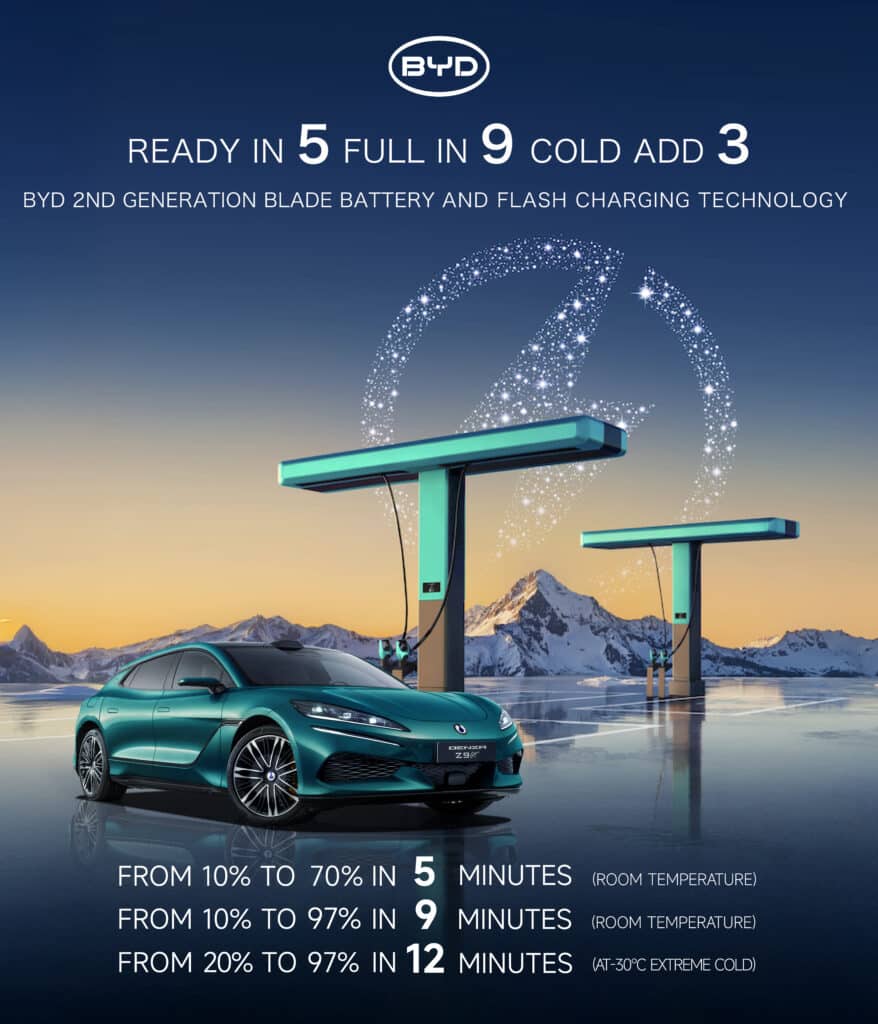
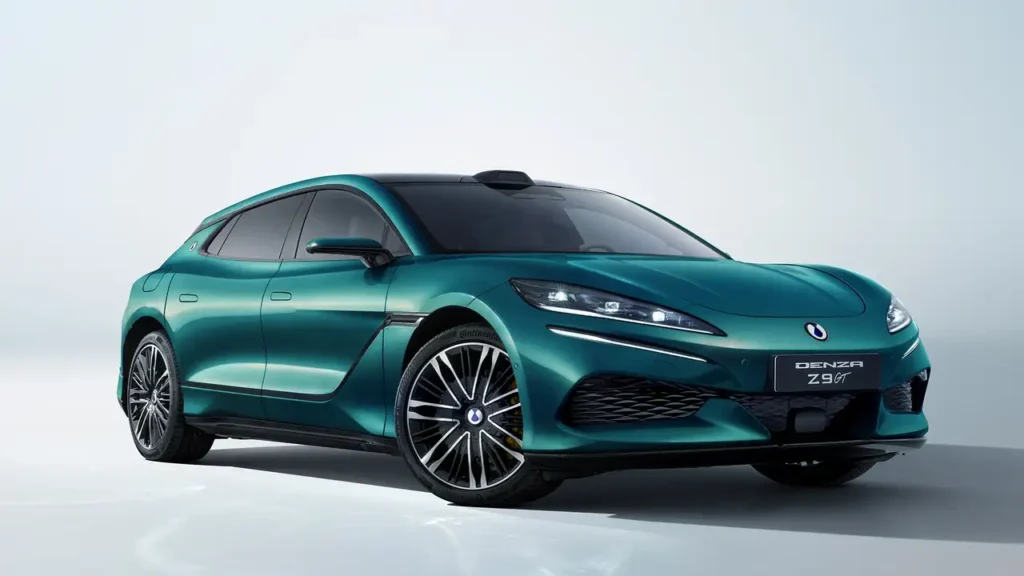
BYD introduced its Flash charging technology to Europe recently, unveiling the Denza Z9GT as the first European-market vehicle capable of using the system.
Equipped with BYD’s latest lithium iron phosphate Blade battery, the Z9GT charges from 10% to 70% in five minutes and from 10% to 97% in nine minutes. In temperatures as low as -30 degrees Celsius, where most EVs slow dramatically, it charges from 20% to 97% in 12 minutes.
This year’s Beijing Auto Show, now the largest automotive event globally, featured more than 1,400 vehicles from both domestic and international brands, with Chinese manufacturers taking a dominant role.
However, global expansion is unfolding alongside geopolitical tension. Chinese EV makers continue to face tariffs and regulatory scrutiny, particularly in the U.S., where concerns include government subsidies, data security, and national interests. Despite this, companies like BYD are gaining brand traction in other regions and shifting from competing primarily on price to competing on advanced technology, including batteries, charging systems, and software integration. Li highlighted that BYD operates as a broader ecosystem spanning electronics, energy storage, solar, and commercial vehicles.
Innovation across the sector was also on display at the Beijing Auto Show. XPeng introduced a new six-seat electric SUV and outlined plans for humanoid robots and flying cars targeted for production by 2027.
Meanwhile, legacy automakers such as Volkswagen, Toyota, and Ford are struggling to keep pace in China, increasingly turning to partnerships with local firms. Examples include collaborations with CATL for batteries, Huawei for driver assistance systems, and joint EV development projects.
Competition within China remains intense, with aggressive pricing and rapid innovation cycles. Even BYD faces pressure domestically, where sales have declined for several consecutive months, while overseas sales, particularly in Europe, are surging. Li acknowledged that consolidation across the sector is likely, noting that not all manufacturers will survive as the market matures.
EVinfo.net’s Take: U.S. EV Policy Missteps Risk Deepening U.S. Economic Strain
The United States is making a strategic error by slowing momentum on electric vehicles at the federal level, and the timing could not be worse. As the conflict involving Iran stretches into another week, fuel prices remain elevated, placing immediate pressure on American households and exposing deeper vulnerabilities in the economy.
Recent polling highlighted by ABC News shows just how severe the situation has become. A striking 73% of Americans say the economy is getting worse, while nearly half describe current conditions as poor. This is not abstract sentiment. It reflects the lived reality of rising costs, particularly for essentials like gasoline and food.
Energy costs are at the center of this frustration. The ongoing geopolitical instability has disrupted global oil markets, pushing gas prices higher and reinforcing volatility. For consumers, this translates into unpredictable monthly expenses and reduced financial stability. For businesses, especially those dependent on transportation and logistics, it means higher operating costs that ultimately get passed down the supply chain.
Against this backdrop, pulling back or slowing progress on EV adoption is economically counterproductive. Electric vehicles offer a structural hedge against fuel price volatility. Electricity prices are generally more stable than gasoline, and home charging provides a level of cost predictability that internal combustion vehicles cannot match.
When federal policy fails to accelerate EV adoption, it effectively keeps consumers tied to a fuel system that is increasingly exposed to geopolitical shocks. That dependency amplifies economic stress during periods like the current one.
This is not just an environmental issue. It is an economic resilience issue. Countries that invest aggressively in electrification reduce their exposure to global oil disruptions. Those that hesitate remain vulnerable.
The current moment underscores a simple reality. High fuel prices are not a temporary anomaly. They are becoming a recurring feature of the global economy. In that environment, affordable EVs are not just a clean alternative. They are a financial safeguard.
Smart government officials in France recently indicated that annual government support will increase from approximately €5.5 billion today to around €10 billion ($12 billion) by 2030, helping households and businesses adopt electric technologies, including electric vehicles, heat pumps, and industrial electrification systems.
If the U.S. continues to foolishly move backward on EV policy, it risks compounding economic dissatisfaction, increasing household costs, and falling even further behind in a vital global technology shift that is already well underway.

Electric Vehicle Marketing Consultant, Writer and Editor. Publisher EVinfo.net.
Services