Waymo, Baidu, Hyundai, and Cadillac Are Among Fast Company’s Most Innovative Companies in Automotive for 2026
Robotaxis went mainstream in 2025, logging millions of rides across the globe. What were once scrappy startups have matured into full-scale businesses, and the competition is fierce, nowhere more so than between Alphabet’s Waymo and Baidu’s Apollo Go, the autonomous vehicle arms of two of the world’s most powerful tech companies.
But this year’s most innovative automotive companies are doing more than ferrying passengers without a driver. They’re overhauling the entire industry, rethinking EV battery technology, reinventing manufacturing, and reimagining the showroom experience. Cadillac is hand-building a $340,000 electric sedan and suiting up for Formula One. Hyundai is pouring billions into a landmark Georgia EV factory. And a Southern California startup is 3D-printing hybrid hypercars that break track records.
The common thread? A refusal to accept the industry as it is, and recognizing that battery electric vehicles (BEVs) are the future of the global automotive industry.
Every year, Fast Company publishes its Most Innovative Companies list, and every year, the same question surfaces: does a ranking like this actually mean anything?
The answer, it turns out, is yes. The companies listed are on the cutting edge of innovation, shaping what tomorrow’s transportation future looks like. That future is electric, autonomous, and sustainable, removing the volatility, higher cost, and pollution of oil.
Fast Company’s 2026 Most Innovative Companies list included:
Waymo: For scaling autonomous vehicles across the United States
Waymo had a landmark year. Alphabet’s AV unit crossed the 20 million-ride milestone in December 2025, doubled its footprint to 10 U.S. cities, and now delivers 1 million rides per month. New markets including Miami, Dallas, Houston, San Antonio, and Orlando joined its existing hubs in Los Angeles, San Francisco, Phoenix, and Austin.
The company is laying groundwork for more than 20 additional cities in 2026, from Baltimore to Boston to Tokyo, and announced its first international commercial launch in London. In August, Waymo received a permit to test in New York City, an environment that will stress-test its systems against snow and gridlock, two things Phoenix never demanded.
Baidu: For taking Apollo Go global
Baidu’s Apollo Go is the world’s largest robotaxi service by every measure: rides given, cities served, and fleet size. After transitioning to fully driverless operations in China in early 2025, Apollo Go now runs more than 1,000 vehicles across 26 cities and has expanded into Hong Kong, Abu Dhabi, and Dubai. Its purpose-built RT6 robotaxi, priced under $30,000, has become part of daily life in Wuhan. Partnerships with Uber and Lyft signal aggressive global ambitions. By February 2026, Apollo Go had logged over 300 million autonomous kilometers and 20 million public rides, numbers that translate directly into better data, sharper technology, and a widening competitive moat.
Hyundai: For betting big on American EV manufacturing
Hyundai made the largest economic development commitment in Georgia’s history: a $7.6 billion Metaplant in Bryan County, roughly 25 miles from Savannah. Opened in March, the facility is more than an EV factory. It’s a hub for battery production, robotics, and next-generation manufacturing. A $4.3 billion joint venture with LG Energy Solution will supply lithium-ion cells for Hyundai, Kia, and Genesis models starting in 2026, and Boston Dynamics’ Atlas humanoid robots are scheduled to begin work on the floor in 2028. The plant targets 500,000 vehicles annually and will add hybrid production next year, keeping Hyundai competitive no matter how the EV market evolves.
Cadillac: For chasing luxury, EV production, and F1 glory simultaneously
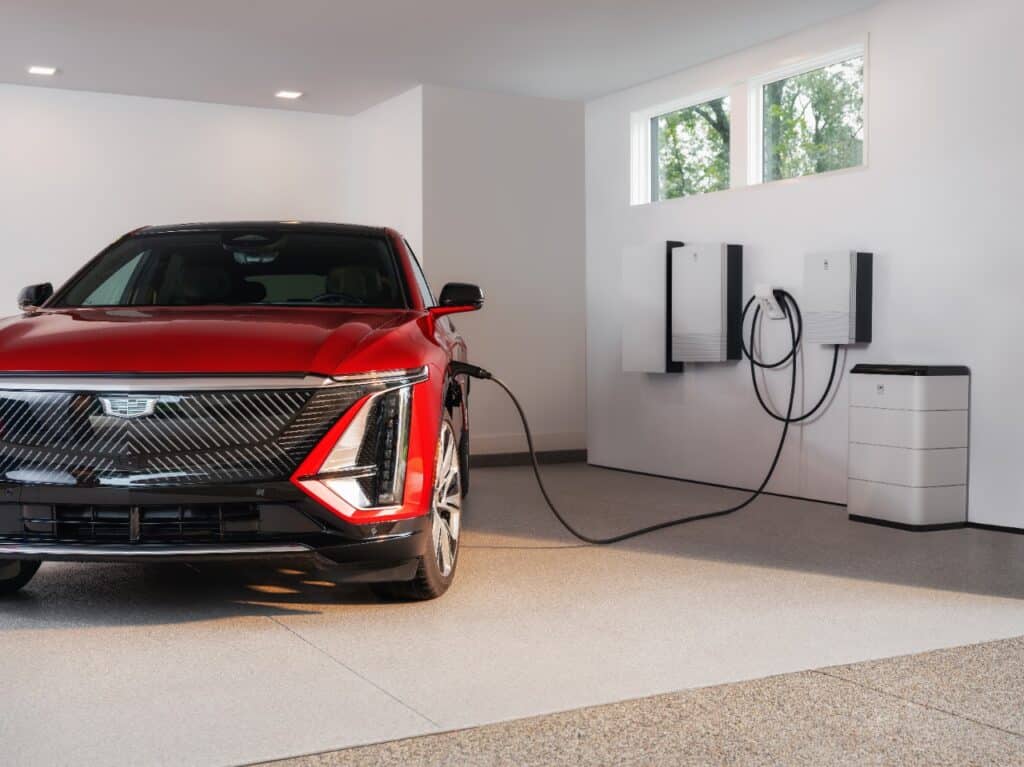
At 124 years old, Cadillac is having one of its most audacious years. The Celestiq is a $340,000, hand-built electric sedan with 655 horsepower, 303 miles of range, and a sub-four-second 0-to-60. It pays homage to the 1957 Eldorado Brougham while staking a claim on the future of American luxury. And that’s just half the story. Cadillac will debut as Formula One’s 11th team at the 2026 season opener in Melbourne, partnering with General Motors and TWG Motorsports. With drivers Sergio Perez and Valtteri Bottas behind the wheel, America is back on the F1 grid. Parent company GM is on it’s way to becoming the USA’s leading EV seller, as Tesla declines. Cadillac’s impressive 2026 EV lineup includes the Escalade IQ, Vistiq, Lyriq, and Optiq.
Czinger Vehicles: For reinventing how cars are built, offering super-fast hybrid supercars
Kevin Czinger’s Divergent Technologies has spent over a decade perfecting a manufacturing platform that combines AI and 3D printing to produce lighter, stronger parts faster and cheaper than traditional methods. The payoff is the Czinger 21C, a $2 million, 3D-printed hypercar delivering 1,250 horsepower and a 1.9-second 0-to-60. In July 2025, the 21C set five track records in five days, including runs at Laguna Seca and Goodwood’s famous hill climb, cementing its status as the fastest street-legal car ever around those circuits. With a $2.3 billion valuation after a September Series E, Czinger is just getting started.
Moment Energy: For giving used EV batteries a second life
Founded by four engineering graduates from Simon Fraser University, Moment Energy is building a business around a simple but powerful idea: retired EV batteries still have plenty of useful energy left. The company repurposes lithium-ion batteries into stationary energy storage systems for commercial and utility use. Its Vancouver facility reached full-scale production in July 2025, and plans are underway for the world’s first second-life battery gigafactory in Taylor, Texas. A November partnership with Copec Wind Ventures will repurpose batteries from Chile’s electric bus fleet, the second-largest in the world, with projects spanning Latin America and Europe.
LiCAP Technologies: For transforming EV battery manufacturing
Sacramento-based LiCAP Technologies is making EV batteries cheaper and cleaner to produce. Its Activated Dry Electrode process ditches the solvents and energy-hungry drying ovens of conventional manufacturing in favor of a dry, roll-to-roll system, cutting costs, reducing emissions, and simplifying gigafactory design. In August 2025, the company announced a partnership with Nissan to develop dry electrode technology for solid-state batteries, with production vehicles targeted for 2028. Backed by the California Energy Commission and a partnership with Dürr Systems, LiCAP is moving from lab to factory floor.
Helm.ai: For making autonomous driving software affordable and scalable
Helm.ai is building autonomous driving software without the expensive sensors its rivals rely on. Its Helm.ai Driver system, launched in April 2025, predicts a vehicle’s real-time path using only standard cameras, no lidar, no HD maps. Helm.ai Vision, released in June, fuses multiple camera feeds into a bird’s-eye view of the vehicle’s surroundings. Together, they form a full-stack system used by Nvidia and Qualcomm, and in August, Honda signed a multiyear joint development agreement to integrate the full Helm.ai suite into production vehicles by 2027. Cheaper hardware, safer driving. That’s the pitch, and it’s working.
WeRide: For achieving true global scale in autonomous ride-hailing
WeRide made history in 2025 as the first autonomous driving company to hold permits in eight markets simultaneously: China, France, Belgium, Saudi Arabia, Singapore, Switzerland, the UAE, and the United States. Its WeRide Go app and purpose-built robo-vehicles are expanding rapidly, backed by a network of major partners including Renault, Bosch, and Uber. In September, WeRide launched China’s first 24-hour autonomous ride-hailing network in Guangzhou and debuted a robotaxi pilot in Riyadh via Uber’s platform. Fully driverless commercial operations in Dubai are targeted for 2026.
Numa: For making car dealerships bearable
Nobody enjoys buying or servicing a car. Numa is trying to change that. Its AI platform consolidates dealership communications, including voice, text, and web chat, into a single inbox and automates routine service tasks like appointment scheduling and repair status updates. Its Expanded AI Agent Suite, launched in October 2025, includes tools that identify trade-in candidates, translate technician notes into plain English, and even draft replies with a touch of humor. The company claims its system can recover up to $1.17 million in lost annual revenue for overwhelmed service departments. In a first for the industry, Numa introduced a pay-for-performance pricing model where dealers only pay when the AI successfully books an appointment.
About Fast Company’s List
Fast Company’s list is not a financial ranking. It doesn’t measure revenue, market cap, or shareholder returns. What it attempts to do is harder and more subjective: identify the companies taking concrete action to solve real problems in new ways. That’s a different kind of signal, and for anyone trying to understand where an industry is heading, it’s often a more useful one.
The list spans 59 categories and 720 honorees. Some are household names. Others are startups most people have never heard of. That mix is intentional. The goal isn’t to celebrate who’s already won. It’s to surface who’s doing something genuinely new.
EVinfo.net’s Take: What’s Important in Fast Company’s List and What’s Missing
Waymo is clearly the robotaxi winner. Experts agree Waymo’s Lidar-based system is far safer than Tesla’s camera-only system. Automotive World reported updated filings from the National Highway Traffic Safety Administration (NHTSA) show that Tesla’s vehicles have reported four crashes across roughly 250,000 miles since June, or one crash roughly every 62,500 miles; this contrasts Waymo’s 1,267 crashes over some 125 million driverless miles, equating to one every 98,600 miles.
Tesla’s CEO is massively failing, falling far short of robotaxi targets over, and over, and over again. Firing its CEO is Tesla’s only way forward.
The rise of robotaxis may prove to be one of the most powerful accelerants for EV adoption the industry has seen. As autonomous ride-hailing networks scale across dozens of cities, the vehicles doing the work are overwhelmingly electric, and the economics demand it. Robotaxi operators run their fleets hard, logging far more miles per day than a personal vehicle ever would.
At that utilization rate, the lower fuel and maintenance costs of EVs aren’t just appealing, they’re essential to making the unit economics work. The more robotaxis proliferate, the more charging infrastructure gets built, the more battery technology gets refined, and the more consumers encounter electric vehicles as a normal, unremarkable part of daily life. Familiarity breeds comfort, and comfort breeds adoption. What the personal EV market has struggled to achieve through incentives and marketing, the robotaxi industry may accomplish simply by showing up.
Hyundai is Beating Bad Government Policy
The Biden administration’s EV tax credits showed great promise before being scaled back, and the current policy environment has been too damaging and inconsistent to give automakers or consumers the confidence to commit. Automakers lost billions of dollars to bad federal goverment policy.
Into that vacuum, Hyundai has stepped with something more durable than legislation: capital. The South Korean automaker’s $7.6 billion Metaplant in Georgia is the kind of long-term industrial bet that doesn’t hinge on which party controls Washington. It creates thousands of jobs in a region that needs them, anchors a supply chain that keeps money and manufacturing on American soil, and builds the kind of EV production capacity the U.S. desperately needs to stay competitive with China, which has spent years subsidizing its own industry into a commanding global lead.
The irony is not subtle. A foreign automaker is doing more to advance American EV manufacturing than American policy has managed to. That’s not an indictment of Hyundai. It’s a reminder that when governments fail to lead, private investment sometimes fills the void, and the communities that benefit rarely stop to ask where the money came from.
GM Winning as Tesla Declines Under a Bad CEO
General Motors is quietly positioning itself to inherit the American EV market that Tesla is squandering. For years, Tesla’s dominance looked unassailable, built on genuine technological leadership, a devoted customer base, and a CEO who seemed to understand that the future of transportation was electric. That CEO is now more interested in political theater than product development, and the market is noticing. Tesla’s sales have declined, its brand has fractured along political lines, and a growing share of consumers who might once have defaulted to a Model 3 are actively looking elsewhere.
GM is ready to meet them. Cadillac’s 2026 EV lineup alone, spanning the Escalade IQ, Vistiq, Lyriq, and Optiq, covers more of the market than Tesla does, from attainable luxury to full-size flagship. Chevrolet and GMC are pushing further into the mass market with electric trucks and SUVs that appeal to buyers Tesla has never meaningfully reached. Unlike Tesla, GM has a century-old dealer network, deep manufacturing infrastructure, and institutional knowledge of what American car buyers actually want. The transition won’t happen overnight, and GM has stumbled before on its EV promises. But the trajectory is clear. Tesla’s loss of cultural cachet and consumer trust is not a temporary dip. It is a structural shift, and GM, with the right lineup and the right moment, is the most likely American beneficiary.
Gas-Only Supercars and Sportscars are Officially Dead
The stopwatch doesn’t lie, and right now it’s telling a story the internal combustion faithful don’t want to hear. The fastest production cars on the planet are no longer powered by gasoline alone. The Czinger 21C, with its hybrid powertrain, hits 60 mph in 1.9 seconds and holds track records at some of the most demanding circuits in the world. The Rimac Nevera, a pure electric hypercar, has broken top speed and acceleration records that took decades of combustion engineering to set. Porsche, Ferrari, and McLaren, brands that built their identities on the sound and fury of the internal combustion engine, are all producing their most capable cars with electric motors in the mix.
The reason is simple physics. Electric motors deliver maximum torque instantly, with a precision and consistency that no combustion engine can match. Paired with advanced chassis systems and regenerative braking, they make already extraordinary cars faster, more controlled, and more responsive. The gas-only supercar is not dying dramatically. It is being quietly outperformed at every metric that matters to the people who buy these cars: lap times, acceleration, handling, and technological prestige. A few holdouts remain, and they will find a nostalgic audience for years to come. But the performance crown has passed. The age of the pure combustion supercar is over, and the fully electric and hybrid cars replacing it are not compromises. They are simply better.
Solid State EV Batteries and EV Battery Repurposing
Yesterday, Inside EVs reported that the world’s first motorcycle powered by an all-solid-state battery has rolled off the Verge Motorcycles production line.
Solid state batteries may be the single most consequential technology development in the EV industry’s near future. By replacing the liquid electrolyte in conventional lithium-ion batteries with a solid material, they promise dramatically higher energy density, faster charging, far longer range, and significantly reduced fire risk. For consumers still on the fence about EVs, those improvements address almost every remaining objection.
But the revolution in battery technology doesn’t stop at the factory floor. What happens to those batteries after their useful life in a vehicle is proving to be an economic story in its own right. Companies like Moment Energy are demonstrating that retired EV batteries, though no longer powerful enough to drive a car, retain substantial energy storage capacity perfectly suited for commercial and utility applications.
That second life transforms what was once an environmental liability into a revenue-generating asset, creating entirely new industries, supply chains, and job markets. The ripple effects are significant. Repurposing batteries reduces the demand for raw material extraction, lowers the total carbon footprint of EV ownership, and makes the economics of going electric more compelling at every stage of the battery’s life.
Dealerships of the Future Will Vastly Step Up EV Education, Install EV Charging
Numa’s mission to make car dealerships more bearable arrives at a moment when dealerships need all the help they can get. The traditional dealership model was built on a reliable revenue engine: vehicles that needed constant maintenance. Oil changes, transmission services, brake jobs, coolant flushes. For decades, the service bay was where dealerships made their real money, and the internal combustion engine was their most dependable business partner.
EVs are quietly dismantling that arrangement. With far fewer moving parts and no need for the routine maintenance that kept customers coming back, electric vehicles represent an existential threat to the service revenue dealerships depend on. The ones that survive the transition will be the ones that recognize it early and adapt aggressively. That means investing in EV charging infrastructure, turning the lot into a destination rather than just a transaction point. It means training staff to educate rather than simply sell, because EV buyers arrive with different questions, different anxieties, and different expectations than the customers dealerships have spent a century learning to handle.
And it means leaning into tools like Numa that streamline operations and recover revenue lost to inefficiency, because margins that were already thin are about to get thinner. The dealership of the future will look less like a repair shop and more like a technology showroom. The ones that make that shift will thrive. The ones that don’t will find that the EV revolution didn’t just change the cars. It changed the entire business model around them.
V2G Deserves a Place on Fast Company’s 2026 Most Innovative Companies List
Vehicle-to-grid, or V2G, deserves a place on Fast Company’s 2026 Most Innovative Companies list because it fundamentally reshapes how energy and transportation interact. By enabling electric vehicles to not only consume power but also send it back to the grid, V2G transforms EVs into distributed energy assets capable of stabilizing grids, reducing peak demand, and accelerating renewable energy adoption. Companies are already demonstrating how fleets of EVs can function as mobile energy storage systems, creating new revenue streams while improving grid resilience. As electrification scales globally, V2G stands out as a breakthrough technology that moves beyond incremental improvement and instead redefines the role of vehicles within the broader energy ecosystem.

Electric Vehicle Marketing Consultant, Writer and Editor. Publisher EVinfo.net.
Services