March 2026 EV Sales in Canada Jump 74.7% From One Year Earlier, as Chinese EVs Arrive
On May 14, 2026, Canada’s government reported that Canada recorded 176,500 new motor vehicle sales in March 2026, down 6.6% compared with March 2025. In dollar terms, new vehicle sales declined 3.6% year over year.
New passenger car sales fell 4.3% during the month, while new truck sales declined 6.9% from a year earlier.
Despite the broader slowdown in the automotive market, zero-emission vehicle (ZEV) sales surged. Canadians purchased 21,574 new ZEVs in March, representing a 74.7% increase year over year.
ZEVs accounted for 12.2% of all new vehicle sales in March 2026, nearly doubling their market share from 6.5% in March 2025.
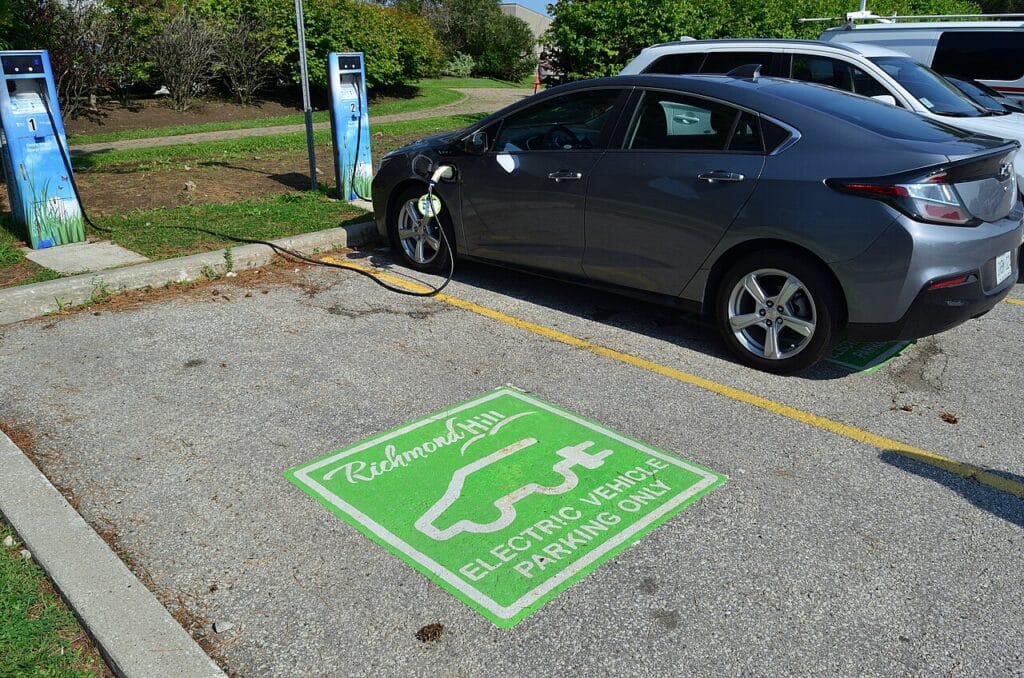

Electric Autonomy Canada reported that zero-emission vehicles accounted for 11.2% of new vehicle registrations in Canada during the fourth quarter of 2025, according to new data from Statistics Canada. The figure marked an increase from the 9.7% market share recorded in the third quarter, although total ZEV sales volume declined alongside a broader slowdown in overall vehicle registrations.
Canada recorded 46,170 ZEV registrations in Q4 out of 411,663 total new vehicle registrations, compared with 47,222 ZEV registrations out of 486,283 total registrations in Q3.
Battery electric vehicles drove most of the growth in market share. BEVs increased from 5.9% market share in Q3 to 7.4% in Q4, while registrations climbed from 28,648 to 30,464 units.
Plug-in hybrid electric vehicle registrations declined quarter over quarter, falling from 18,574 units in Q3 to 15,706 in Q4. However, because overall vehicle sales also dropped, PHEV market share remained steady at 3.8%.
On a yearly basis, Canada’s ZEV market experienced a sharp decline. Total ZEV registrations fell 44.7% in 2025 compared with 2024, while ZEV market share dropped from 14.6% at the end of 2024 to 9.5% by the end of 2025.
Analysts attributed much of the decline to a surge in EV purchases late in 2024 as consumers rushed to buy vehicles before Canada’s Incentives for Zero-Emission Vehicles program ended.
Canada has since launched a new Electric Vehicle Affordability Program offering rebates of $5,000 for BEVs and $2,500 for PHEVs for eligible purchases dating back to February 16.
Chinese EVs Are Coming to Canada, Some Dealers Can’t Wait to Sell Them
On May 15, 2026, CNBC reported Canadian auto dealer Michael MacGillivray believes the arrival of Chinese electric vehicles in Canada could significantly reshape the country’s automotive market.
MacGillivray, CEO of Century Auto Group and Sigma Auto Group, oversees 10 dealerships across Nova Scotia and New Brunswick and is working to become one of the first Canadian dealers to sell imported Chinese EVs. In April, he traveled to the Beijing Auto Show alongside other Canadian dealers to meet with Chinese automakers and evaluate vehicles that could eventually enter the Canadian market.
MacGillivray said he was highly impressed by the quality, design, and driving experience of the vehicles he saw in China.
“Their materials are second to none. Their styling is impressive. The ride is very impressive,” MacGillivray said to CNBC.
Canada’s decision to allow limited imports of Chinese-made EVs has generated mixed reactions across the automotive industry and political circles.
The Canadian Vehicle Manufacturers’ Association described the move as deeply concerning, while U.S. officials sharply criticized the policy.
Under the current policy, Canada will permit up to 49,000 Chinese-made EVs annually at a reduced tariff rate of 6.1%, far lower than the 100% tariff applied to most other Chinese vehicle imports.
The lower tariff structure has already sparked strong interest among Canadian dealerships. Farid Ahmad, CEO of Toronto-area dealership broker DSMA, said the company received nearly 400 inquiries from dealers interested in representing Chinese brands including BYD, Geely, and Chery.
Industry analysts said the limited import cap would likely allow Chinese automakers to establish an initial foothold in Canada without dramatically disrupting the broader market. According to S&P Global Mobility, the permitted volume would represent roughly 3% to 5% of the Canadian auto market.
Many Canadian consumers interviewed by CNBC expressed curiosity and optimism about the arrival of lower-cost Chinese EVs, particularly as fuel prices remain elevated and demand for affordable electric transportation continues growing.
EVinfo.net’s Take: Canada’s EV Adoption Growing Fast, EV Leaders Based in Canada
The Canadian Automobile Association (CAA) is one of the largest and oldest consumer-based organizations in Canada. CAA reported:
May 16 2026, Daily National average of gas prices in Canada:
Today: 187.3/L
Year Ago: 138.3/L
Canadians, just like drivers around the world, are suffering from America’s unnecessary war against Iran, which shows no end in sight. The US President seems less focused on ending the war and solving the global energy emergency, and more focused on the latest million-dollar waste of taxpayer money, renovating the Lincoln Memorial Reflecting Pool. New million-dollar projects by the President seemingly pop up every week, while drivers struggle under high gas prices under a never-ending and expensive war. Last week, inflation hit 3.8%, outpacing wage growth for the first time since 2023.
These high prices, and the loss of confidence in fossil fuels in general, due to the global energy instability the war has caused, has driven people, business leaders, and governments of every kind around the world into a greatly accelerated interest and uptake of EVs and renewable energy.
This global EV/renewable boom is here to stay, and will keep growing fast, even if the war ended today.
EV Leaders Based in Canada
Here are three of Canada’s top leaders in the EV space, that EVinfo.net has had the honor of working with.
Clockwork Energy is focused squarely on one of the biggest pain points in the EV transition, charger reliability. Rather than competing with existing charging hardware or backend platforms, Clockwork operates as a software reliability layer that sits on top of current systems. It integrates with chargers, networks, communications equipment, and monitoring tools to give operators a clear, real-time view of how their infrastructure is performing. By continuously monitoring charger behavior, detecting anomalies early, and automating diagnostics, Clockwork helps prevent outages before drivers ever experience them. The goal is simple but critical: make EV charging work the first time, every time.
BluWave-ai addresses a different, but equally important, layer of the electrification challenge. Based in Canada, the company applies artificial intelligence and real-time analytics to optimize how electricity is generated, stored, and consumed. As renewable energy and electric vehicles add variability to the grid, BluWave-ai’s technology helps utilities, grid operators, and fleet managers balance supply and demand more efficiently. Its AI models process vast amounts of data, including energy prices, weather patterns, and load behavior, to make smarter decisions in real time.
Montreal, Quebec-based Relion was created when Benoit Lacroix partnered with Jesse White to address one of the EV industry’s most persistent challenges: reliable charging infrastructure. Together, they have assembled a team of driven professionals focused on solving the operational complexity of EV charging through collaboration, accountability, and a strong commitment to customer success. Today, Relion provides operations and maintenance (O&M) solutions that blend advanced technology, strategic partnerships, and deep technical expertise, all guided by a user-centered approach designed to maximize uptime, performance, and long-term value for charging operators.

Electric Vehicle Marketing Consultant, Writer and Editor. Publisher EVinfo.net.
Services