CISA Issues Cross-Sector Alert on Copper Wire Theft from Electric Vehicle Charging Stations
On May 12, 2026, The Cybersecurity and Infrastructure Security Agency (CISA) released a a Cross-Sector Alert, providing information on the safety concerns with a damaged EV charging station and how to identify and respond to copper wire theft from EV charging stations. The alert is for law enforcement, first responders, recycling centers, and other entities that work with EV charging stations. View the fact sheet here.
Driven by rising global copper prices, thieves are increasingly targeting EV charging stations because charging cables contain valuable copper wiring that can be resold for profit. CISA warned that many chargers are located in public areas with minimal security or surveillance, making them easy targets for criminal activity.
The agency said copper theft can cause extensive and expensive damage to charging infrastructure, including short circuits, exposed live wires, fire hazards, and electrocution risks. Large-scale theft can also disrupt transportation systems, strain energy infrastructure, and create safety hazards for first responders, maintenance crews, and EV drivers.
CISA noted that damaged or disabled charging stations contribute to “charging deserts,” areas with limited or no functioning public EV chargers. Widespread cable theft could further reduce charging availability and increase pressure on remaining stations.
The alert highlighted Seattle as a case study, where thieves targeted 8 of Seattle City Light’s 13 fast-charging stations between March 2023 and January 2024. The utility estimated replacement and repair costs at roughly $2,500 per stolen charging cable.
CISA also warned that thieves sometimes burn cable insulation to access copper, increasing fire risks and exposing dangerous live electrical components. Damaged chargers may contain exposed wires, broken connectors, or compromised grounding systems that can cause electrical shocks or ignite nearby flammable materials.
The agency urged emergency responders and maintenance personnel to treat damaged charging stations as potentially hazardous, secure affected sites, identify emergency shutoff systems, and coordinate with law enforcement and charging station operators.
CISA concluded that copper wire theft is no longer just a property crime but an infrastructure security issue with cascading impacts on transportation, energy systems, public safety, and EV adoption nationwide.
The Cybersecurity and Infrastructure Security Agency (CISA) is a United States federal agency under the Department of Homeland Security (DHS) that serves as the nation’s risk advisor and lead agency for defending critical infrastructure against both physical and cyber threats.
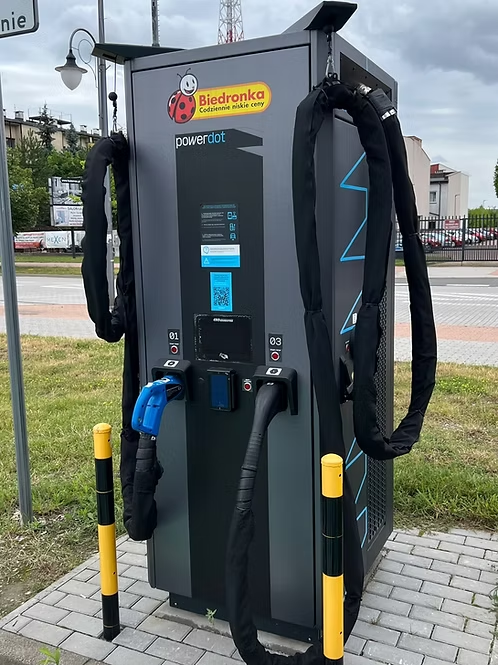
EVinfo.net Interviewed David Birsen, VP of CatStrap, About the Company’s Innovative Anti-Theft Products for EV Charging
EVinfo.net reported that CatStrap has entered the EV charging anti-theft market with a new armored cable protection system designed to combat the growing problem of EV charging cable theft across the United States and internationally.
We were honored to interview David Birsen, VP of CatStrap, in November 2025, and speak with him again today.
“The first time it stops a cut, the CatStrap Cable Shield pays for itself several times over — it only takes one. And across our deployed sites, it’s stopped many,” said David Birsen, VP, CatStrap.
The company developed the CatStrap EV Cable Shield to help charging station operators protect charging cables from thieves targeting the copper wiring inside public EV chargers. The system uses a dual-steel core design combining hardened steel strips and aircraft-grade cable wrapped inside a weatherproof nylon sleeve, making cables significantly more difficult to cut with bolt cutters, saws, or grinders.
CatStrap says the product acts as both a physical barrier and a visual deterrent. An optional DyeDefender system releases bright blue dye if tampered with, marking perpetrators and discouraging theft attempts. According to the company, more than 1,500 units have already been deployed across seven countries since late 2024 with virtually no reported theft incidents at protected sites.
The article noted that cable theft has become a major issue for EV charging operators because replacement DC fast charging cables can cost thousands of dollars while causing charger downtime and customer frustration. Cities including Los Angeles, Seattle, Fresno, and Houston have experienced repeated cable theft incidents that disabled large portions of public charging networks.
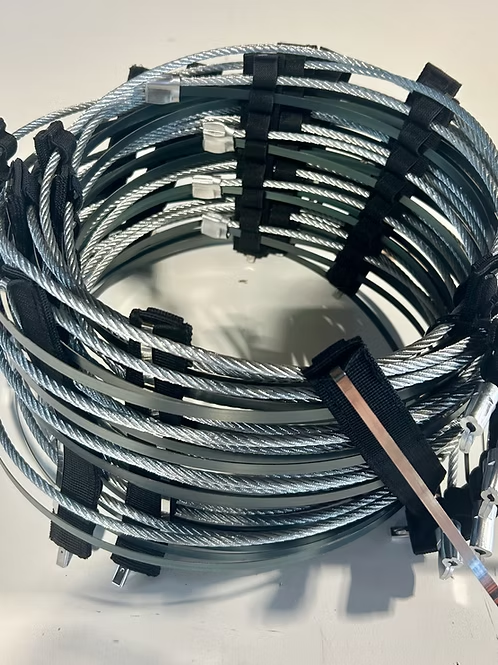
CatStrap originally built anti-theft devices for catalytic converters and adapted its technology for EV charging infrastructure after fleet customers began experiencing charging cable theft. The company claims its EV Cable Shield adds minimal weight while preserving cable flexibility and compatibility with most Level 2 and DC fast chargers.
The growing market for anti-theft charging technology reflects broader industry concerns about EV infrastructure security. Multiple charging companies and manufacturers are now developing cut-resistant cables, alarms, dye systems, and armored protective sleeves as copper theft increasingly disrupts public charging reliability.

Electric Vehicle Marketing Consultant, Writer and Editor. Publisher EVinfo.net.
Services