ACES to Bring Interoperable Charging to 250+ Electric Aviation Sites Across America by 2030
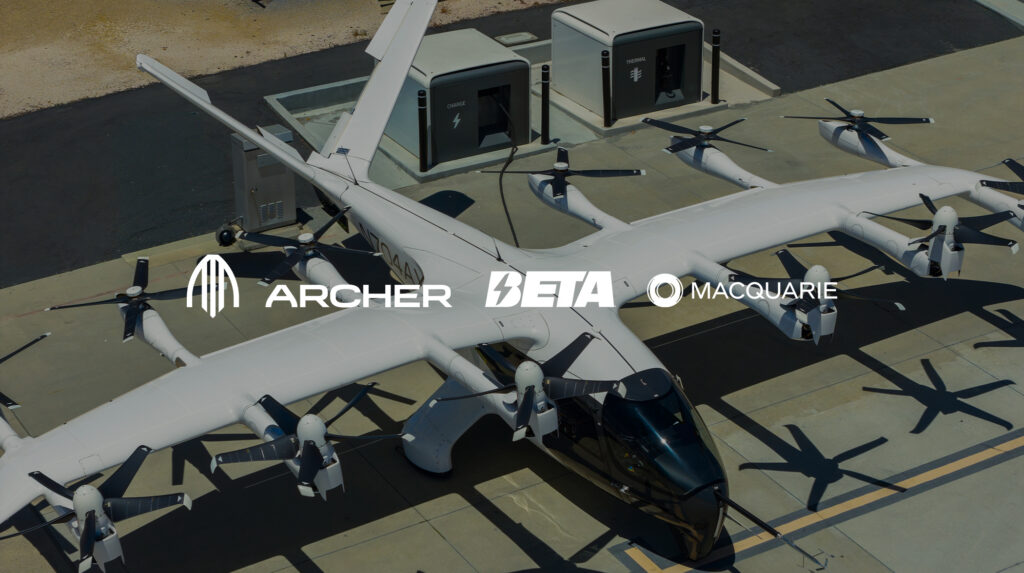
Archer Aviation, BETA Technologies, and Macquarie Capital have announced the formation of America’s Consortium for Electric Skyways (ACES), an initiative aimed at developing a nationwide network of electric aircraft charging infrastructure.
On July 16, 2026, the consortium announced plans to electrify up to 250 air taxi locations across the United States over the next decade, creating the foundation needed to support large-scale electric vertical takeoff and landing (eVTOL) operations. Initial deployment efforts will focus on major metropolitan regions and transportation hubs, including airports and vertiports in California, Texas, Florida, and New York.
The partnership combines the expertise of three organizations to accelerate the development of a standardized charging network. BETA Technologies will provide its electric aircraft charging systems, which utilize the Combined Charging Standard (CCS), a widely adopted industry standard that enables interoperability among different electric aircraft manufacturers. Archer Aviation will help drive demand for the network through its planned passenger air taxi services in key metropolitan markets, while Macquarie Capital will offer strategic guidance and assist in securing investment capital for site acquisition, development, and construction.
“The infrastructure required to open our nation’s airports and future vertiports to advanced air mobility is a fraction of what people expect,” said Kyle Clark, founder and chief executive officer of BETA Technologies. “By deploying interoperable chargers built on an open standard, we’re putting in place nearly all the physical infrastructure this industry needs, built so every operator can use it.”
“Electric air taxi operations can’t scale without the infrastructure to charge them. That’s why we’re building the backbone to support the next 250 years of electric aviation in America,” said founder & chief executive officer of Archer Aviation, Adam Goldstein. “We’re putting interoperable chargers in the locations where we plan to fly, including the core eIPP markets, and using the industry-adopted charging standard so every operator can share in their usage and distribute the cost across the whole industry. This is how you build the foundation for the next-gen aviation technologies that will transform how Americans move through their cities.”
The planned charging network is intended to support a wide range of aviation applications and aligns with the Federal Aviation Administration’s eVTOL Integration Pilot Program (eIPP), in which both Archer and BETA are participating. The infrastructure is being designed as a shared network that can be used by multiple operators rather than a proprietary system dedicated to a single company.
Under this model, Archer plans to utilize the charging sites for passenger air taxi operations, while BETA’s customers will be able to support cargo transportation, medical logistics, and other commercial aviation services. At larger airports, the CCS-compatible charging equipment may also be available for electric ground support vehicles, helping establish a more integrated and sustainable airport ecosystem.
By creating an open-access charging framework, ACES aims to encourage broader participation from infrastructure developers, aircraft manufacturers, and investors. The consortium believes that a unified approach to charging infrastructure can help accelerate eVTOL adoption while avoiding the fragmentation that can occur when competing proprietary networks emerge.
The announcement highlights growing momentum within the advanced air mobility sector as companies work to build the infrastructure necessary to support the commercialization of electric aviation across the United States.

Electric Vehicle Marketing Consultant, Writer and Editor. Publisher EVinfo.net.
Services