Andretti Formula E Partners with Nissan for Formula E GEN4 Era
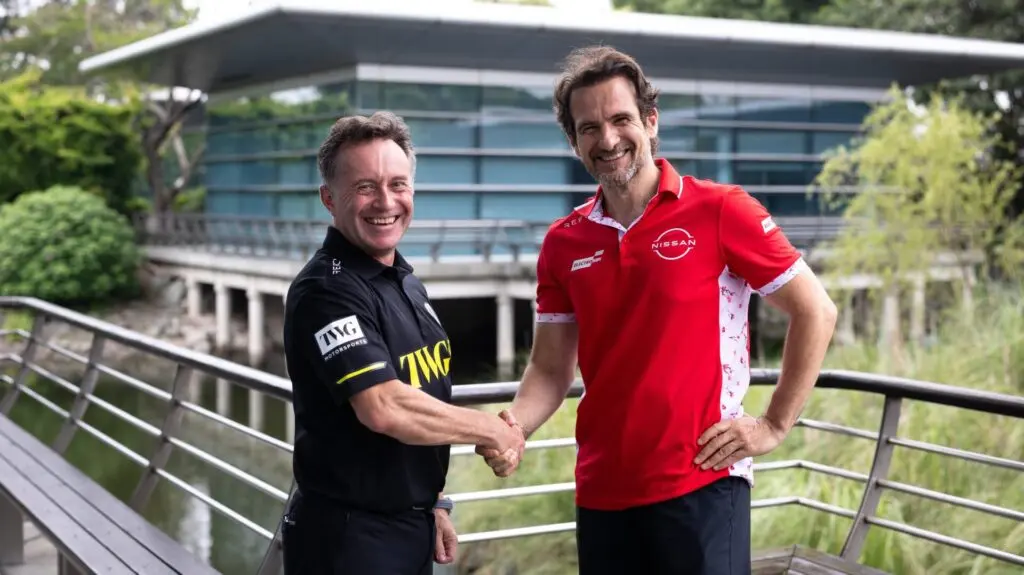
Andretti Global announced on July 24, 2026, that Andretti Formula E will partner with Nissan as a customer team for the ABB FIA Formula E World Championship’s upcoming GEN4 era. The new multi-year agreement will begin with Season 13 and will see Andretti compete with Nissan powertrains as Formula E enters its next generation of technology and performance.
The partnership brings together two of Formula E’s most established organizations as the championship prepares for the introduction of the GEN4 regulations. Andretti has been part of Formula E since its inaugural season and remains one of the series’ most successful teams. The team captured the 2023 ABB FIA Formula E Drivers’ World Championship with Jake Dennis, who became the first British driver to win the title.
Nissan enters the GEN4 era following a successful period in Formula E, including winning the 2025 ABB FIA Formula E Drivers’ World Championship with Oliver Rowland. Since joining the championship in Season 5, Nissan has become one of Formula E’s leading manufacturers, earning nine race victories, 34 podium finishes, and 14 pole positions.
The announcement comes ahead of the 2026 TDK Tokyo E-Prix doubleheader in Japan, Nissan’s home market and one of Formula E’s most important global events. During the race weekend, Andretti Formula E will showcase a special one-off Liberty Walk-inspired livery, celebrating its collaboration with the Japanese automotive tuning brand and honoring Japan’s influential car culture.
Andretti has already confirmed its Season 13 driver lineup. Jake Dennis will continue with the team after signing a previously announced multi-year contract extension. He will be joined by Felipe Drugovich, who was confirmed for the upcoming season ahead of the 2026 Shanghai E-Prix. Drugovich will enter his second Formula E campaign with Andretti after earning his first podium finish with the team at the Monaco E-Prix earlier this season.
The move follows the conclusion of Andretti’s current Formula E customer partnership with Porsche, which will end after Season 12. The transition to Nissan marks a new chapter for Andretti Formula E as the team prepares for the next era of electric racing technology.
Formula E Enters a New Era as Electric Racing Accelerates Global EV Innovation
Formula E has become one of the most important proving grounds for electric vehicle technology, demonstrating how competition can accelerate advances in battery performance, power electronics, software, and energy management. What began as an experimental all-electric racing series has evolved into a global championship attracting major automakers and showcasing the future of electric mobility.
The ABB FIA Formula E World Championship was created to prove that electric vehicles could deliver excitement, performance, and innovation without relying on traditional combustion engines. Over more than a decade, the series has helped change perceptions of EVs by bringing high-performance electric racing to major cities around the world.
As Formula E prepares for its GEN4 era, the championship is entering its most advanced technological phase yet. The next generation of race cars will push the limits of electric performance with greater power, improved efficiency, faster acceleration, and more advanced energy management systems. These developments will provide automakers with valuable lessons that can eventually influence consumer electric vehicles.
EVinfo.net’s Take: All-Electric Racing Is Winning Over Gas Racing
For more than a century, motorsports have been dominated by gasoline engines. The roar of internal combustion has long been considered an essential part of racing culture. But a growing number of fans, manufacturers, and racing organizations are discovering that the future of motorsports is electric.
Electric racing has evolved rapidly over the past decade. What began as an experiment has become a serious global motorsport movement. Series such as Formula E, Extreme H, electric rallycross, and electric motorcycle racing have demonstrated that electric vehicles can deliver incredible speed, instant acceleration, and intense wheel-to-wheel competition.
One of the biggest advantages of electric racing is performance. Electric motors deliver maximum torque instantly, allowing race cars to accelerate faster than many gasoline-powered competitors. Modern electric race cars can launch from a standstill with breathtaking speed while maintaining precise power delivery throughout a race.
In September 2025, the Yangwang U9 Xtreme EV officially reached a staggering 308.4 miles per hour, making it the fastest production car in the world.
Electric racing is also driving innovation. Automakers use racing programs to test advanced battery systems, power electronics, regenerative braking, thermal management, and software controls. Technologies developed on the track often find their way into consumer vehicles, helping improve efficiency, range, reliability, and performance for everyday drivers.
One example is the new Mercedes-AMG CLA 45 4Matic+, featuring three axial-flux electric motors, a technology also used in some of the world’s most advanced performance vehicles and plug-in hybrid supercars. Most electric vehicles rely on slower radial-flux motors, so this is an important breakthrough for EV speed and efficiency.
Manufacturers are increasingly embracing electric motorsports because it aligns with their broader vehicle strategies. Companies investing billions of dollars in electric vehicle development can showcase their latest technologies through racing rather than promoting technologies they may eventually phase out. Electric racing provides a platform that reflects where the automotive industry is heading.
The environmental benefits are another advantage. While racing will always consume resources, electric motorsports eliminate tailpipe emissions and can be powered by renewable energy. Many racing organizations are also adopting sustainable materials, battery recycling programs, and carbon reduction initiatives.
The gas racing industry is recognizing the environmental harm that gas racing has caused. Formula 1 is wisely targeting net-zero carbon emissions by 2030, driven by key initiatives like 100% sustainable fuels, optimized freight logistics, and factory energy efficiency, in partnership with DHL.
Perhaps most importantly, electric racing appeals to younger audiences who are growing up in an era defined by technology, software, and electrification. Many fans are more interested in innovation and performance than engine noise alone. They see electric racing as an exciting glimpse into the future rather than a departure from tradition.
Gas-powered racing is unlikely to disappear anytime soon, and many fans will always appreciate the history and sound of internal combustion engines. However, the momentum behind electric motorsports continues to grow. As electric vehicles become faster, more affordable, and more common on public roads, electric racing is becoming increasingly relevant.
The future of motorsports will likely include both technologies for now, but the trend is clear. Electric racing is no longer a novelty. It is proving that thrilling competition, cutting-edge technology, and sustainable transportation can exist together. In many ways, all-electric racing is not just competing with gas racing. It is surpassing it. The days of gas-powered racing may be numbered.

Electric Vehicle Marketing Consultant, Writer and Editor. Publisher EVinfo.net.
Services