char.gy Begins Devon, UK On-Street EV Charger Trial
char.gy will install 30 on-street electric vehicle charge points across Devon, UK in a trial scheduled to begin in early to mid-August. Devon is a county in South West England. It is bordered by the Bristol Channel to the north, Somerset and Dorset to the east.
The project is being delivered in partnership with Devon County Council and funded through the UK Government’s Local Electric Vehicle Infrastructure (LEVI) Fund. According to the company, the deployment represents one of the first examples of LEVI funding moving from the award stage into active delivery, with a portion of the funding released for each charge point installed.
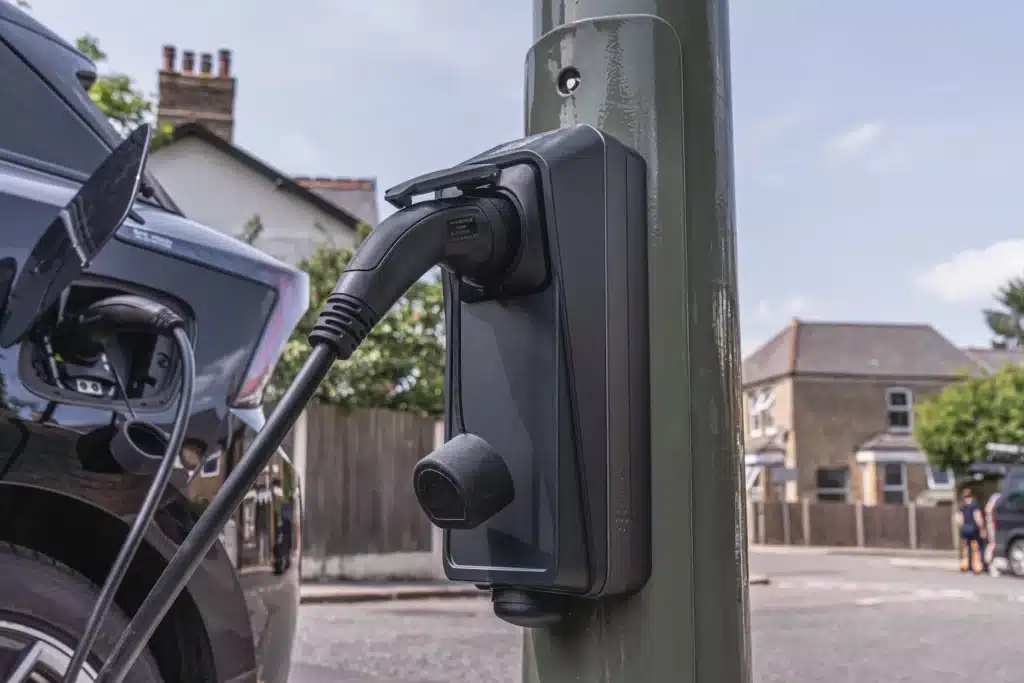
The trial is focused on expanding charging access for residents who do not have off-street parking. For many households without a driveway or garage, access to convenient charging remains one of the biggest barriers to electric vehicle ownership. The installation of on-street charging infrastructure is intended to provide a practical solution for drivers who rely on public charging near their homes.
Rather than serving as a full-scale rollout, the 30 chargers are being deployed as an initial phase that will help guide future expansion. char.gy says the trial will provide valuable information about charging demand, usage patterns, and deployment strategies that can be used to shape larger installations across Devon. The company notes that linking funding payments to completed installations places emphasis on delivering operational charging infrastructure rather than simply allocating funding commitments.
char.gy specializes in curbside charging infrastructure and works with local authorities across the United Kingdom to expand access to residential charging. The company frequently utilizes existing street infrastructure, including lampposts and other roadside assets, to install charging points while minimizing disruption to neighborhoods and reducing installation costs.
Devon County Council views the expansion of public charging infrastructure as an important component of its environmental strategy. Councillor Jacqui Hodgson, Devon County Council’s Cabinet Member for Environment and Biodiversity, emphasized the role of transport emissions in the county’s carbon footprint and highlighted the need to make charging available where people live and park.
“On-road transport makes up more than a quarter of Devon’s total carbon emissions and the delivery of more publicly accessible EV chargers is of vital importance to help address the climate emergency,” Hodgson said.
“Making it as easy as possible for people to charge their vehicles when and where they need to — outside their home, on streets, in public car parks and even on lamp posts — is crucial to encourage the take-up of EVs,” Hodgson continued.
The project comes as the UK’s public charging network continues to expand. Citing data from Zapmap, char.gy notes that there were approximately 87,000 public charging points operating across more than 45,000 locations nationwide by late 2025. While charging availability has grown rapidly, regional differences remain, particularly in rural areas where infrastructure deployment can be more challenging than in densely populated urban centers.
The South West of England has historically trailed many metropolitan regions in charger availability, reflecting the logistical challenges associated with serving large rural counties. char.gy believes the Devon trial represents the beginning of a more coordinated effort to improve charging access throughout the region and support future EV adoption.
Founded in 2016, char.gy focuses exclusively on on-street charging solutions delivered through partnerships with local authorities. The company currently operates more than 5,000 public charge points across the United Kingdom and says every charger installed through the Devon trial will be powered by 100% renewable electricity while offering pricing intended to support affordable neighborhood charging.
EVinfo.net’s Take: Why Curbside (On-Street) EV Charging Is Essential for Mass EV Adoption
One of the biggest barriers to electric vehicle adoption is not the vehicles themselves, it’s access to charging. While homeowners with garages or driveways can easily install a charger, millions of people living in apartments, condominiums, and urban neighborhoods do not have that option.
Curbside, or on-street, EV charging helps solve this problem by bringing charging directly to where people park their vehicles. By utilizing existing infrastructure such as lampposts, utility poles, and street-side parking spaces, cities can provide convenient charging access without requiring major changes to neighborhoods.
The importance of curbside charging extends beyond convenience. It creates a more equitable EV ecosystem by ensuring that renters and residents of multi-unit housing have the same opportunity to own an electric vehicle as those with private parking. Without accessible public charging near home, many potential EV buyers may delay or avoid making the switch.
Curbside charging also supports local climate and transportation goals. As more drivers gain access to reliable charging, EV adoption can increase, helping reduce greenhouse gas emissions, improve air quality, and lower dependence on gasoline.
While fast chargers along highways are critical for road trips, most charging occurs when vehicles are parked for extended periods. On-street chargers are ideally suited for overnight and workplace-adjacent charging, making them a practical and cost-effective solution for daily driving needs.
As electric vehicle ownership continues to grow, curbside charging will play a vital role in ensuring that the transition to electric transportation is accessible to everyone, not just those with a driveway.
it’s electric Leads the U.S. Effort for Curbside EV Charging
it’s electric is taking a different approach to curbside EV charging by using spare electrical capacity from nearby buildings rather than requiring costly utility upgrades and new grid connections. The Brooklyn-based company partners with U.S. property owners to install low-profile Level 2 chargers at the curb, creating new charging opportunities for residents who lack driveways or garages. Property owners can earn passive income from hosting the chargers, while cities gain additional public charging infrastructure without major public investment.
By eliminating bulky screens, payment terminals, and permanently attached cables, it’s electric aims to make curbside charging less expensive, easier to deploy, and better suited for dense urban neighborhoods where access to home charging remains one of the biggest barriers to EV adoption. it’s electric is expanding its network across cities including Boston, Detroit, Los Angeles, San Francisco, Washington, D.C., and others as it works to bring convenient neighborhood charging to millions of drivers.

Electric Vehicle Marketing Consultant, Writer and Editor. Publisher EVinfo.net.
Services